
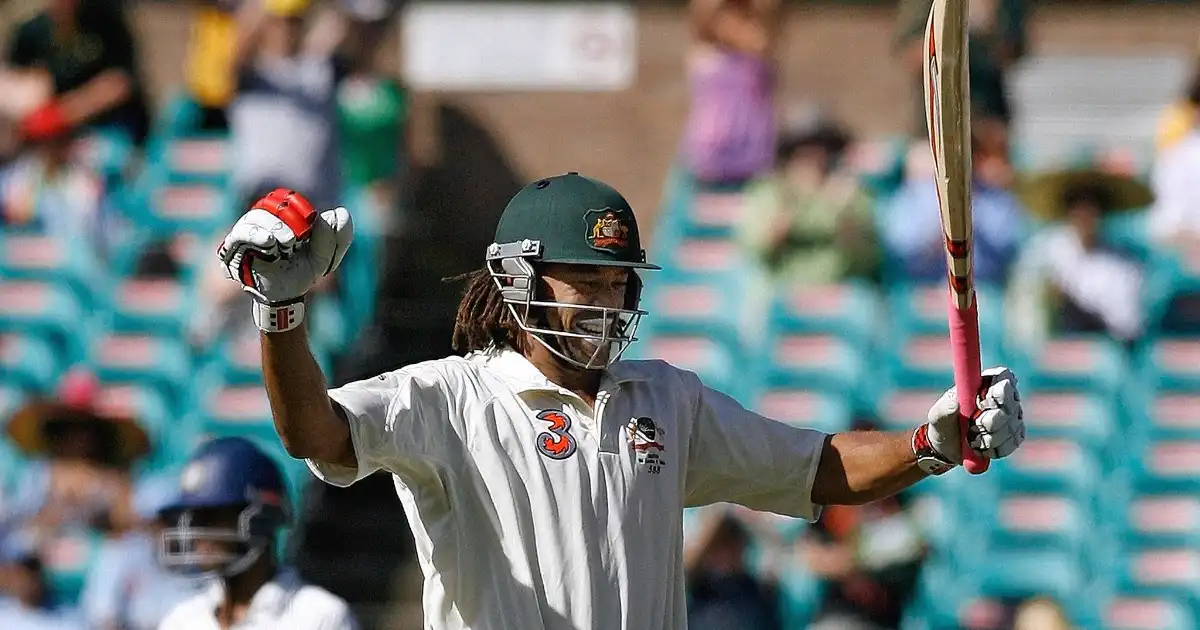
Andrew Symonds was an Australian international cricketer renowned for his explosive batting, useful bowling and exceptional fielding. Nicknamed “Roy,” he became an important member of Australia’s dominant teams of the 2000s, winning the ICC Cricket World Cup in 2003 and 2007. Born in Birmingham, England, and raised in Queensland, Australia, Symonds developed into a powerful right-handed batter who could bowl both off-spin and medium pace. His career included memorable performances in international cricket, county cricket and the Indian Premier League (IPL). However, disciplinary problems and the controversial 2008 Sydney Test also shaped his journey. Symonds retired from professional cricket in 2012 and died in a car accident in Queensland on May 14, 2022, aged 46.
BBC Sport
+2
Andrew Symonds Career Stats
| Format | Career | Matches | Innings | Runs | HS | Bat Avg | 50s | 100s | Wickets | BBI | Bowl Avg |
|---|---|---|---|---|---|---|---|---|---|---|---|
| TESTRecorded matches only — career source held | 2004–2008 | 26 | 48 | 1,462 | 162 | 40.61 | 10 | 2 | 24 | — | 37.33 |
| ODIReconciled source snapshot | 1998–2009 | 198 | 161 | 5,088 | 156 | 39.75 | 30 | 6 | 133 | 5/18 | 37.25 |
| T20ICareer source | 2005–2009 | 14 | — | 337 | 85* | 48.14 | 2 | 0 | 8 | 2/14 | 34.62 |
| T20Recorded matches only | 2008–2011 | 39 | 36 | 974 | 117 | 36.07 | 5 | 1 | 20 | — | 33.70 |
This compact table is rendered directly from the shared per-format source selection; recorded-only rows are explicitly labelled. Detailed opponent, venue, year and dismissal analysis remains on the full stats page.
Andrew Symonds
/cricket-player/andrew-symonds/Each format uses one source consistently. Recorded-only figures are labelled separately.
Recorded matches only — career source held
Reconciled source snapshot
Career source
Recorded matches only
Andrew Symonds Quick Facts
Andrew Symonds
Australian international cricketer · All-rounder
Full name: Andrew Symonds
Nickname: Roy
Born: June 9, 1975
Birthplace: Birmingham, England
Nationality: Australian cricketer
Role: Batting all-rounder
Batting: Right-handed
Bowling: Right-arm off-break and medium pace
International career: 1998–2009
World Cup titles: 2003 and 2007
Retirement: 2012
Died: May 14, 2022, aged 46
Early Life, Childhood and Family Background
Andrew Symonds was born in Birmingham, England, on June 9, 1975. He was adopted as an infant by Ken and Barbara Symonds, who raised him in Australia. The family eventually settled in Charters Towers in northern Queensland, where his childhood developed around sport and outdoor activities.
His adoptive father, Ken, was a teacher and an enthusiastic cricket supporter. He played an important role in introducing Andrew to the game, regularly throwing balls to him before and after school. The family’s commitment to his development extended beyond their immediate town: his early cricket involved trips to Townsville to play junior cricket for the Wanderers club.
Symonds’ upbringing in Queensland helped establish his connection with Australian cricket despite his English birthplace. He progressed through the state’s junior cricket system before making his first-class debut for Queensland in the 1994–95 season.
ABC News
+2
Andrew Symonds’ Parents and Siblings
Ken and Barbara Symonds were his adoptive parents. Published biographical accounts also describe him as having siblings, including his sister Louise, who appeared on the Australian television sports-entertainment programme Gladiators in 2008.
Symonds’ adoption was publicly known during his life. His biological ancestry has been described in published biographies, but claims about his biological parents’ identities and personal circumstances should not be expanded without reliable supporting evidence. His documented family story is primarily one of growing up in an Australian household where cricket was an important part of everyday life.
ABC News
+2
Education and Cricket Development
Symonds attended All Souls St Gabriels School in Charters Towers, according to biographical accounts, while CricketArchive lists All Saints School in Merrimac, Queensland, in its education field. The available profiles do not establish a clear chronology that reconciles these school references, so both should be checked against primary records before a definitive school history is published.
Kent Cricket
+1
He attended the Australian Cricket Academy in 1994 and moved through Queensland’s age-group and state cricket structures. His early development demonstrated that he was more than a powerful batter: he could bowl, field athletically and contribute across several aspects of the game.
Andrew Symonds’ Domestic Cricket Career
Symonds established himself as a talented young cricketer in Queensland before earning opportunities in English county cricket. His domestic career helped develop the all-round skills that eventually made him valuable to Australia’s national side.
Queensland: The Foundation of His Career
Symonds made his first-class debut for Queensland during the 1994–95 season. One early highlight was an unbeaten 108 against England during the touring side’s visit to Australia, when he shared an unbroken fifth-wicket partnership of 205 with Jimmy Maher.
In 1995, playing for Gloucestershire against Glamorgan, Symonds scored an unbeaten 254 and hit 16 sixes in a first-class innings, a performance that brought considerable attention to his hitting power. He continued to develop through state cricket and became an important Queensland player in domestic competitions.
His contribution was not restricted to batting. Symonds could take wickets with either off-spin or medium pace, giving his team flexibility when building a bowling attack. His domestic record included substantial run-scoring and useful wicket-taking, while his fielding added further value.
Kent Cricket
+1
Sheffield Shield and Pura Cup Finals
Symonds delivered significant performances in Queensland’s domestic finals. In the 1998–99 Sheffield Shield final, he scored 113 and took four wickets, although Queensland lost the match.
He later played a major role in Queensland’s 2002 Pura Cup final victory. Symonds scored 123 runs and took six wickets, earning the man-of-the-match award. That performance illustrated the combination that defined his cricket: he could influence a match with the bat and then contribute with the ball.
English County Cricket: Gloucestershire, Kent and Lancashire
Symonds played county cricket in England for Gloucestershire, Kent and Lancashire, with later appearances for Surrey in Twenty20 cricket.
Kent became one of his most significant overseas domestic teams. Between 1999 and 2004, he played 49 first-class matches for the county, scoring 3,526 runs at an average of 45.20, including 12 centuries. He also took 65 wickets in those matches.
His limited-overs performances were similarly influential. Symonds became known for his aggressive batting and athletic fielding, qualities that made him a valuable overseas professional. Kent supporters later recognised him as the club’s greatest overseas player in white-ball cricket in a fan poll.
Kent Cricket
+2
Andrew Symonds’ International Career for Australia
Symonds made his One Day International debut for Australia in 1998 and later became a regular member of the national team. His combination of middle-order power, bowling options and outstanding fielding suited Australia’s aggressive approach to limited-overs cricket.
He made his Test debut against Pakistan in 2003. Although his international career covered all three formats, he was especially influential in one-day cricket, where his batting could change a match quickly and his bowling helped balance the side.
ODI Career: A Powerful Middle-Order All-Rounder
Symonds played 198 One Day Internationals for Australia, scoring 5,088 runs and taking 133 wickets. He made six ODI centuries and 30 half-centuries, with a highest score of 156 not out.
His value went beyond the figures. Symonds could rebuild an innings after early wickets or accelerate late in the innings, while his bowling offered Australia another option when frontline bowlers needed support. His throwing strength and ability to save runs made him a major asset in the field.
His strongest international period coincided with Australia’s success at the 2003 and 2007 World Cups. The team benefited from his ability to contribute in several roles without requiring a specialist for each task.
ICC
+2
For a detailed breakdown of his ODI career, use the site’s player statistics section:
See Andrew Symonds's complete ODI stats
Test Career: From Selection Questions to a Defining Century
Symonds played 26 Test matches for Australia, scoring 1,462 runs at an average of 40.61. He scored two Test centuries and ten half-centuries, with a highest score of 162 not out. He also took 24 Test wickets.
cricketarchive.co.uk
+1
His maiden Test century came during the 2006–07 Ashes series against England at the Melbourne Cricket Ground. The innings strengthened his case as a Test all-rounder and helped demonstrate that his attacking approach could also work in the longer format.
His second Test century came against India at the Sydney Cricket Ground in January 2008. Australia were under pressure at 134 for six when Symonds continued his innings and formed a substantial partnership with Brad Hogg. Symonds eventually made 162 not out in Australia’s first innings and then scored 62 not out in the second innings.
The match was also remembered for the controversy involving Harbhajan Singh that became known as “Monkeygate.” The cricketing performance and the dispute became inseparable in the public memory of the series.
Wikipedia
+2
For his Test career statistics, use:
Explore Andrew Symonds's complete Test stats
T20 International Career
Symonds played 14 Twenty20 Internationals for Australia between 2005 and 2009. He scored 337 runs and took eight wickets, adding experience and power to Australia’s early international T20 teams.
ESPNcricinfo.com
+1
His international T20 career was shorter than his ODI career, but the format suited his aggressive batting, ability to clear the boundary and versatility with the ball.
For the full T20I breakdown:
View Andrew Symonds's full T20I record
Andrew Symonds at the 2003 and 2007 Cricket World Cups
The two World Cup victories remain central to Symonds’ place in Australian cricket history. He was part of the Australian squads that won the men’s 50-over World Cup in 2003 and 2007.
The ICC has highlighted his effectiveness in both tournaments. Across the two unbeaten Australian campaigns, Symonds played 18 matches and averaged more than 100 with the bat across 13 innings. Australia’s strong top order meant he was not always required to make a major score, but when his team needed him, he could deliver.
ICC
+1
The 2003 World Cup
Symonds played a defining innings against Pakistan during the 2003 World Cup group stage. Australia had lost early wickets when he came to the crease, and he responded with an unbeaten 143. His innings helped Australia recover and secure a convincing victory.
That performance established his capacity to handle pressure on a major international stage. Rather than simply attacking from the first ball, he built an innings when necessary and accelerated as the situation allowed.
Australia went on to win the tournament, and Symonds became one of the players associated with the team’s successful campaign.
The 2007 World Cup Semi-Final
Symonds also made a significant contribution during Australia’s 2007 World Cup campaign. He scored an unbeaten 91 in the semi-final against Sri Lanka, helping Australia progress to the final.
Australia subsequently won the final against Sri Lanka and secured its third consecutive men’s ODI World Cup title. Symonds’ ability to deliver under pressure reinforced his importance to the team.
ICC
+1
His two World Cup victories remain among the strongest reasons he is remembered as a major Australian all-rounder of his generation.
Andrew Symonds’ IPL Career and Auction Price
Symonds became one of the early high-profile overseas players in the Indian Premier League. In the inaugural IPL auction in February 2008, the Deccan Chargers acquired him for US$1.35 million, making him one of the most expensive players in that auction and its highest-priced overseas player.
The Economic Times
+1
Deccan Chargers: The 2008 Breakthrough
Symonds made an immediate impression with the Deccan Chargers. In the 2008 season, he scored 117 in just 53 balls against the Rajasthan Royals, an innings featuring powerful hitting and demonstrating his suitability for the new franchise format.
He continued with Deccan in the 2009 and 2010 seasons. His ability to bat aggressively, bowl useful overs and field well made him an attractive T20 option.
Mumbai Indians: The 2011 Season
Symonds joined the Mumbai Indians for the 2011 IPL season. The team featured several prominent international players, including Sachin Tendulkar and Harbhajan Singh. Symonds’ presence brought additional experience and all-round options to the squad.
His IPL career is a useful example of how established international cricketers became important early investments in franchise cricket. His price attracted attention, but his role was based on his established reputation as a powerful batter and versatile all-rounder.
IPLT20Stats.com
+1
For the complete domestic and franchise T20 record:
View Andrew Symonds's domestic and franchise T20 stats
Andrew Symonds’ Playing Style and Fielding Ability
Symonds was a right-handed batting all-rounder who could bowl right-arm off-spin and medium pace. That flexibility allowed captains to adjust their bowling plans and batting order depending on the match situation.
His batting combined power with adaptability. He could attack pace bowling, hit sixes over the boundary and play a stabilising innings when early wickets had fallen. His unbeaten 143 against Pakistan in the 2003 World Cup and his 162 not out against India in the 2008 Sydney Test illustrate the different situations in which he could score heavily.
Fielding was another major strength. Symonds was recognised for his athletic movement, safe hands and powerful throwing arm. His presence in the field helped Australia apply pressure through run-saving stops and opportunities for direct hits.
The combination of batting, bowling and fielding made him particularly valuable in limited-overs cricket, where an all-rounder who could influence several phases of a match gave the captain additional tactical options.
Wisden
+2
Andrew Symonds and the 2008 Monkeygate Controversy
The second Test between Australia and India at the Sydney Cricket Ground in January 2008 became one of the most controversial matches in modern cricket history.
Symonds alleged that India’s Harbhajan Singh had racially abused him during an exchange on the field. Harbhajan denied the allegation. Following the initial disciplinary hearing, Harbhajan received a three-Test ban, but the racism charge was not upheld on appeal and the ban was overturned. The dispute strained relations between the teams and generated extensive international coverage.
Cricket News – The Indian Express
+2
The episode affected Symonds beyond the immediate disciplinary proceedings. In later interviews, he spoke about the emotional burden of the controversy and his feelings about the involvement of teammates who supported his account. He said that he struggled to deal with the aftermath and that his drinking increased during this period.
ABC News
+1
The controversy should be understood with care: Symonds’ allegation, Harbhajan’s denial, the original sanction and the appeal outcome are distinct parts of the documented history. The initial ban was not the final disciplinary result.
Disciplinary Problems and the End of His International Career
Symonds’ international career also involved several disciplinary problems. In 2005, he was dropped after arriving intoxicated before a match against Bangladesh. In 2008, he was sent home from an Australian one-day series after missing a team meeting to go fishing. These incidents raised questions about his commitment and relationship with team management.
Deccan Herald
+1
In June 2009, Symonds was sent home from the ICC World Twenty20 in England after breaching team rules related to alcohol and other issues. Cricket Australia subsequently withdrew his central contract, and he did not play for Australia again.
ABC News
+1
These events marked a sharp change in a career that had previously included major tournament victories and some of Australia’s most memorable limited-overs performances. Symonds remained a talented cricketer, but his international career ended before he reached the age at which many players continue competing at the highest level.
Andrew Symonds’ Retirement and Life After Cricket
Symonds retired from all forms of professional cricket in February 2012. He had already been out of the Australian international setup for several years, and his retirement marked the formal end of his playing career.
Wikipedia
+1
Following retirement, he remained a recognisable figure in Australian cricket and appeared in media discussions about his career and the controversies that had affected it. His later interviews offered insight into his experience of the 2008 Sydney Test, his relationships with former teammates and the pressures that accompanied international cricket.
He was also remembered for his love of sport beyond cricket, including his support for the Brisbane Broncos rugby league team. His public identity was closely connected with Queensland, where he had grown up and played much of his domestic cricket.
Andrew Symonds’ Death: What Happened in 2022?
Andrew Symonds died on May 14, 2022, aged 46, following a single-vehicle car crash near Townsville in Queensland, Australia.
Police said the vehicle left Hervey Range Road near the Alice River Bridge and rolled. Emergency services attempted to revive him, but he died at the scene. The circumstances were investigated by Queensland police.
ABC News
+1
His death prompted tributes from the cricket community, including former teammates and international cricket organisations. The news came only a few months after the death of fellow Australian cricket great Shane Warne, making it a difficult period for Australian cricket supporters.
Symonds is remembered for his role in Australia’s World Cup victories, his spectacular hitting, his outstanding fielding and the all-round skills that made him a distinctive player of his generation.
Andrew Symonds’ Career Statistics and Records
The following figures summarise his senior international career.
| Format | Matches | Runs | Highest score | Wickets |
|---|---|---|---|---|
| Test | 26 | 1,462 | 162* | 24 |
| ODI | 198 | 5,088 | 156* | 133 |
| T20I | 14 | 337 | — | 8 |
Career figures are drawn from cricket statistical profiles. The dash means the highest score has not been included in this summary, not that no score is recorded.
cricketarchive.co.uk
+2
Notable Career Achievements
- Member of Australia’s 2003 Cricket World Cup-winning team.
- Member of Australia’s 2007 Cricket World Cup-winning team.
- Scored an unbeaten 143 against Pakistan at the 2003 World Cup.
- Scored an unbeaten 91 in the 2007 World Cup semi-final against Sri Lanka.
- Scored 162 not out against India in the 2008 Sydney Test.
- Scored an unbeaten 254 for Gloucestershire in first-class cricket.
- Scored 123 and took six wickets in Queensland’s 2002 Pura Cup final victory.
- Became one of the most expensive overseas players in the inaugural IPL auction.
For a broader comparison of his batting and bowling records, readers can use the site’s cricket statistics tool:
Explore the complete cricket player statistics database
Compare Andrew Symonds With Other Cricket All-Rounders
Andrew Symonds’ career can be compared with other all-rounders to examine differences in international runs, wickets, batting averages, strike rates and format-specific contributions.
Start typing Player B, choose a result, then compare instantly from cached career summaries. Compare Andrew Symonds
Player A is locked to this biography
Frequently Asked Questions About Andrew Symonds
Who was Andrew Symonds?
Andrew Symonds was an Australian international cricket all-rounder known for aggressive batting, off-spin and medium-pace bowling, and exceptional fielding. He was a member of Australia’s 2003 and 2007 World Cup-winning teams.
When was Andrew Symonds born?
He was born on June 9, 1975, in Birmingham, England.
What was Andrew Symonds’ nickname?
His best-known nickname was “Roy.”
How many international matches did Andrew Symonds play?
He played 26 Tests, 198 ODIs and 14 T20 Internationals for Australia.
How many World Cups did Andrew Symonds win?
He was part of Australia’s men’s ODI World Cup-winning squads in 2003 and 2007.
What was Andrew Symonds’ highest Test score?
His highest Test score was 162 not out, scored against India at the Sydney Cricket Ground in January 2008.
Which IPL team bought Andrew Symonds in 2008?
The Deccan Chargers acquired him for US$1.35 million at the inaugural IPL auction in 2008.
Was Andrew Symonds involved in the Monkeygate controversy?
Yes. During the 2008 Sydney Test against India, Symonds alleged that Harbhajan Singh had racially abused him. Harbhajan denied the allegation, and the initial ban imposed on him was overturned on appeal.
When did Andrew Symonds retire?
Symonds retired from professional cricket in February 2012.
How did Andrew Symonds die?
He died on May 14, 2022, aged 46, after a car crash near Townsville in Queensland, Australia.
What was Andrew Symonds’ net worth?
A dependable, independently verified estimate of Symonds’ net worth has not been established in the sources consulted. His international career and publicly reported IPL contract are documented, but those figures alone do not establish his total wealth.
Conclusion
Andrew Symonds remains one of the most memorable all-rounders in Australian cricket history. Known for his powerful batting, useful off-spin and medium-pace bowling, and outstanding fielding, he played an important role in Australia’s success during the early 2000s. His contributions to Australia’s 2003 and 2007 Cricket World Cup victories highlighted his value as a versatile team player. Symonds also made a significant impact in the Indian Premier League, particularly with the Deccan Chargers. Despite facing controversies during his career, his aggressive playing style and match-winning abilities earned him a special place in cricket history. His tragic death in May 2022 was a great loss to the cricket community, but his achievements and legacy continue to be remembered by fans around the world.