
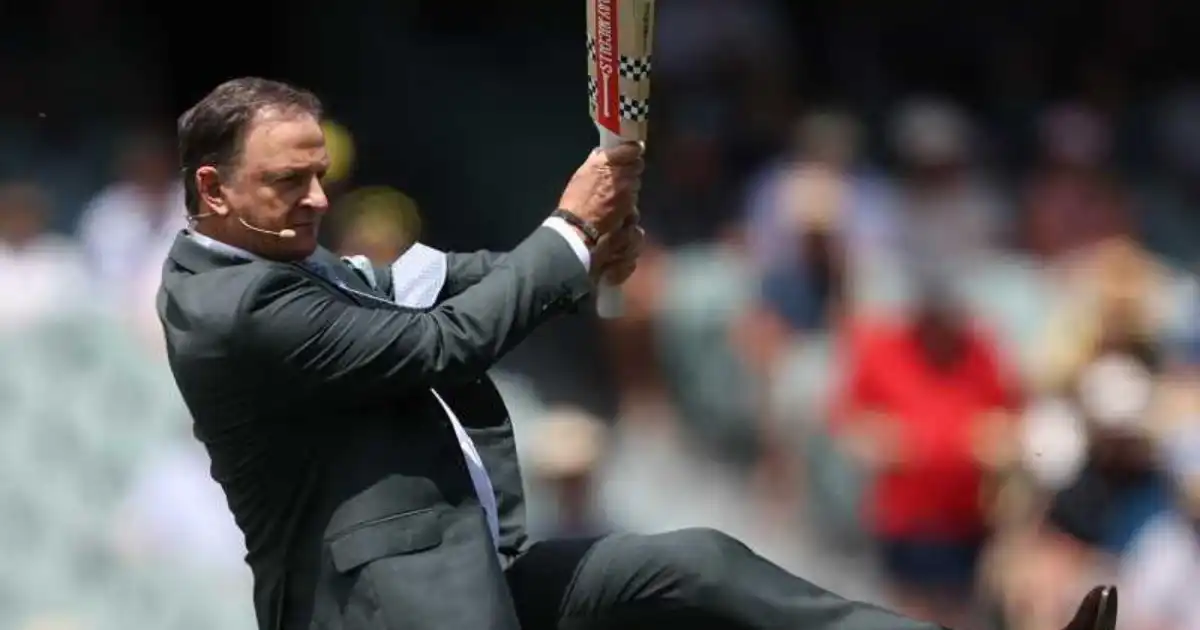
Mark Waugh is a former Australian international cricketer renowned for his elegant right-handed batting, exceptional fielding and contributions to Australia’s dominant teams of the 1990s. Born on 2 June 1965 in Canterbury, New South Wales, Mark Edward Waugh represented Australia in Test and One Day International (ODI) cricket from 1988 to 2002. He was a key member of Australia’s 1999 Cricket World Cup-winning team and became particularly famous for his performances at the 1996 World Cup, when he scored centuries in consecutive matches. The younger twin brother of former Australian captain Steve Waugh, Mark developed a distinguished career of his own, combining stylish stroke play with useful off-spin bowling and outstanding catching. After retiring from international cricket, he continued his association with the game through cricket commentary and national selection.
Mark Waugh Career Stats
| Format | Career | Matches | Innings | Runs | HS | Bat Avg | 50s | 100s | Wickets | BBI | Bowl Avg |
|---|---|---|---|---|---|---|---|---|---|---|---|
| TESTReconciled source snapshot | 1991–2002 | 128 | 209 | 8,029 | 153* | 41.82 | 47 | 20 | 59 | 5/40 | 41.17 |
| ODIReconciled source snapshot | 1988–2002 | 244 | 236 | 8,500 | 173 | 39.35 | 50 | 18 | 85 | 5/24 | 34.56 |
This compact table is rendered directly from the shared per-format source selection; recorded-only rows are explicitly labelled. Detailed opponent, venue, year and dismissal analysis remains on the full stats page.
Mark Waugh
/cricket-player/mark-waugh/Each format uses one source consistently. Recorded-only figures are labelled separately.
Reconciled source snapshot
Reconciled source snapshot
Mark Waugh Quick Facts
| Detail | Information |
|---|---|
| Full name | Mark Edward Waugh |
| Known as | Mark Waugh |
| Date of birth | 2 June 1965 |
| Age | 61 years as of October 2026 |
| Birthplace | Canterbury, New South Wales, Australia |
| Nationality | Australian |
| Profession | Former international cricketer, commentator and former national selector |
| Batting style | Right-handed |
| Bowling style | Right-arm off-break and right-arm medium |
| Primary role | Batter |
| International teams | Australia |
| Domestic team | New South Wales |
| County team | Essex |
| ODI debut | 11 December 1988 against Pakistan |
| Test debut | 25 January 1991 against England |
| Highest Test score | 153 not out |
| Highest ODI score | 173 |
| Test matches | 128 |
| ODI matches | 244 |
| Test centuries | 20 |
| ODI centuries | 18 |
| Major team achievement | 1999 Cricket World Cup champion |
| Twin brother | Steve Waugh |
| Younger brother | Dean Waugh |
| International retirement | 2002 |
Career and biographical references include ESPNcricinfo’s player profile and historical scorecards.
Wikipedia
+2
Mark Waugh’s Early Life, Parents and Family Background
Mark Waugh grew up in a sporting family in western Sydney, where cricket, tennis and soccer were part of everyday life. His childhood helped establish the broad athletic skills that later became visible in his movement, balance and fielding. His twin brother Steve followed a remarkably similar cricketing pathway, but their careers eventually developed different identities: Steve became famous for his captaincy and competitive resilience, while Mark earned a reputation for graceful stroke play and attacking batting.
Mark Waugh’s parents and siblings
The Waugh family provided an early sporting environment for the brothers.
| Family member | Verified biographical detail |
|---|---|
| Father: Rodger Waugh | Worked as a bank official and had a strong sporting background, including tennis |
| Mother: Beverley (Bev) Waugh | Worked as a teacher in New South Wales and played tennis |
| Twin brother: Steve Waugh | Former Australian captain and international cricketer |
| Brother: Dean Waugh | Played first-class and List A cricket for New South Wales |
| Brother: Danny Waugh | Played club cricket |
| Maternal uncle: Dion Bourne | Opening batter in Sydney grade cricket |
| Paternal grandfather: Edward Waugh | Had sporting connections, including rugby league and greyhound training |
These family connections help explain why organised sport was familiar to Mark from an early age. The twins began playing organised cricket, soccer and tennis as children. Their first cricket match was not particularly auspicious: both were dismissed without scoring.
The brothers attended the same schools and initially competed across several sports. Their development was not simply a matter of specialising in cricket from the beginning; they gradually progressed through junior competitions before making senior-grade appearances.
Wikipedia
+1
Mark Waugh and Steve Waugh: twin brothers, different cricketing identities

Mark Waugh
Elegant stroke-maker, middle-order Test batter and prolific ODI opener. His career is particularly associated with timing, cover drives, slip catching and useful off-spin.

Steve Waugh
A highly competitive batter who became Australia’s Test captain and led the side through a period of exceptional international success.
Steve was born four minutes before Mark. Although the brothers shared their early cricket education and played together for Australia for many years, they were not interchangeable players. Mark’s batting often appeared effortless, while Steve became associated with persistence under pressure and leadership.
Mark also played under Steve’s captaincy during much of his international career. Their relationship was unusual in cricket: they were close family members competing at the highest level, yet each had to establish an individual place in a team full of international stars. Mark discussed the tendency for the public to compare them in a 2002 interview with The Guardian.
The Guardian
+1
Education, school cricket and early coaching
Mark and Steve attended East Hills Boys Technology High School in Sydney. Their uncle Dion Bourne was involved in Bankstown grade cricket, providing a family connection to organised club cricket.
The brothers were selected for Bankstown’s under-16 cricket team as teenagers and made their senior-grade cricket debut in the 1979–80 season. Their progress through Sydney cricket gave them experience against older players before they became regular members of New South Wales’ senior setup.
Early-development timeline
- Childhood: organised cricket, tennis and soccer.
- Teenage years: junior cricket with Bankstown.
- 1979–80: senior-grade cricket debut.
- 1985–86: Sheffield Shield appearances for New South Wales are recorded in CricketArchive’s match history.
- 1987–88: Mark shared the Sheffield Shield Player of the Series award with Queensland’s Dirk Tazelaar.
- 1988: made his ODI debut for Australia.
The available evidence supports this broad pathway. A precise height, weight, shirt number, private coaching history and a complete list of school-level statistics cannot be established confidently from the sources consulted, so they are not presented as verified facts.
Wikipedia
+2
Mark Waugh’s Domestic Cricket Career and Rise with New South Wales
Mark’s domestic cricket was essential to his development. Playing for New South Wales exposed him to senior first-class competition and gave selectors repeated evidence of his batting ability. His rise was not identical to Steve’s: Steve reached Test cricket earlier, while Mark had to continue building his case through state performances before earning his opportunity in the Australian Test side.
Sheffield Shield breakthrough
Mark’s performances for New South Wales established him as one of the state’s important batting prospects. CricketArchive records his Sheffield Shield appearances beginning in October 1985, and the 1987–88 season brought wider recognition when he shared the competition’s Player of the Series honour.
That award was an important milestone because it demonstrated that Mark’s potential extended beyond the occasional attractive innings. He was producing results across a domestic season, against experienced first-class opponents.
His domestic batting included substantial scores against state sides. One notable example from the lead-up to his Test selection was a 172 from 301 balls in a Sheffield Shield match, followed by further centuries during the period in which he was pushing for higher honours.
Cricket Archive
+2
Domestic career at a glance
| Category | Details |
|---|---|
| Australian state team | New South Wales |
| Major domestic competition | Sheffield Shield |
| County cricket | Essex, England |
| Important early recognition | Shared Sheffield Shield Player of the Series, 1987–88 |
| Domestic significance | Built the first-class record that supported his eventual Test selection |
Mark’s county cricket with Essex also formed part of his education as a professional batter. His first season with the English county helped prepare him for Test cricket, with the varied pitches and conditions offering valuable experience outside Australia. Wisden later highlighted that county season as an important part of his development.
Almanack
+1
View Mark Waugh's complete first-class stats Explore Mark Waugh's complete List A recordMark Waugh’s Australia Career: ODI Debut Before His Test Breakthrough
Mark Waugh’s international career began in limited-overs cricket. He made his ODI debut against Pakistan on 11 December 1988 in Adelaide, more than two years before his Test debut. His entry into Test cricket came after strong domestic form and an opening in Australia’s batting order.
ODI debut and gradual development
Waugh entered the Australian ODI side at a time when the team was developing a formidable batting unit. He did not immediately become a prolific century-maker in the format. His first ODI hundred arrived in 1993, against England at Birmingham, after several years of international experience.
His ODI game eventually developed into a highly productive combination of composure and attacking stroke play. He was particularly effective at the top of the order, where his ability to find gaps and maintain a high scoring rate complemented more aggressive opening partners.
Test debut: 138 against England in Adelaide
Mark’s Test debut came during the 1990–91 Ashes series. He was selected for the fourth Test at Adelaide Oval in January 1991, replacing his out-of-form twin brother Steve in the batting order. The circumstances created an unusual family storyline, but Mark’s response was emphatic.
Australia were 104 for four when he came to the crease. He then made 138 from 188 balls, striking 18 boundaries and sharing a substantial partnership with Greg Matthews. The innings helped Australia establish a first-innings lead of 157, although England recovered and the match was drawn.
Test debut snapshot
Score
138
188 balls
Opponent
England
Adelaide Oval, 1991
Key detail: Mark became one of the relatively small group of Australians to score a century on Test debut.
The quality of the innings mattered beyond the score itself. Waugh was not given a quiet introduction to Test cricket; he entered while Australia were under pressure and produced a century against an experienced England attack. Wisden later described the innings as a striking demonstration of his timing and balance.
Wisden
+1
Explore Mark Waugh's complete Test statsMark Waugh’s Greatest International Performances and Records
Mark’s international reputation rests on more than his debut century. He produced important innings against England, India, the West Indies and other leading sides, while his ODI career became especially notable during the 1996 World Cup and the early 2000s.
The 1995 West Indies Test series
Waugh played an important role in Australia’s successful 1995 Frank Worrell Trophy campaign against the West Indies. His 126 in the deciding Test was among the significant innings of the series and helped Australia secure a major away achievement against a formidable opponent.
The performance reinforced his standing as a batter capable of succeeding in demanding Test conditions. His contribution was not confined to home matches or favourable batting surfaces.
Wikipedia
+1
1996 Cricket World Cup: consecutive centuries
The 1996 World Cup in the Indian subcontinent became one of the defining periods of Mark Waugh’s career. Opening the batting, he scored 130 against Kenya in Visakhapatnam and followed it with 126 against India in Mumbai.
His century against Kenya was part of a 207-run partnership with Steve Waugh, then the first double-century partnership in World Cup history. The back-to-back hundreds also made Mark the first player to score centuries in consecutive World Cup matches.
1996 World Cup performance snapshot

130
Against Kenya
Visakhapatnam

126
Against India
Mumbai
Both performances earned him Player of the Match honours, and the consecutive hundreds became a defining part of his World Cup record.
Waugh also scored an unbeaten 76 against Zimbabwe. Against India, his contribution extended beyond batting: he dismissed Sachin Tendulkar, who had made 90, by using his off-spin to create a stumping opportunity. That wicket was an example of the secondary skill that made him a valuable international cricketer.
Australia ultimately lost the 1996 World Cup final to Sri Lanka. Mark’s outstanding individual performances therefore did not result in a tournament title, but they cemented his reputation as one of the competition’s standout batters.
Wikipedia
+1
Mark Waugh’s highest Test score: 153 not out against India
Mark’s highest Test score was 153 not out against India in the third Test at Bengaluru in March 1998. The innings came in difficult circumstances for Australia during a series in which India had already won the first two Tests.
Waugh’s 153 not out from 267 balls anchored Australia’s first innings. He hit 13 fours and four sixes, demonstrating that his elegant style could also produce a long, disciplined innings under pressure. The score remains his highest in Test cricket.
IMG Cricket
+1
Mark Waugh’s ODI record: 173 against the West Indies
His highest ODI score was 173 against the West Indies at the Melbourne Cricket Ground in February 2001. It was a major innings in a period when Australia were among the strongest sides in one-day cricket.
The innings became a national milestone because it set a new record for the highest individual ODI score by an Australian at the time. Waugh’s ODI career had taken time to reach its full statistical output, but by this stage he was one of the format’s most accomplished century-makers.
Wikipedia
+1
Mark Waugh’s major international records
| Achievement | Detail |
|---|---|
| Test debut century | 138 against England, Adelaide, 1991 |
| Highest Test score | 153 not out against India, Bengaluru, 1998 |
| Highest ODI score | 173 against the West Indies, Melbourne, 2001 |
| 1996 World Cup | Consecutive centuries: 130 and 126 |
| World Cup partnership | 207 runs with Steve Waugh against Kenya |
| Test batting record | 8,029 runs in 128 matches |
| ODI batting record | 8,500 runs in 244 matches |
| International centuries | 20 in Tests and 18 in ODIs |
| World Cup title | Member of Australia’s 1999 winning squad |
Mark Waugh and Australia’s 1999 Cricket World Cup Victory
The 1999 Cricket World Cup was the tournament in which Mark Waugh became a world champion with Australia. The final was played against Pakistan at Lord’s on 20 June 1999, and Australia won by eight wickets after bowling Pakistan out for 132.
Waugh finished the final unbeaten on 37 from 52 balls. Adam Gilchrist made 54 from 36 balls, and Ricky Ponting contributed 24 as Australia reached 133 for two in 20.1 overs.
1999 World Cup final snapshot
| Detail | Result |
|---|---|
| Date | 20 June 1999 |
| Venue | Lord’s, London |
| Opponent | Pakistan |
| Pakistan’s total | 132 all out |
| Mark Waugh’s score | 37 not out from 52 balls |
| Australia’s total | 133/2 in 20.1 overs |
| Result | Australia won by eight wickets |
| Significance | Mark Waugh became a World Cup-winning player |
The final was a team victory rather than a one-man performance. Shane Warne took four wickets, while Gilchrist’s rapid half-century helped finish the chase. Waugh’s unbeaten contribution provided stability as Australia completed a comfortable win.
The title was a major achievement in a career that already included memorable World Cup batting performances. It also formed part of Australia’s emergence as the dominant team in international cricket around the turn of the century.
ESPN Australia
+1
See Mark Waugh's complete ODI statsMark Waugh’s Batting Style, Fielding and Bowling
Mark Waugh was primarily a batter, but his value to Australia came from a broader skill set. He was a right-handed stroke-maker, a capable slip fielder and a useful part-time bowler who could deliver off-breaks or right-arm medium pace.
Why Mark Waugh was known for elegant batting
Waugh’s reputation centred on timing rather than brute force. His cover drives, leg-side placement and ability to find gaps allowed him to score fluently without appearing to overhit the ball.
His role varied by format:
- Test cricket: He often batted in the middle order, commonly at number four, where he could build an innings after the early wickets.
- ODI cricket: He became a productive opener, combining steady accumulation with attacking stroke play.
- Long innings: His 153 not out against India demonstrated his ability to occupy the crease for extended periods.
- Limited-overs acceleration: His 173 against the West Indies showed that his technique could also support a high-scoring ODI innings.
His batting was particularly effective when he could use the pace of the ball and place it into spaces rather than rely on constant power hitting. This style made him an aesthetically distinctive batter of his generation.
Wisden
+2
Mark Waugh’s fielding
Waugh was widely admired for his catching, particularly in the slips. His athletic movement and reliable hands made him an important part of Australia’s catching unit.
His international career included 181 Test catches and 108 ODI catches, according to historical career records. These figures reflect how regularly he contributed in the field as well as with the bat.
Wikipedia
+1
Mark Waugh’s bowling record
Although he was not selected primarily as a bowler, Waugh offered Australia useful overs. His right-arm off-spin was particularly relevant in one-day cricket, where a part-time bowler could break partnerships or provide a change of pace.
His career figures include:
- Test best bowling: 6 for 68.
- ODI best bowling: 5 for 24.
- Test wickets: 59.
- ODI wickets: 85.
These figures show that Waugh was more than a specialist batter. His bowling was an additional tactical resource, and his wicket of Tendulkar during the 1996 World Cup was one of its most memorable examples.
Wikipedia
+1
Mark Waugh’s Career Statistics: Test, ODI and First-Class Cricket
Mark Waugh’s statistics show the scale and consistency of his career. He scored more than 8,000 runs in both Test and ODI cricket, with 38 international centuries combined. His record was particularly strong in one-day cricket, where he became a leading Australian opener.
International batting and bowling summary
| Statistic | Test | ODI |
|---|---|---|
| Matches | 128 | 244 |
| Runs | 8,029 | 8,500 |
| Batting average | 41.81 | 39.35 |
| Highest score | 153* | 173 |
| Centuries | 20 | 18 |
| Half-centuries | 47 | 50 |
| Wickets | 59 | 85 |
| Best bowling | 6/68 | 5/24 |
| Catches | 181 | 108 |
Career totals are drawn from historical player statistics. Figures should be checked against the site’s underlying scorecard database before publication if the stats engine uses a different data cut or calculation convention.
Wikipedia
+1
What the numbers reveal
Three points stand out from Waugh’s career record:
- Long-term Test contribution: 8,029 runs across 128 Tests reflect a sustained place in Australia’s middle order over more than a decade.
- ODI productivity: His 8,500 runs and 18 centuries made him one of Australia’s leading one-day batters of his era.
- All-round utility: His wickets and catches added value beyond his main batting role.
First-class and List A cricket
Waugh’s domestic and county career was also substantial. His first-class cricket included New South Wales and Essex, while his List A career featured state and other limited-overs appearances. Those records are useful for readers who want to distinguish international performance from his full senior playing career.
The international totals above should not be confused with his domestic statistics. First-class cricket includes Tests and other multi-day matches; List A includes ODIs and qualifying domestic one-day matches. The exact aggregate totals therefore depend on the format and database filter being used.
Mark Waugh’s Captaincy, Teammates and Australian Cricket Leadership
Mark’s career developed largely within teams led by other prominent Australian captains, particularly Allan Border and later his twin brother Steve. He was a senior member of the side, but his main international identity was as a batter rather than as Australia’s long-term captain.
His contribution to leadership was nevertheless significant. Experienced players help establish standards through preparation, fielding, match awareness and performance. Waugh’s place in Australia’s successful teams meant that he worked alongside several defining players of the period, including Ricky Ponting, Adam Gilchrist, Shane Warne and Glenn McGrath.
Playing alongside Steve Waugh
The brothers played together in both Test and ODI cricket. Their shared experience was especially visible during the 1996 World Cup, when they put together the historic 207-run stand against Kenya.
They were different kinds of leaders. Steve became internationally renowned for his captaincy, while Mark’s reputation centred on batting and fielding. Their contrasting strengths gave Australia two experienced players with extensive knowledge of the game.
Australia’s 1990s generation
Mark’s career overlapped with a generation that helped establish Australia as a leading force across formats. He contributed during the transition from Allan Border’s rebuilding era to the highly successful teams associated with Steve Waugh and later Ricky Ponting.
His value to that generation was not limited to any one tournament. The combination of his Test record, ODI output and fielding made him a regular contributor over a long period.
Mark Waugh’s Retirement, National Selection and Commentary Career
Mark Waugh’s international playing career ended in 2002. He subsequently remained involved in Australian cricket, moving into national selection and broadcasting.
Retirement from international cricket
Waugh retired after a long career that began with his ODI debut in 1988 and his Test debut in 1991. His departure marked the end of an international period in which he had established himself as one of Australia’s leading batters.
He finished with 16,529 international runs across Tests and ODIs, alongside 38 centuries. His record placed him among the major Australian batters of his generation.
National selector, 2014–2018
In May 2014, Waugh joined Australia’s National Selection Panel. The role required him to assess players, consider team balance and contribute to selection decisions across the national setup.
He announced in May 2018 that he would not seek a new contract when his term expired on 31 August. He said that working with the selectors, coaches and players had been a privilege. His departure coincided with his move into a commentary role with Fox Sports.
Cricket Australia
+1
Mark Waugh as a cricket commentator
Waugh joined Fox Sports’ cricket commentary lineup in 2018, bringing his experience as an international batter and selector to television coverage.
His post-playing career gave him a different role in the sport: rather than producing runs himself, he could analyse batting decisions, player form, tactics and selection debates for viewers. His familiarity with Australian cricket’s professional environment has been an important part of that work.
Cricket Australia
+1
Mark Waugh’s Net Worth, Salary, Endorsements and Personal Life
Mark Waugh earned his living through international cricket and later cricket-related professional work. However, a reliable public figure for his current net worth could not be verified from authoritative financial reporting or official disclosures.
Claims on celebrity wealth websites should not be treated as established facts unless they are supported by credible financial sources. International career earnings, broadcast fees, past playing contracts and any private investments are not enough to calculate an individual’s current net worth accurately.
The same caution applies to commercial endorsements and personal assets. Without reliable public documentation, it would be misleading to assign Waugh a specific salary, endorsement income, property portfolio or investment value.
What can be stated reliably:
- His playing career included Australian international cricket, New South Wales cricket and county cricket with Essex.
- His post-playing work included a four-year period as a national selector and a move into Fox Sports commentary.
- His parents, siblings and sporting family background are documented in historical biographical accounts.
- A dependable current net-worth estimate, a complete public endorsement list and a verified current salary figure were not established from the sources reviewed.
Mark Waugh’s Career Timeline
| Year / period | Team or level | Career milestone |
|---|---|---|
| 1965 | Canterbury, New South Wales | Born on 2 June |
| 1979–80 | Bankstown senior-grade cricket | Began senior-grade cricket as a teenager |
| 1985–86 onward | New South Wales | Sheffield Shield appearances recorded |
| 1987–88 | New South Wales | Shared Sheffield Shield Player of the Series award |
| December 1988 | Australia ODI team | Made ODI debut against Pakistan |
| January 1991 | Australia Test team | Scored 138 on Test debut against England |
| 1995 | Australia | Contributed to the Frank Worrell Trophy success |
| 1996 | Australia | Scored consecutive World Cup centuries |
| 1998 | Australia | Made his highest Test score, 153 not out |
| 1999 | Australia | Won the Cricket World Cup |
| 2001 | Australia | Made an ODI-best 173 against the West Indies |
| 2002 | Australia | Ended his international playing career |
| 2014 | Cricket Australia | Joined the National Selection Panel |
| 2018 | Fox Sports | Moved into a cricket commentary role |
Compare Mark Waugh With Another Cricketer
Mark Waugh’s career can be compared with other batters to understand differences in format performance, longevity, batting average, centuries and bowling contributions.
Compare Mark Waugh
Player A is locked to this biographyStart typing Player B, choose a result, then compare instantly from cached career summaries.
Frequently Asked Questions About Mark Waugh
How old is Mark Waugh?
Mark Waugh was born on 2 June 1965. He is 61 years old as of October 2026.
Is Mark Waugh Steve Waugh’s twin brother?
Yes. Mark and Steve Waugh are twin brothers. Steve was born four minutes before Mark, and both represented Australia in Test and ODI cricket.
What is Mark Waugh’s highest Test score?
His highest Test score is 153 not out, made against India in Bengaluru in March 1998.
What is Mark Waugh’s highest ODI score?
Mark Waugh’s highest ODI score is 173, made against the West Indies at the Melbourne Cricket Ground in February 2001.
How many centuries did Mark Waugh score in international cricket?
He scored 20 Test centuries and 18 ODI centuries, giving him 38 international hundreds.
Did Mark Waugh win a Cricket World Cup?
Yes. He was part of Australia’s 1999 Cricket World Cup-winning team. In the final against Pakistan, he scored 37 not out as Australia won by eight wickets.
What was Mark Waugh’s role in the 1996 World Cup?
He was one of the tournament’s standout batters, scoring 130 against Kenya and 126 against India in consecutive matches. He became the first player to score centuries in consecutive World Cup matches.
Did Mark Waugh play in the IPL?
No. The Indian Premier League began in 2008, after Waugh had retired from international cricket in 2002. He did not have an IPL playing career.
What did Mark Waugh do after retirement?
He joined Australia’s National Selection Panel in 2014 and left the role in 2018. He also moved into cricket commentary with Fox Sports.
What is Mark Waugh’s net worth?
A dependable current net-worth estimate could not be verified from authoritative public financial sources. Exact figures published by celebrity-wealth websites should be treated cautiously.
What is Mark Waugh famous for?
He is best known for elegant batting, 8,029 Test runs, 8,500 ODI runs, consecutive centuries at the 1996 World Cup, a highest ODI score of 173 and his part in Australia’s 1999 World Cup victory.
Conclusion
Mark Waugh remains one of the most memorable Australian cricketers of the 1990s. Known for his elegant batting style, excellent timing, and outstanding fielding, he made a significant contribution to Australia’s success in international cricket. His Test and ODI centuries, consecutive hundreds in the 1996 Cricket World Cup, and role in Australia’s 1999 World Cup triumph highlight his exceptional talent and consistency. Alongside his twin brother, Steve Waugh, he became an important part of Australian cricket history. After retiring from international cricket, Mark Waugh continued contributing to the sport through national selection and television commentary. His achievements and influence have secured his place among Australia’s notable cricketing greats.