
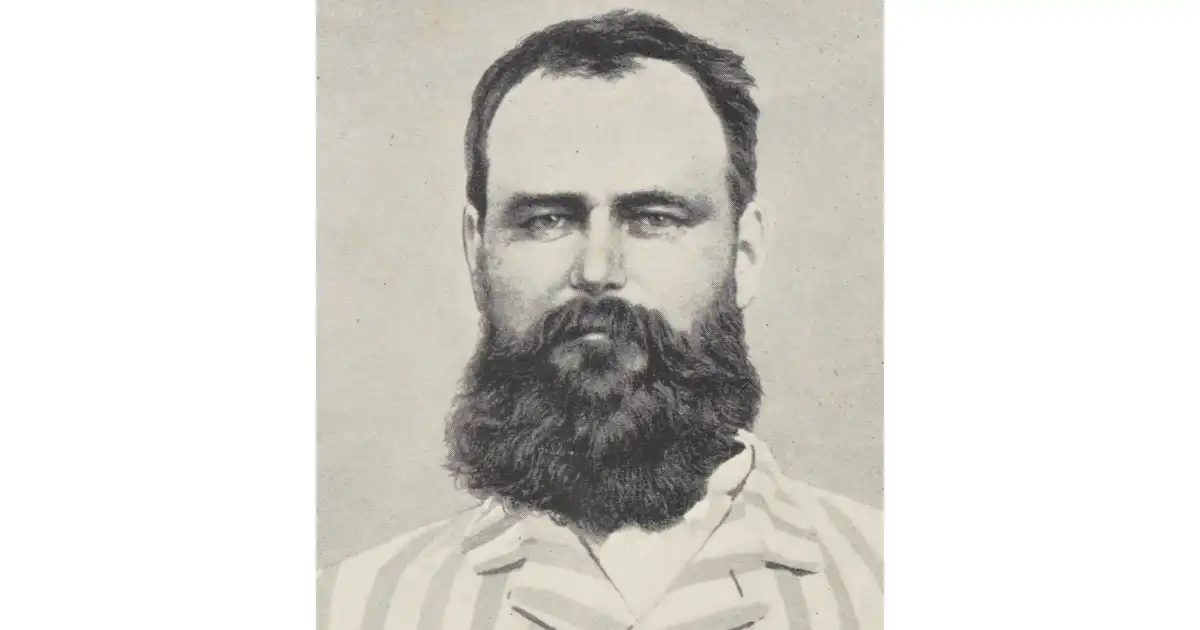
David William Gregory, better known as Dave Gregory, was an Australian cricketer and cricket administrator who became the first captain of Australia’s national Test team. Born on 15 April 1845 in New South Wales, he led Australia in its first three recognized Test matches against England, played between 1877 and 1879. His career also included the first Australian cricket tour of England in 1878 and a prominent role in the Sydney cricket riot of 1879. Beyond the cricket field, Gregory worked in the New South Wales public service and helped organize Australian cricket during its formative years.
Australian Dictionary of Biography
+1
David Gregory Quick Facts
| Detail | Information |
|---|---|
| Full name | David William Gregory |
| Common name | Dave Gregory |
| Date of birth | 15 April 1845 |
| Birthplace | Wollongong, New South Wales, Australia |
| Nationality | Australian |
| Profession | Cricketer, cricket administrator, public servant |
| Batting style | Right-handed |
| Bowling style | Round-arm, right-arm fast |
| Primary role | Batter |
| Test debut | Australia vs England, 15 March 1877 |
| Last Test | Australia vs England, January 1879 |
| Test matches | 3 |
| Test runs | 60 |
| Test batting average | 20.00 |
| Highest Test score | 43 |
| First-class matches | 41 |
| First-class runs | 889 |
| First-class highest score | 85 |
| Major distinction | First captain of Australia’s Test team |
| Father | Edward William Gregory |
| Mother | Mary Anne Gregory, née Smith |
| Education | St James Model School, Sydney |
| Date of death | 4 August 1919 |
| Age at death | 74 |
David Gregory
Player identity needs reviewEach format uses one source consistently. Recorded-only figures are labelled separately.
This player link is not safely connected yet. No statistics have been changed.
Sources: Australian Dictionary of Biography and CricketArchive.
Australian Dictionary of Biography
+1
David Gregory’s Early Life, Family and Education
Birth and family background
David William Gregory was born on 15 April 1845 in the Wollongong area of New South Wales, Australia. He was the son of Edward William Gregory, a bootmaker and keen cricketer, and Mary Anne Gregory, née Smith.
Cricket was a significant part of the Gregory family’s history. Edward William had eight sons, five of whom represented New South Wales in intercolonial or international matches during the nineteenth century. Over subsequent generations, approximately 20 of his descendants represented New South Wales in cricket and other sports.
Australian Dictionary of Biography
+1
His family connections included several notable cricketers:
- Edward James (Ned) Gregory: His brother, who played representative cricket and later became curator of the Sydney Cricket Ground.
- Charles Smith Gregory: His brother and another member of the family’s cricketing tradition.
- Arthur Gregory: His brother, who also played for New South Wales.
- Syd Gregory: His nephew, who later became an Australian Test cricketer.
The family’s contribution extended beyond one generation, making the Gregory name an important part of early Australian cricket history.
Australian Dictionary of Biography
+1
Education and early career
Gregory attended St James Model School in Sydney. In 1861, he entered the New South Wales public service, joining the Auditor-General’s Department. His professional life therefore developed alongside his cricket career rather than being limited to sport.
Later, he became an inspector of public accounts and subsequently worked as paymaster in the Treasury. He retired from public service in 1908.
Australian Dictionary of Biography
+1
David Gregory’s Domestic Cricket Career
Gregory began playing significant representative cricket for New South Wales in 1866, when he appeared in an intercolonial match against Victoria. He played during a period when Australian cricket was developing its organized domestic structure and before international Test cricket had formally begun.
He represented New South Wales through the 1860s, 1870s and early 1880s. CricketArchive records 41 first-class matches across his career, although historical databases can differ in how they classify matches from this early period.
Australian Dictionary of Biography
+1
First-class career statistics
| Statistic | Record |
|---|---|
| Matches | 41 |
| Runs | 889 |
| Batting average | 14.57 |
| Highest score | 85 |
| Half-centuries | 5 |
| Centuries | 0 |
| Wickets | 29 |
| Best bowling | 5/55 |
| Bowling average | 19.24 |
Source: CricketArchive’s historical player record.
CricketArchive
Gregory was not known primarily for exceptionally high batting averages. His importance came from his experience, leadership and involvement in the early development of representative cricket. His first-class record also shows that he contributed with the ball, taking 29 wickets and recording one five-wicket innings.
David Gregory and the First Test Match in Cricket History


4
Australia vs England, March 1877
The first recognized Test match between Australia and England took place at the Melbourne Cricket Ground from 15 to 19 March 1877. Gregory captained Australia, making him the first captain of the Australian Test team.
IMG Cricket
+1
The match was played over four days of actual play, with rest days, and used the conventions of nineteenth-century cricket. Australia won by 45 runs, creating a landmark result in the history of international cricket.
First Test match snapshot
| Detail | Record |
|---|---|
| Match | Australia vs England, first Test |
| Dates | 15–19 March 1877 |
| Venue | Melbourne Cricket Ground |
| Australian captain | Dave Gregory |
| England captain | James Lillywhite Jr. |
| Australia, first innings | 245 |
| England, first innings | 196 |
| Australia, second innings | 104 |
| England, second innings | 108 |
| Result | Australia won by 45 runs |
IMG Cricket
+1
Gregory scored one run in Australia’s first innings and three in the second. His individual batting contribution was modest, but his place in cricket history was established through the captaincy of this inaugural Test.
The match also featured Charles Bannerman’s 165, the first century in Test cricket, and Tom Kendall’s seven-wicket performance in England’s second innings. Those performances helped Australia secure the historic win.
IMG Cricket
+1
Gregory’s role in the beginning of Test cricket
Gregory’s significance is best understood in its historical context. International cricket was still in its infancy, and the first Australia–England contests helped establish the format and the sporting rivalry that later became central to cricket.
As captain, Gregory represented a developing Australian cricketing identity at a time when the colonies were still separate political entities. His role connected the practical demands of leading a team with the larger emergence of Australian cricket as a competitive force.
David Gregory’s Test Career and Captaincy Record
Gregory appeared in three Test matches, all against England, and captained Australia in each one. His international career was brief, but his leadership record included two wins and one defeat.
myKhel
+1
Test batting and bowling statistics
| Test statistic | Record |
|---|---|
| Matches | 3 |
| Batting innings | 5 |
| Runs | 60 |
| Batting average | 20.00 |
| Highest score | 43 |
| Centuries | 0 |
| Half-centuries | 0 |
| Wickets | 0 |
Source: CricketArchive.
CricketArchive
His highest Test score was 43, made against England in the second Test at Melbourne from 31 March to 4 April 1877. Australia lost that match by four wickets.
Arcsnet Wiki
+1
Gregory’s Test statistics were not outstanding by modern standards, but judging his contribution solely through runs and averages would overlook the significance of his leadership during cricket’s earliest international era.
Captain of Australia’s first three Tests
Gregory led Australia in the two Tests played in 1877 and again when England returned in January 1879. He was succeeded as Australian Test captain by Billy Murdoch.
His distinction is unusually clear: all three of his Test appearances came as captain. This makes his international record inseparable from his role in establishing Australia’s first Test side.
Wikipedia
+1
Readers interested in his complete historical Test record can consult the David Gregory record at CricketArchive.
David Gregory’s 1878 Tour of England
One of Gregory’s most important achievements came in 1878, when he captained the first Australian team to tour England. The tour was organized with John Conway of Victoria and represented a major undertaking for Australian cricket.
Australian Dictionary of Biography
+1
Organizing the first Australian touring team
The team was assembled through player contributions, with each player providing £50 toward the tour’s financing. The group travelled from Australia to England and also played in America during the wider journey.
The tour included 37 matches. Australia won 13 of its 17 eleven-a-side games, according to the Australian Dictionary of Biography. These results helped establish the touring side as a serious opponent for English teams.
Australian Dictionary of Biography
+1
The famous victory at Lord’s
The tour’s defining result came against the Marylebone Cricket Club (MCC) at Lord’s on 27 May 1878. Australia defeated a respected English side in a performance that significantly improved the standing of Australian cricket in England.
The match is remembered as one of the important early victories in the development of international cricket. It helped demonstrate that Australian teams could compete successfully on English soil rather than simply participate in overseas tours.
Gregory’s captaincy during the tour gave him a role beyond the first Test match: he helped lead Australian cricket into a more organized and internationally respected era.
Australian Dictionary of Biography
+1
David Gregory and the Sydney Riot of 1879
Gregory’s career also became associated with one of the most turbulent episodes in early Australian cricket: the Sydney Riot of 1879.
On 8 February 1879, New South Wales played a touring England side at the Sydney Cricket Ground, then known as the Association Ground. Gregory captained New South Wales, while Lord Harris led the English team.
Wikipedia
+1
What caused the riot?
The immediate trigger was a controversial umpiring decision against Australian batter Billy Murdoch, who was given out by Victorian umpire George Coulthard. Some spectators believed the decision was unfair, and tensions escalated rapidly.
Spectators invaded the playing area, and violence broke out involving players and officials. The match was interrupted amid confusion and disorder. Accounts also discuss gambling-related allegations, but those allegations should be distinguished from the documented events on the field.
Wikipedia
+1
Gregory became a central figure because he insisted that the match could not proceed normally amid the dispute over the umpiring. The incident illustrated how regional rivalries, intense national sporting feeling and distrust of officiating could combine to destabilize a major cricket match.
Why the Sydney Riot matters
The riot is an important episode in cricket history because it exposed the tensions surrounding the sport’s early international development. Gregory’s involvement is a significant part of his biography, alongside his achievements as a Test captain and touring-team leader.
David Gregory’s Career Timeline
| Year | Career milestone |
|---|---|
| 1845 | Born in New South Wales, Australia |
| 1861 | Joined the New South Wales public service |
| 1866 | Made his representative cricket appearance for New South Wales against Victoria |
| 1877 | Captained Australia in the first recognized Test against England |
| 1877 | Led Australia in its first two Tests against England |
| 1878 | Captained the first Australian team to tour England |
| 1878 | Led Australia in its famous victory over MCC at Lord’s |
| 1879 | Captained Australia in his third and final Test |
| 1879 | Captained New South Wales during the Sydney Riot |
| 1883–1889 | Served as secretary of the New South Wales Cricket Association |
| 1908 | Retired from public service |
| 1919 | Died on 4 August |
Australian Dictionary of Biography
+1
David Gregory’s Work in Cricket Administration
Gregory’s contribution to cricket continued beyond his playing career. From 1883 to 1889, he served as secretary of the New South Wales Cricket Association. His administrative work followed years of experience playing representative cricket and organizing the 1878 English tour.
This combination of playing, captaincy and administration made him an important figure in the early organization of Australian cricket. He was involved not only in the results achieved by teams but also in the structures that helped the sport develop.
Australian Dictionary of Biography
+1
David Gregory’s Personal Life and Later Years
Gregory’s life extended well beyond cricket. His work in the public service continued through several stages of his professional career, and he retired from the Treasury in 1908.
Historical biographical records identify three marriages and a large family. The Australian Dictionary of Biography reports that he was survived by children from his first and second marriages and by his third wife, Ellen née Hillier. Family details should be read in their historical context, as records from the nineteenth century often describe family relationships differently from modern biographies.
Australian Dictionary of Biography
+1
Gregory died on 4 August 1919, aged 74. His death marked the end of the life of a man who had witnessed the transition from colonial representative cricket to the beginnings of organized international Test cricket.
Australian Dictionary of Biography
+1
David Gregory’s Records and Historical Significance
Gregory’s most important achievements are linked to leadership and cricket history rather than exceptionally high individual batting totals.
| Achievement | Significance |
|---|---|
| First Australian Test captain | Led Australia in the first recognized Test match in 1877 |
| Captain in three Tests | Captained Australia in all three of his Test appearances |
| Two Test victories | Australia won two of the three matches he captained |
| First Australian tour of England | Led the 1878 touring team |
| Victory at Lord’s | Captained Australia in the important 1878 win over MCC |
| Cricket administration | Served as secretary of the New South Wales Cricket Association from 1883 to 1889 |
Australian Dictionary of Biography
+2
For a player whose Test career lasted only three matches, these distinctions give a much clearer picture of his place in cricket history than his batting average alone.
Explore the complete cricket player statistics database
Start typing Player B, choose a result, then compare instantly from cached career summaries. Compare David Gregory
Player A identity needs review
Frequently Asked Questions About David Gregory
Who was David Gregory in Australian cricket?
David William Gregory, known as Dave Gregory, was an Australian cricketer and the first captain of Australia’s Test team. He led the side in its first three recognized Tests against England.
When was David Gregory born?
He was born on 15 April 1845 in the Wollongong area of New South Wales, Australia.
Australian Dictionary of Biography
+1
How many Test matches did David Gregory play?
Gregory played three Test matches, all against England, between 1877 and 1879. He captained Australia in all three.
CricketArchive
+1
What was David Gregory’s highest Test score?
His highest Test score was 43, made against England in the second Test at Melbourne in 1877.
Arcsnet Wiki
+1
Did David Gregory captain Australia in the first Test match?
Yes. Gregory captained Australia against England at the Melbourne Cricket Ground from 15 to 19 March 1877. Australia won by 45 runs.
IMG Cricket
+1
What was David Gregory’s role in the 1878 England tour?
He captained the first Australian team to tour England in 1878. The tour included a notable victory over MCC at Lord’s, helping strengthen the reputation of Australian cricket.
Australian Dictionary of Biography
+1
What was the Sydney Riot of 1879?
It was a major disturbance during a New South Wales match against a touring England team on 8 February 1879. The controversy followed Billy Murdoch’s disputed dismissal, and Gregory was captain of New South Wales.
Conclusion
David Gregory, widely known as Dave Gregory, holds a special place in cricket history as Australia’s first Test captain. He led Australia in the inaugural Test match against England in Melbourne in March 1877, helping establish the foundation of one of the sport’s greatest international rivalries. His leadership continued during Australia’s historic 1878 tour of England, which helped demonstrate the strength of Australian cricket on the international stage.
Beyond his achievements as a cricketer, Gregory contributed to the development of the game through his administrative work with the New South Wales Cricket Association. His legacy is also connected to the famous Gregory cricketing family, which produced several notable players. Although he played in a very different era from modern cricket, Dave Gregory remains an important figure in the history of Australian cricket and an enduring symbol of its early international success.