
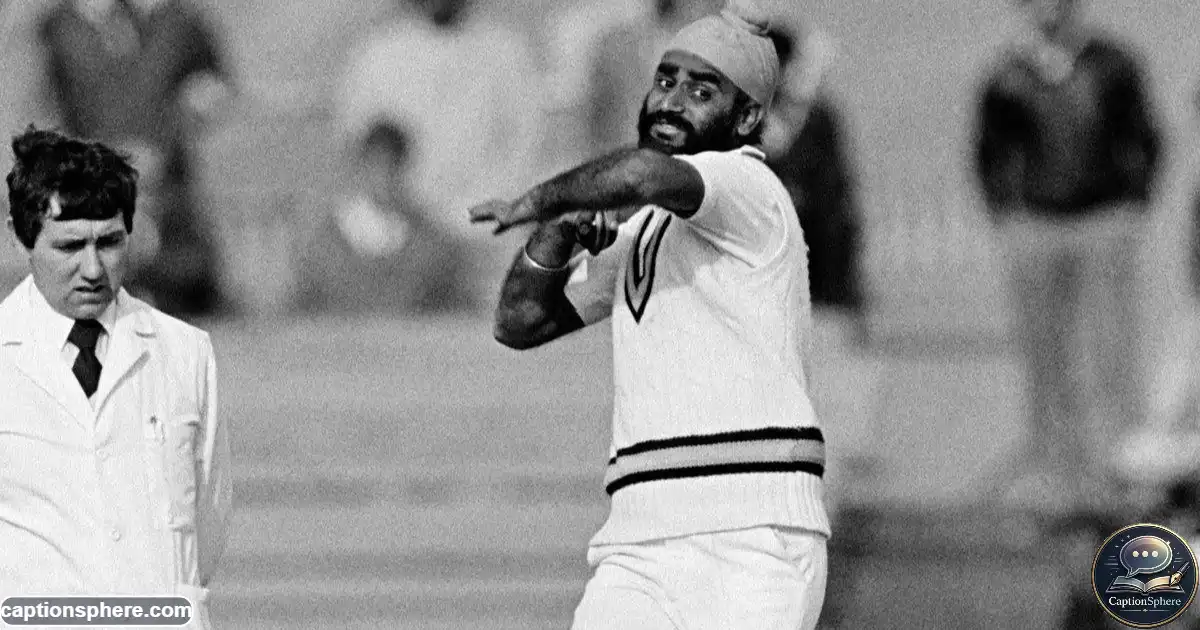
Balwinder Singh Sandhu is a former Indian international cricketer best remembered as a member of India’s 1983 Cricket World Cup-winning team. Born on 3 August 1956 in Bombay, now Mumbai, Maharashtra, Sandhu was a right-handed lower-order batter and right-arm medium-fast bowler whose main strength was conventional swing. He represented India in 8 Tests and 22 ODIs between 1982 and 1984.
His most famous moment came at Lord’s on 25 June 1983, when he bowled West Indies opener Gordon Greenidge with an inswinging delivery in the World Cup final. Sandhu also made an important contribution with the bat, sharing a last-wicket partnership with Syed Kirmani that helped India reach 183. India eventually defeated the West Indies by 43 runs.
Sandhu’s international career was relatively short, but his influence on Indian cricket continued through coaching. He subsequently worked with Mumbai, Punjab, the National Cricket Academy and other domestic programmes, and later became involved with the Indian Cricket League.
Identity note: This article concerns the 1956-born 1983 World Cup winner. A different Indian cricketer named Balwinder Singh Sandhu was born in 1987 and also played for Mumbai.
Balwinder Sandhu Career Stats
| Format | Career | Matches | Innings | Runs | HS | Bat Avg | 50s | 100s | Wickets | BBI | Bowl Avg |
|---|---|---|---|---|---|---|---|---|---|---|---|
| TESTReconciled source snapshot | 1983–1983 | 8 | 11 | 214 | 71 | 30.57 | 2 | 0 | 10 | 3/87 | 55.70 |
| ODIReconciled source snapshot | 1982–1984 | 22 | 7 | 51 | 16* | 12.75 | 0 | 0 | 16 | 3/27 | 47.68 |
This compact table is rendered directly from the shared per-format source selection; recorded-only rows are explicitly labelled. Detailed opponent, venue, year and dismissal analysis remains on the full stats page.
Balwinder Sandhu
/cricket-player/balwinder-sandhu/Each format uses one source consistently. Recorded-only figures are labelled separately.
Reconciled source snapshot
Reconciled source snapshot
Balwinder Sandhu Quick Facts
| Category | Details |
|---|---|
| Full name | Balwinder Singh Sandhu |
| Born | 3 August 1956 |
| Birthplace | Bombay, now Mumbai, Maharashtra, India |
| Nationality | Indian |
| Role | Bowler / lower-order batter |
| Batting style | Right-handed |
| Bowling style | Right-arm medium-fast |
| International career | 1982–1984 |
| Test matches | 8 |
| Test wickets | 10 |
| Test runs | 214 |
| ODI matches | 22 |
| ODI wickets | 16 |
| ODI runs | 51 |
| First-class matches | 55 |
| First-class wickets | 168 |
| First-class runs | 1,003 |
| Major achievement | 1983 Cricket World Cup winner |
| Domestic team | Bombay/Mumbai |
| Famous wicket | Gordon Greenidge, 1983 World Cup final |
| Coaching work | Mumbai, Punjab, NCA and other programmes |
Career statistics are recorded by CricketArchive and other statistical databases.
Early Life and Cricket Development
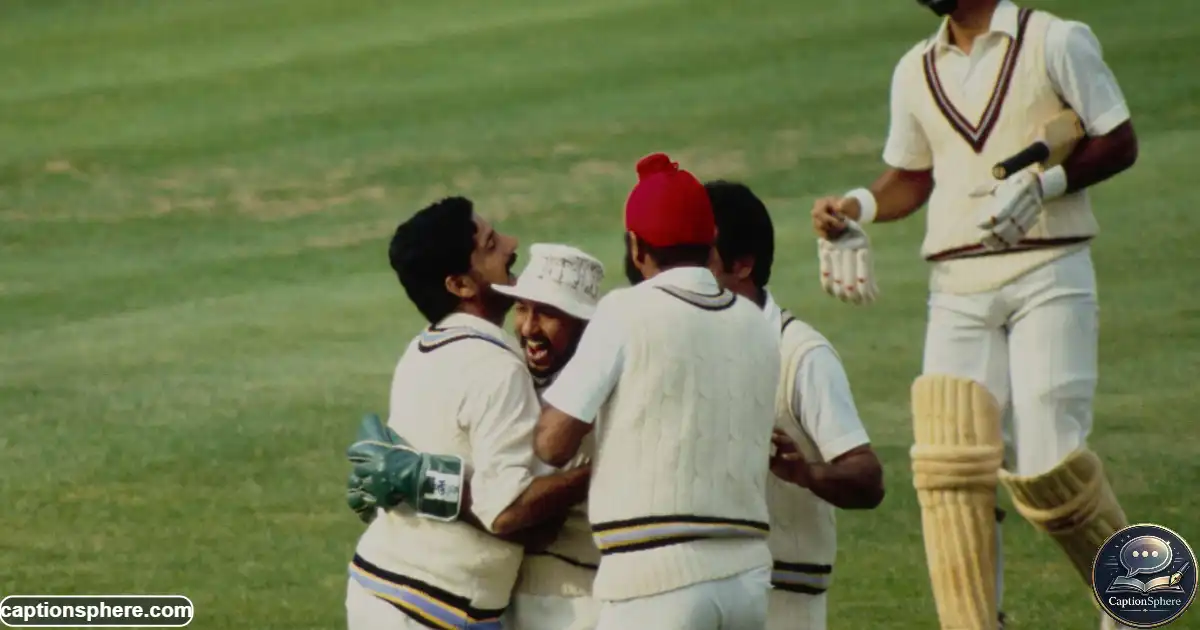
Sandhu was considered a relatively late starter in cricket. His early opportunity came when former first-class cricketer Yeshwant “Baba” Sidhaye noticed him at a summer coaching camp. He later trained under renowned Mumbai coach Ramakant Achrekar and first-class player Hemu Dalvi.
His development was strongly connected with Mumbai’s competitive cricket environment. Dalvi, in particular, was known for his work with young cricketers and coached Sandhu at Jhunjhunwala College. Sandhu later credited Dalvi’s understanding of swing bowling as an important influence on his own development.
Rather than entering international cricket as an established star, Sandhu built his reputation through domestic cricket and strong performances for Bombay.
Balwinder Sandhu’s Domestic Cricket Career
Sandhu made his first-class debut for Bombay during the 1980–81 season. His opportunity came when regular opening bowler Karsan Ghavri was away with the Indian team.
His debut against Gujarat immediately attracted attention: he took nine wickets. Later in the same season, he played a major role against Delhi in the Ranji Trophy final, reducing Delhi to 18 for five and finishing the match with nine wickets. He ended that season with 25 wickets at an average of 18.72.
His domestic progress continued into the early 1980s. During the 1982–83 Duleep Trophy, playing for West Zone against South Zone, Sandhu took eight wickets and scored 56 runs while batting at No. 11. A five-wicket haul in the Irani Trophy further strengthened his case for international selection.
By the time he reached India’s Test squad, Sandhu had established himself as a useful swing bowler who could also contribute runs from the lower order.
International Debut for India
Sandhu made his ODI debut against Pakistan at Gujranwala on 3 December 1982. His Test debut followed against Pakistan at Hyderabad in January 1983.
His Test opportunity came after Madan Lal suffered a heel-bone injury. Sandhu entered the fourth Test and immediately made an impact, dismissing Mohsin Khan and Haroon Rashid with successive deliveries.
The match, however, became famous for Pakistan’s enormous partnership between Javed Miandad and Mudassar Nazar. Sandhu subsequently showed his batting ability by scoring 71 at No. 9, making him more than just a specialist bowler. His Test career eventually produced 214 runs at an average of 30.57.
Sandhu’s Batting Contributions for India
Although Sandhu was primarily selected as a bowler, his batting became an unexpected asset.
His 71 on Test debut remains his highest Test score. He also scored 68 against the West Indies at Bridgetown in 1983, contributing after India had suffered a batting collapse.
Across eight Tests, he scored:
- 214 runs
- Average of 30.57
- Highest score of 71
- Two fifties
His ODI batting numbers were more modest, with 51 runs from 22 matches, but he was frequently used in the lower order.
Balwinder Sandhu and the 1983 Cricket World Cup
The defining chapter of Sandhu’s playing career was the 1983 Cricket World Cup.
India entered the tournament without the established record of the dominant West Indies side. Sandhu was part of Kapil Dev’s squad and appeared in all eight of India’s World Cup matches. He took eight wickets at 37.12, with best World Cup figures of 2/26 against Australia.
His role was particularly valuable because his bowling style relied on movement through the air. Sandhu himself later described swing bowling as the foundation of his method.
India reached the final at Lord’s, where they faced the defending champions, West Indies.
Balwinder Sandhu in the 1983 World Cup Final
The 1983 World Cup final became the match most closely associated with Sandhu.
India batted first and were dismissed for 183. Sandhu came to the crease at No. 11 when India were 161 for nine. He and wicketkeeper Syed Kirmani added 22 runs, helping India reach a more competitive total.
The partnership mattered because India needed every run against a West Indies side containing some of the greatest fast bowlers of the era.
When West Indies began their chase of 184, Sandhu opened the bowling attack.
The Gordon Greenidge Wicket
One of the most famous deliveries in World Cup history came from Sandhu.
West Indies opener Gordon Greenidge was expecting the ball to move away but was beaten by Sandhu’s inswinger. Greenidge left the delivery, only for the ball to move back into the stumps and bowl him.
The dismissal gave India an early breakthrough and became Sandhu’s signature moment.
Sandhu later explained that the delivery was particularly effective because of its angle, movement and late dip. He had already dismissed Greenidge with a similar type of delivery earlier in the tournament.
India eventually dismissed the West Indies for 140, winning the final by 43 runs and claiming their first men’s Cricket World Cup title. Sandhu finished with 2/32 in the final.


Why Sandhu’s 1983 Final Performance Matters
Sandhu’s contribution to the final was not limited to one wicket.
He:
- Helped India reach 183 through the last-wicket partnership with Kirmani.
- Took the crucial early wicket of Gordon Greenidge.
- Later dismissed Faoud Bacchus.
- Finished with 2/32.
- Played a role in India’s first World Cup championship.
The famous Greenidge dismissal has subsequently become one of the most recognizable moments from India’s 1983 triumph.
Test Career After the World Cup
Sandhu continued to play Test cricket after the World Cup. His final Test came against the West Indies at Ahmedabad in November 1983.
He took one wicket in that match, while Kapil Dev produced remarkable figures of 9/83. Sandhu’s Test career eventually ended with eight matches and 10 wickets.
His international career lasted only a few seasons. His final ODI came against Pakistan at Sialkot on 31 October 1984.
Balwinder Sandhu’s First-Class Records
Although his international statistics were relatively modest, Sandhu’s first-class record was substantially stronger.
According to CricketArchive, he played 55 first-class matches, scoring 1,003 runs and taking 168 wickets. His best first-class bowling figures were 6/64, and he took five five-wicket hauls.
His first-class batting included eight fifties, with a highest score of 98.
| Format | Matches | Runs | Highest | Wickets | Best Bowling |
|---|---|---|---|---|---|
| Tests | 8 | 214 | 71 | 10 | 3/87 |
| ODIs | 22 | 51 | 16* | 16 | 3/27 |
| First-class | 55 | 1,003 | 98 | 168 | 6/64 |
| List A | 42 | 159 | 32* | 36 | 3/27 |
Balwinder Sandhu’s 98 Against Tamil Nadu
One of Sandhu’s notable post-World Cup domestic performances came in the 1984–85 Ranji Trophy season, when he scored 98 against Tamil Nadu.
His innings was important in helping Bombay establish a first-innings advantage in the Ranji Trophy semifinal. It was also another example of the useful batting ability that had been evident during his international career.
Bowling Style and Strengths
Sandhu was a right-arm medium-fast swing bowler.
His greatest weapon was the ability to move the ball in the air. He could use the angle from around the wicket and generate late movement, making him especially dangerous when conditions assisted swing.
In a BCCI interview, Sandhu described swing as the central feature of his bowling and explained that he concentrated on bowling in the correct areas rather than trying too many variations.
His method was based on:
- swing movement
- line and length
- patience
- seam-friendly conditions
- attacking the stumps
- forcing batters to play
The Greenidge dismissal in the 1983 final remains the clearest illustration of this approach.
Balwinder Sandhu as a Cricket Coach
After his playing career, Sandhu developed an extensive coaching career.
He worked with Mumbai and Punjab, served in coaching roles at the National Cricket Academy, and worked with other domestic programmes. He also coached in Kenya during the 1990s.
In 2001, Sandhu was appointed chief coach at the National Cricket Academy, according to historical NCA records.
His coaching philosophy was heavily influenced by technical fundamentals. During a visit to a US cricket academy, he demonstrated different grips and deliveries and emphasized the importance of mastering technique before developing individual creativity.
Coaching Journey Across Indian Domestic Cricket
Sandhu’s coaching career took him through several Indian cricket centres.
In a 2021 interview, he recalled working in:
- Maharashtra
- National Cricket Academy
- Odisha
- Baroda
- Madhya Pradesh
- Mumbai
- Punjab
He also described his involvement with coach education and his experience with the Indian Cricket League.
His time at Mumbai was particularly notable. Sandhu recalled a period in which the side won numerous competitions and captured the Ranji Trophy during his tenure.
He also served as a coach in the Indian youth-development system, including work connected with Under-19 cricket. BCCI records from 2016 list him as a coach on a Bihar Under-19 camp.
Balwinder Sandhu and the Indian Cricket League
Sandhu later became associated with the Indian Cricket League (ICL), the now-defunct professional cricket competition.
He joined the ICL after Kapil Dev invited him to become involved. Sandhu explained in a later interview that he had hoped to receive an opportunity as India’s bowling coach but instead joined the ICL.
This period formed part of his transition from international player to experienced cricket coach and mentor.
Balwinder Sandhu in the Film 83
Sandhu’s place in Indian cricket history also brought him into popular culture.
In the 2021 Hindi film 83, directed by Kabir Khan and based on India’s 1983 World Cup victory, Punjabi singer and actor Ammy Virk portrayed Balwinder Singh Sandhu. Contemporary reporting also noted that Sandhu helped Virk prepare for the role.
The film introduced Sandhu’s famous Greenidge dismissal and his role in the 1983 team to a new generation of viewers.
Balwinder Sandhu’s Life After International Cricket
Sandhu has remained connected with cricket long after his playing career ended.
In 2025, he continued to appear in Indian cricket media as a former World Cup winner and commentator on contemporary cricket issues. He discussed topics including Jasprit Bumrah’s workload and India’s performances in Test cricket.
These appearances reflect his continuing role as an experienced former international cricketer rather than an active professional player.
As of September 2026, Sandhu is 70 years old, based on his 3 August 1956 date of birth.
Balwinder Sandhu vs Madan Lal: 1983 World Cup Roles
Both Balwinder Sandhu and Madan Lal were important members of India’s 1983 World Cup bowling group, but their contributions were different.
| Feature | Balwinder Sandhu | Madan Lal |
|---|---|---|
| Main bowling type | Right-arm medium-fast swing | Right-arm medium-fast |
| World Cup final wickets | 2 | 3 |
| Famous final moment | Bowled Gordon Greenidge | Dismissed Viv Richards and others |
| Batting position | Lower order, No. 11 in final | Lower order |
| Defining contribution | Early breakthrough and final partnership | Middle-overs wickets |
| Overall role | Swing bowler and lower-order contributor | Seam bowler and major wicket-taker |
This comparison describes their documented roles in the 1983 campaign rather than ranking either player. Sandhu’s World Cup figures were 8 wickets in 8 matches, while his final figures were 2/32.
Balwinder Sandhu Career Timeline
1956
Born in Bombay, now Mumbai, Maharashtra.
Late 1970s
Developed through Mumbai cricket and coaching under figures including Yeshwant Sidhaye, Ramakant Achrekar and Hemu Dalvi.
1980–81
Made his first-class debut for Bombay and took nine wickets against Gujarat.
1980–81
Produced another nine-wicket performance against Delhi in the Ranji Trophy final.
1982–83
Impressed in the Duleep Trophy and Irani Trophy.
December 1982
Made his ODI debut against Pakistan at Gujranwala.
January 1983
Made his Test debut against Pakistan at Hyderabad and scored 71.
June 1983
Helped India win the Cricket World Cup and famously bowled Gordon Greenidge in the final.
1983–84
Continued playing Test and ODI cricket for India.
1984
Played his final ODI against Pakistan at Sialkot.
1984–85
Scored 98 against Tamil Nadu in the Ranji Trophy semifinal.
1990s
Played club cricket and undertook coaching work in Kenya.
2001
Served as chief coach at the National Cricket Academy.
2010s
Continued domestic and academy coaching, including BCCI development assignments.
2021
Discussed his coaching journey and Mumbai’s success in a Times of India interview.
2025
Continued contributing as a cricket analyst and former World Cup winner in Indian media.
2026
Age 70; remains best known historically for his contribution to India’s 1983 World Cup victory.
Balwinder Sandhu Awards and Major Achievements
- 1983 Cricket World Cup winner with India
- Indian Cricket Cricketer of the Year, 1983, as recorded in CricketArchive’s historical profile.
- 168 first-class wickets
- 1,003 first-class runs
- 10 Test wickets
- 16 ODI wickets
- Two wickets in the 1983 World Cup final
- Famous dismissal of Gordon Greenidge in the 1983 final
- Long coaching career after international cricket
Balwinder Sandhu Family, Education and Personal Life
Public sources contain considerably less consistently verifiable information about Sandhu’s private life than about his cricket career.
Some secondary biographical sites publish detailed claims about his wife, daughters, parents, schooling and university education. However, those details are not supported consistently by the strongest cricket sources, so they should not be presented as established facts without stronger primary or independent corroboration.
What is well documented is his Mumbai background and his development through the city’s cricket coaching network, particularly his association with Sidhaye, Achrekar and Hemu Dalvi.
This distinction is important because many online biography pages repeat personal details without showing their original evidence.
Balwinder Sandhu Net Worth and Salary
A reliable, authoritative public figure for Balwinder Sandhu’s current net worth or lifetime earnings is not established in the sources reviewed.
Online estimates should therefore not be presented as factual.
His playing career predates the modern IPL-era salary structure, and his later income from coaching, domestic appointments and other cricket activities is not sufficiently documented publicly to produce a trustworthy net-worth calculation.
Frequently Asked Questions
Compare Balwinder Sandhu
Player A is locked to this biographyStart typing Player B, choose a result, then compare instantly from cached career summaries.
Who is Balwinder Sandhu?
Balwinder Singh Sandhu is a former Indian international cricketer and member of India’s 1983 World Cup-winning team. He played eight Tests and 22 ODIs.
When was Balwinder Sandhu born?
He was born on 3 August 1956 in Bombay, now Mumbai, Maharashtra.
How old is Balwinder Sandhu in 2026?
Balwinder Sandhu is 70 years old in September 2026.
What is Balwinder Sandhu famous for?
He is best known for bowling Gordon Greenidge in the 1983 World Cup final and helping India defeat the West Indies to win the World Cup.
How many Tests did Balwinder Sandhu play?
He played 8 Test matches for India and took 10 wickets. He also scored 214 runs.
How many ODIs did Balwinder Sandhu play?
He played 22 ODIs, taking 16 wickets and scoring 51 runs.
How many wickets did Balwinder Sandhu take in the 1983 World Cup?
He took 8 wickets in 8 matches during the 1983 World Cup.
How many wickets did Sandhu take in the 1983 World Cup final?
He took 2 wickets for 32 runs, including the famous dismissal of Gordon Greenidge.
What was Balwinder Sandhu’s highest Test score?
His highest Test score was 71, made on his Test debut against Pakistan.
What was Balwinder Sandhu’s first-class record?
He played 55 first-class matches, scoring 1,003 runs and taking 168 wickets. His best bowling was 6/64.
Was Balwinder Sandhu a coach?
Yes. After his playing career, he worked with Mumbai, Punjab, the National Cricket Academy and other cricket-development programmes. He also coached in Kenya during the 1990s.
Who played Balwinder Sandhu in 83?
Punjabi actor and singer Ammy Virk portrayed Sandhu in Kabir Khan’s 2021 film 83.
Conclusion
Balwinder Sandhu’s international career was short, but his place in Indian cricket history is firmly connected with one of the sport’s most important matches. His 1983 World Cup final wicket of Gordon Greenidge, his last-wicket partnership with Syed Kirmani and his two wickets in the final all contributed to India’s first men’s World Cup triumph.
His wider career tells a more complete story. Sandhu developed through Mumbai’s domestic system, became a successful first-class bowler, represented India in Tests and ODIs, and then moved into coaching and player development. His 168 first-class wickets, international experience and long coaching career show that his contribution to cricket extended well beyond the famous delivery at Lord’s.