
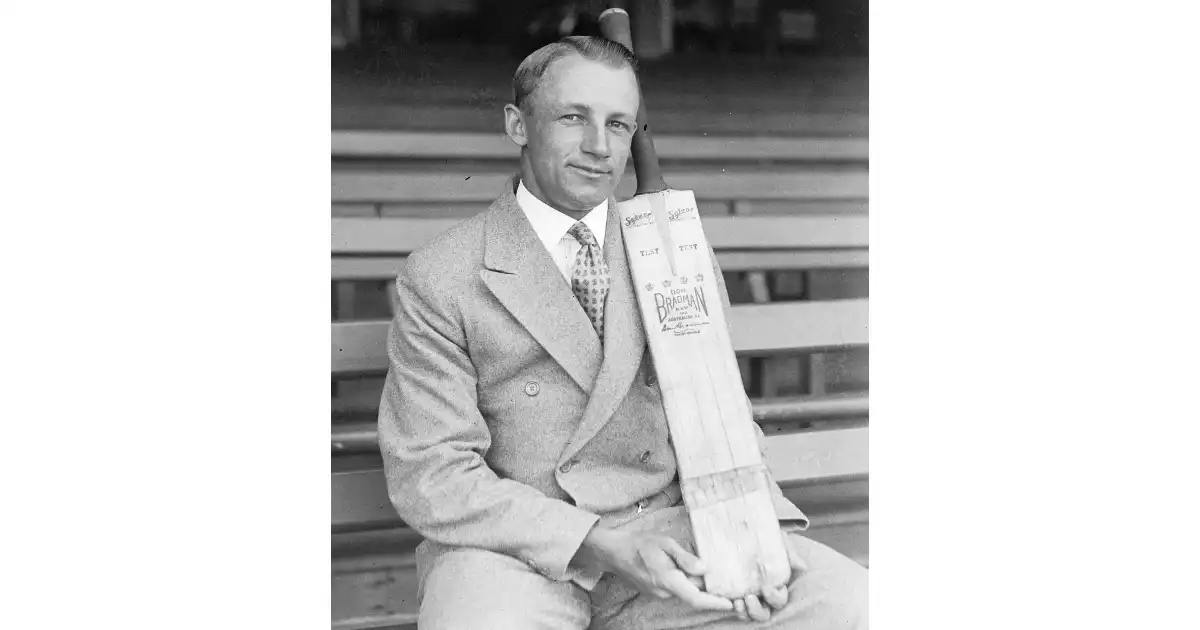
Sir Donald George Bradman, universally known as Don Bradman or “The Don,” was an Australian cricketer whose extraordinary batting records established him as one of the most influential figures in cricket history. Born on 27 August 1908 in Cootamundra, New South Wales, Bradman scored 6,996 runs in 52 Test matches at an average of 99.94, a statistical achievement that remains the defining feature of his career. He transformed a childhood cricket game played with a golf ball and a stump into a career of remarkable international success, captained Australia’s famous 1948 “Invincibles,” and later became a prominent cricket administrator and selector. His life also included business challenges, family responsibilities, wartime illness and decades of service to Australian cricket.
ICC
+2
Don Bradman Career Stats
| Format | Career | Matches | Innings | Runs | HS | Bat Avg | 50s | 100s | Wickets | BBI | Bowl Avg |
|---|---|---|---|---|---|---|---|---|---|---|---|
| TESTCareer source | 1928–1948 | 52 | 80 | 6,996 | 334 | 99.94 | — | — | 2 | 1/8 | 36.00 |
This compact table is rendered directly from the shared per-format source selection; recorded-only rows are explicitly labelled. Detailed opponent, venue, year and dismissal analysis remains on the full stats page.
Don Bradman
/cricket-player/don-bradman/Each format uses one source consistently. Recorded-only figures are labelled separately.
Career source
Don Bradman Quick Facts
| Detail | Information |
|---|---|
| Full name | Sir Donald George Bradman |
| Popular name | Don Bradman |
| Nickname | The Don |
| Date of birth | 27 August 1908 |
| Place of birth | Cootamundra, New South Wales, Australia |
| Date of death | 25 February 2001 |
| Age at death | 92 |
| Nationality | Australian |
| Profession | Cricketer, stockbroker, cricket administrator and selector |
| Playing role | Batter |
| Batting style | Right-handed |
| Height | Approximately 170 cm (5 ft 6¾ in) |
| Wife | Jessie Martha Menzies |
| Children | John Bradman, later known as John Bradsen, and daughter Shirley; their first child, Ross, died in infancy |
| International career | 1928–1948 |
| Test matches | 52 |
| Test runs | 6,996 |
| Test batting average | 99.94 |
| Test centuries | 29 |
| Highest Test score | 334 |
| First-class matches | 234 |
| First-class runs | 28,067 |
| First-class centuries | 117 |
| Highest first-class score | 452 not out |
| Major honour | Knight Bachelor, 1949 |
| Other honour | Companion of the Order of Australia, 1979 |
| Famous team | Australia’s 1948 Invincibles |
| Final Test | Fifth Ashes Test at The Oval, August 1948 |
Sources: ICC Hall of Fame, Australian Dictionary of Biography, State Library of South Australia and National Portrait Gallery of Australia.
ICC
+3
Don Bradman’s Early Life, Childhood and Family Background
Don Bradman was born on 27 August 1908 to George Bradman and Emily Bradman, née Whatman. He was the youngest of five children. His birthplace was Cootamundra, a town in New South Wales, but Bowral became the place most closely associated with his childhood and early cricket development.
In approximately 1910–1911, the family moved to Bowral in the Southern Highlands of New South Wales. His father worked as a carpenter after previously working in agriculture, while the family maintained an interest in sport and music. Bradman attended local schools and grew up in an environment where cricket was familiar through his father and maternal uncles.
Australian Dictionary of Biography
+1
The golf ball and water tank that shaped a cricket legend

One of the most famous stories about Bradman’s childhood concerns a simple practice game he invented at the family home on Shepherd Street in Bowral.
There was little organised cricket available to him as a very young child, so he developed his own training method:
- He used a shortened cricket stump as a bat.
- He hit a golf ball against the curved brick base of a water tank.
- He repeatedly practised controlling the ball as it rebounded.
- The exercise demanded quick reactions, precise timing and concentration.
This unusual routine is widely associated with the hand-eye coordination that later became one of his greatest strengths as a batter. It was not a substitute for organised coaching throughout his career, but it illustrates how he developed his skills before entering senior cricket.
Sport Australia Hall of Fame
+1
His first century and early cricket achievements
Bradman’s early performances quickly demonstrated that his ability extended well beyond a backyard game.
At approximately 11 years old, he scored 55 not out in his first competitive school match. The following season, he made 115 for his high school against Mittagong, scoring most of his team’s total of 156. He also showed promise as a fielder and bowler during his youth.
Australian Dictionary of Biography
+1
Another important influence was his father, George, who played local cricket. Bradman also benefited from the involvement of his maternal uncles, Richard and George, both associated with local cricket clubs. His mother, Emily, encouraged his interest by bowling to him after school.
Important early-life milestones
- 1910–1911: The family moved to Bowral.
- Around age 11: He scored 55 not out in a school match.
- Around age 12: He scored 115 against Mittagong.
- 1921: His father took him to the Sydney Cricket Ground to watch Australia play England in a Test match.
- 1925–1926: His performances for Bowral’s senior team began attracting wider attention.
The Sydney Cricket Ground subsequently became Bradman’s favourite ground.
Sport Australia Hall of Fame
+1
Don Bradman’s Parents, Siblings, Wife and Children
Bradman’s family life was important to him, although international fame created a constant demand for his time and attention. His marriage to Jessie Menzies lasted almost 65 years, and his experiences as a father included both profound loss and concern for his children’s privacy.
Parents and siblings
His parents were George Bradman and Emily Bradman. George had a background in farming and later worked as a carpenter in Bowral. Emily helped encourage her son’s early cricket practice.
Bradman had four siblings: brother Victor and sisters Islet, Lilian and Elizabeth May. His sister Lilian helped teach him piano, a skill he continued to enjoy throughout his life. Music became one of his interests away from cricket, and teammates sometimes appreciated his piano playing during tours.
Australian Dictionary of Biography
+1
Who was Don Bradman’s wife?

Don Bradman married Jessie Martha Menzies on 30 April 1932 at St Paul’s Church of England in Burwood, Sydney. The couple had known one another since childhood. Jessie had stayed with the Bradman family while attending school in Bowral.
The marriage attracted considerable public attention because Bradman was already a national sporting celebrity. Jessie became a significant source of personal support throughout his playing career, business life and later administrative work. She also travelled to England during the medical emergency that followed Bradman’s appendicitis in 1934.
Jessie died in 1997, four years before Bradman. Their long marriage is an important part of his biography because it extended across his rise to fame, retirement from international cricket and decades of public service.
Australian Dictionary of Biography
+2
Don Bradman’s children
Bradman and Jessie had three children, although only two survived infancy.
| Child | Verified biographical details |
|---|---|
| Ross Bradman | Born in October 1936; died two days after birth. |
| John Bradman | Born in July 1939; recovered fully after contracting polio at age 12. He pursued athletics and later became a law lecturer at the University of Adelaide. |
| Shirley Bradman | Born in April 1941; had cerebral palsy from birth. |
John later changed his surname to Bradsen in 1972, partly because of the difficulty of developing a separate identity while carrying one of Australia’s most famous sporting surnames. He eventually returned to the Bradman surname late in his father’s life.
Australian Dictionary of Biography
+1
These details are part of the documented history of the Bradman family. They should be discussed respectfully rather than treated as sensational personal-life material.
Don Bradman’s Education, Height and Interests Outside Cricket
Bradman attended Bowral Public School and Bowral Intermediate High School. He was considered a good student, particularly in mathematics, and passed the Intermediate certificate examination. Like many young Australians of his generation, he left school at 14 to begin employment.
His first job was as a clerk in a Bowral real estate office. His employer, Percy Westbrook, allowed him time to pursue cricket and other sporting activities. Bradman later worked for a Sydney sports-equipment retailer before establishing a more stable professional career in stockbroking.
Australian Dictionary of Biography
+1
Physical profile
- Height: Approximately 170 cm, or 5 feet 6¾ inches, according to the Australian Dictionary of Biography.
- Batting hand: Right-handed.
- Playing role: Batter.
- Other interests: Piano, tennis, golf, squash, table tennis and billiards.
Bradman won the South Australian squash championship in 1938 and was an accomplished golfer. His interests demonstrate that he was a keen sportsman beyond cricket, although batting remained his defining talent.
Australian Dictionary of Biography
+1
Don Bradman’s Domestic Cricket Career: Bowral, New South Wales and South Australia
Bradman’s rise was unusually rapid. His performances in regional cricket earned him opportunities in Sydney, followed by selection for New South Wales and Australia. He later moved to South Australia, where he combined playing with captaincy and long-term administrative involvement.
From Bowral cricket to St George
During the 1925–1926 season, Bradman became a regular member of Bowral’s town team. One of his notable early performances came against Wingello on 9 January 1926, when he scored 234. The match also brought him into contact with Bill O’Reilly, who would later become a leading Australian Test spin bowler.
Bradman’s regional performances led to an invitation to play for St George District Cricket Club in Sydney. He initially travelled by train for matches before moving to Sydney in September 1928 and working in his employer’s office during the week.
Australian Dictionary of Biography
+1
New South Wales and the Sheffield Shield breakthrough
Bradman made his first-class debut for New South Wales in the 1927–1928 season. In December 1927, he scored 118 against South Australia in his first Sheffield Shield innings.
His impact grew quickly. In January 1929, he scored 340 not out against Victoria, confirming his capacity to dominate strong domestic attacks. A year later, he produced the extraordinary 452 not out against Queensland that established a new world first-class individual scoring record at the time.
Australian Dictionary of Biography
+1
The 452 not out against Queensland

Performance snapshot
Competition
Sheffield Shield
Opposition
Queensland
Score
452 not out
Date
January 1930
Time at the crease
415 minutes
Source: Sport Australia Hall of Fame and Australian Dictionary of Biography.
Sport Australia Hall of Fame
+1
The innings was remarkable for its scale and speed. Bradman broke Bill Ponsford’s previous first-class record of 437, scoring 452 not out in 415 minutes. The mark stood until 1959, when it was surpassed by Hanif Mohammad.
The innings helped establish Bradman as a player whose domestic achievements could not be dismissed as the product of limited opposition or small-town cricket. His scoring record created the momentum for his selection in Australia’s Test team.
Sport Australia Hall of Fame
+1
Moving to South Australia
In 1934, Bradman accepted a professional opportunity with Adelaide stockbroker Harry Hodgetts. The arrangement offered him financial security while allowing him to continue playing cricket. Following his recovery from appendicitis, Bradman moved to Adelaide in 1935, joined Kensington Cricket Club and became captain of South Australia.
He captained South Australia’s Sheffield Shield side from 1935 until 1949. His role there extended beyond individual batting performances: he helped develop the state side, participated in selection and committee work, and maintained an association with South Australian cricket long after his international retirement.
Australian Dictionary of Biography
+1
Readers looking for the complete domestic record can use the player-statistics system for Bradman’s first-class cricket statistics.
View Don Bradman's complete first-class stats
Don Bradman’s International Career and Test Debut
Bradman made his Test debut for Australia against England at Brisbane on 30 November 1928. His international career continued through 1948, a period that included record-breaking Ashes series, the controversy of Bodyline, wartime interruption and the undefeated tour of England by the 1948 Australian team.
ICC
+1
Early Tests and selection setbacks
Bradman’s first Test was difficult. He scored poorly in both innings as England defeated Australia, and he was omitted from the second Test, serving as twelfth man. His response was immediate: in the third Test at Melbourne, he scored 79 and 112, becoming the youngest player at that time to make a Test century. He then scored 123 in the final Test of the series.
Those performances secured his place in the team and established a pattern that would define his career: early setbacks were often followed by substantial scoring.
Australian Dictionary of Biography
+1
Don Bradman’s Test career statistics
| Test batting record | Career figure |
|---|---|
| Matches | 52 |
| Innings | 80 |
| Runs | 6,996 |
| Batting average | 99.94 |
| Highest score | 334 |
| Centuries | 29 |
| Half-centuries | 13 |
| Career span | 1928–1948 |
Source: ICC Hall of Fame and ICC player profile.
ICC
+1
Bradman’s 99.94 average is unusual not simply because it is high, but because it was sustained across an international career of 52 Tests and 80 innings. He scored 29 Test centuries, including multiple double centuries and a triple century.
Explore Don Bradman's complete Test stats
The 1930 Ashes: Bradman becomes a world cricket sensation
Bradman’s 1930 tour of England was a defining moment. He scored 974 runs in the five-Test Ashes series at an average of 139.14. Across the entire tour, he made 2,960 first-class runs.
Three performances stand out:
- 236 at Worcester: A major innings in his first match in England.
- 254 at Lord’s: An innings Bradman later described as the technically best of his career.
- 334 at Headingley, Leeds: A new Test individual scoring record at the time.
His 334 at Headingley included 309 runs in a single day. He scored 105 before lunch and added another 115 between lunch and tea, making the innings a defining demonstration of his scoring power.
Australian Dictionary of Biography
+1
The series established Bradman as an international phenomenon. His ability to score rapidly and repeatedly forced opponents to reconsider their bowling and fielding plans, while his achievements became a source of national pride during the Great Depression.
Explore the complete cricket player statistics database
The 1932–33 Bodyline series
Bradman’s batting dominance contributed to England’s controversial use of Bodyline bowling during the 1932–1933 Ashes. Under captain Douglas Jardine, English fast bowlers, notably Harold Larwood, bowled short-pitched deliveries directed towards the body with a concentrated leg-side field designed to produce catches.
The tactic was intended to limit Bradman’s scoring and challenge Australia’s batting strength. It raised serious concerns about safety and sportsmanship, especially because players in that era had considerably less protective equipment than modern cricketers. The series created tensions not only between players but also between cricket administrators and the wider public.
National Museum of Australia
+2
Bradman missed the first Test because of illness. In Melbourne, he was dismissed for a first-ball duck in the first innings but answered with 103 not out in the second. Despite the controversy, he finished the series with an average of 56.57, still the highest among Australia’s players, while England won the series 4–1.
Australian Dictionary of Biography
+1
The Bodyline episode remains significant because it demonstrates how one batter’s dominance influenced cricket tactics and helped provoke debate about the limits of aggressive bowling.
The 1934 Ashes and the partnership with Bill Ponsford
Bradman returned to England in 1934 and continued to produce exceptional innings. At Headingley, he scored 304 in a match against England, sharing a 388-run fourth-wicket partnership with Bill Ponsford. Rain prevented Australia from forcing a result in that Test.
In the final Test at The Oval, Bradman and Ponsford added 451 runs for the second wicket. Bradman scored 244, and Australia won by 562 runs to regain the Ashes. These partnerships were important because they showed that his achievements were not limited to isolated individual innings; he could build huge stands that changed the direction of major matches.
Australian Dictionary of Biography
+1
Don Bradman’s captaincy and the 1936–37 Ashes comeback
Bradman became Australia’s captain in 1936. His first series as leader began badly, with England winning the opening two Tests. Questions were raised about his suitability for captaincy, but Australia recovered to win the series 3–2.
Bradman played a major role in the turnaround, scoring 270, 212 and 169 in successive victories. Australia became the first team to win an Ashes series after falling 2–0 behind. He also demonstrated tactical flexibility by rearranging the batting order on a difficult wet pitch to protect Australia’s strongest batters until conditions improved.
Australian Dictionary of Biography
+1
His captaincy was not universally admired. Some teammates regarded him as reserved and intensely competitive, while others respected his concentration and example. His leadership legacy therefore includes both exceptional results and a complex relationship with the personalities in his team.
The 1938 tour, injury and the interruption of war
Bradman captained Australia during the 1938 England tour. Australia retained the Ashes, although the final Test at The Oval became famous for England’s enormous victory and Len Hutton’s 364. Bradman fractured his ankle while demonstrating leg-spin bowling and could not bat in that match.
Australian Dictionary of Biography
+1
World War II then interrupted international cricket. Bradman served in Australia’s military forces, but health problems, including fibrositis and defective eyesight, led to his release from duties in 1941. The interruption cost him important playing years and made his eventual return to Test cricket uncertain.
Australian Dictionary of Biography
+1
The postwar return and Australia’s first series against India
Bradman returned for the 1946–47 Ashes against England despite continuing questions about his health. He scored 187 in the first Test at Brisbane and helped Australia win the series 3–0.
During the second Test in Sydney, Bradman and Sid Barnes shared a 405-run fifth-wicket partnership, with each scoring 234. It became a major first-class partnership record and highlighted Bradman’s capacity to return to elite form after years away from international cricket.
Australian Dictionary of Biography
+1
In 1947–48, India toured Australia for its first Test series there. Bradman scored his 100th first-class century, making 172 for an Australian XI against the tourists. Australia won the Test series 4–0, and Bradman then announced that the following tour of England would be his last.
Sport Australia Hall of Fame
+1
Don Bradman and the 1948 Invincibles Tour

The 1948 Australian tour of England became one of the most celebrated episodes in cricket history. Bradman captained a team that completed the tour without losing a match. Australia won four of the five Tests, with the remaining Test drawn, and the team became known as the Invincibles.
Sport Australia Hall of Fame
+1
Bradman’s own performances were central to the team’s success:
- He scored 138 in the first Test at Nottingham.
- He made 173 not out in the fourth Test at Headingley.
- In the Headingley match, Bradman and Arthur Morris added 301 runs for the second wicket.
- Australia completed an extraordinary chase by scoring more than 400 runs on the final day.
The team’s undefeated tour reflected more than Bradman’s individual batting. The squad included outstanding players such as Arthur Morris, Keith Miller, Ray Lindwall and wicketkeeper Don Tallon. Bradman combined a demanding approach to winning with the responsibility of guiding a strong team through a long overseas tour in the aftermath of World War II.
Australian Dictionary of Biography
+1
Don Bradman’s final Test: The Oval, 1948

Bradman’s final Test appearance took place at The Oval in August 1948. The crowd gave him a prolonged ovation as he walked out to bat. He needed only four runs to finish with a Test batting average of exactly 100.
On the second ball he faced, English leg-spinner Eric Hollies bowled him for a duck. Bradman therefore ended his Test career with 6,996 runs at an average of 99.94, four runs short of the 7,000-run milestone and the perfect average of 100.
ICC
+1
The ending has become one of cricket’s most enduring stories because the difference between 99.94 and 100 was just four runs. Yet the dismissal does not diminish the record: the 99.94 average remains an extraordinary benchmark in Test cricket.
Bradman continued to score heavily in first-class cricket after that Test, including centuries in his final three first-class innings in England. His final first-class match was a Sheffield Shield game against Victoria in March 1949.
Australian Dictionary of Biography
+1
Don Bradman’s Records, Milestones and Statistical Achievements
Bradman’s records are central to his historical reputation. His numbers span Test cricket, first-class cricket, Ashes series and domestic competition. The figures below distinguish his established career totals from records whose status can change over time.
| Record or milestone | Achievement |
|---|---|
| Test batting average | 99.94 |
| Test career runs | 6,996 |
| Test centuries | 29 |
| Highest Test score | 334 |
| 1930 Ashes runs | 974 at 139.14 |
| First-class career runs | 28,067 |
| First-class centuries | 117 |
| Highest first-class score | 452 not out |
| 1936–37 Ashes | Captained Australia to a 3–2 comeback after trailing 0–2 |
| 1948 England tour | Captain of the undefeated Invincibles |
| First-class century milestone | 100th century: 172 against an Australian XI’s Indian opposition in 1947–48 |
Sources: ICC, State Library of South Australia and Australian Dictionary of Biography.
ICC
+2
Why is Don Bradman’s 99.94 average so famous?
The number represents a sustained level of Test batting that has remained unmatched across a long international career. Bradman made 6,996 runs in 80 innings and scored 29 centuries. The fact that his final innings ended without the four runs required for an average of 100 adds a memorable story to the statistical achievement.
His record should also be understood in its historical context. Cricket conditions, protective equipment, opposition tactics and the number of Tests played differed from the modern era. Those differences matter when comparing players across generations, but they do not erase the scale of Bradman’s statistical dominance.
ICC
+1
The 117 first-class centuries
Bradman scored 117 first-class centuries, including 37 double centuries, according to the State Library of South Australia and the National Portrait Gallery. His first-class record demonstrates that his exceptional performance was not confined to international cricket. He repeatedly scored heavily in Sheffield Shield matches, tour fixtures and other first-class games.
State Library of South Australia
+1
For detailed figures, innings and format-level breakdowns, consult Bradman’s complete player statistics.
Start typing Player B, choose a result, then compare instantly from cached career summaries. Compare Don Bradman
Player A is locked to this biography
Don Bradman’s Playing Style and Cricketing Strengths
Bradman was a right-handed batter known for his rapid scoring, concentration and ability to turn good starts into enormous innings. His performances suggest a combination of efficient stroke production, strong timing, adaptability and exceptional consistency.
Rather than relying only on a reputation for elegance, Bradman built his career on the ability to dominate bowling attacks in different conditions. His 1930 Ashes tour, 452 not out in first-class cricket and repeated double centuries show how frequently he converted opportunities into major scores.
Australian Dictionary of Biography
+1
His documented strengths included:
- Scoring volume: He regularly produced centuries and double centuries.
- Concentration: His long innings required sustained attention and decision-making.
- Adaptability: He continued to score against different attacks and on overseas tours.
- Competitive intensity: Teammates and opponents recognised his relentless approach to winning.
- Tactical awareness: His captaincy during the 1936–37 Ashes demonstrated an ability to respond to difficult playing conditions.
Comparisons with modern batters must take account of different eras, rules, protective equipment and playing schedules. Nevertheless, Bradman’s statistical gap from other Test batters is so substantial that his average remains a central reference point in discussions of cricketing greatness.
Don Bradman’s Career Beyond Playing: Stockbroker, Selector and Administrator
Bradman’s influence on cricket did not end with his retirement. He spent decades in administration, team selection and the governance of Australian cricket while maintaining a professional career in stockbroking.
Stockbroking and financial independence
Bradman had long been concerned about financial security because cricket in his era did not provide the same commercial opportunities available to many modern international players. In 1934, he moved to Adelaide under an arrangement that allowed him to train as a stockbroker while continuing to play.
His business career was not entirely smooth. In the mid-1940s, the firm associated with Harry Hodgetts collapsed amid financial misconduct by Hodgetts. Bradman was investigated but was not found to have been involved in the wrongdoing. He subsequently established his own stockbroking business.
Australian Dictionary of Biography
+1
The episode is relevant to his biography because it illustrates the economic realities faced by leading cricketers before the modern era of television contracts, global franchise leagues and large sponsorship deals.
Leadership in Australian cricket administration
Bradman served in several important cricketing roles:
- Australian Test selector for substantial periods between 1936 and 1971.
- Member of the Australian Board of Control from 1945 to 1980.
- Chairman of the Australian Board of Control in 1960–1963 and 1969–1972.
- President of the South Australian Cricket Association from 1965 to 1973.
- Long-serving member of South Australian cricket committees.
He advocated positive cricket and took an interest in matters affecting the game’s governance and playing standards. His influence extended to selection policy, cricket administration and the management of international tours.
History Hub
+2
The South African tour controversy
One of Bradman’s most significant administrative decisions concerned the proposed 1971–72 Australian tour by South Africa during the apartheid era. Bradman initially wanted the tour to proceed, but it was ultimately cancelled amid the political and ethical controversy surrounding South Africa’s racial policies. He then helped organise a Rest of the World tour in Australia.
This episode illustrates that Bradman’s post-playing career involved difficult questions beyond cricket statistics. It also reflects the changing expectations placed on sporting institutions during a period of international opposition to apartheid.
State Library of South Australia
+1
Don Bradman’s Awards, Honours and Recognition
Bradman received several major honours during and after his playing career.
| Year | Honour or milestone |
|---|---|
| 1949 | Knighted for services to cricket and Commonwealth relations |
| 1958 | Made a life member of the Marylebone Cricket Club (MCC) |
| 1979 | Appointed Companion of the Order of Australia |
| 1985 | Inducted into the Sport Australia Hall of Fame |
| 1993 | Elevated to Legend of Australian Sport |
| 2001 | Australian Sports Medal awarded posthumously |
Sources: State Library of South Australia, Sport Australia Hall of Fame and Australian Dictionary of Biography.
State Library of South Australia
+2
Bradman was the first Australian cricketer to receive a knighthood and remains the only Australian Test cricketer to have received one, according to the National Portrait Gallery of Australia.
National Portrait Gallery
+1
His name is also associated with Bradman Oval in Bowral and the Bradman Museum, now part of the Bradman heritage and museum presence in his hometown. These institutions preserve material connected to his career and Australian cricket history.
People Australia
+1
Don Bradman’s Books, Music and Interests
Bradman had interests beyond playing and administration. He enjoyed music, especially piano, and was proficient in several other sports. His written works also contributed to his influence on cricket.
His major books included:
- How to Play Cricket (1935).
- Farewell to Cricket (1950), his autobiography.
- The Art of Cricket (1958).
He also worked as a cricket writer and commentator, including covering England tours for the Daily Mail in 1953 and 1956. His writing and public appearances helped extend his influence beyond his playing years.
State Library of South Australia
+1
Don Bradman’s Net Worth, Salary and Endorsements
There is no dependable, independently verified public estimate of Don Bradman’s lifetime net worth that can be presented as a reliable figure. Modern celebrity-net-worth websites may publish estimates, but such numbers should not be treated as established facts without credible financial evidence.
What is documented is that Bradman earned income from cricket-related arrangements, broadcasting, writing, commercial endorsements and stockbroking. In 1931, he entered into a commercial arrangement involving the Sydney Sun, radio station 2UE and retailer F. J. Palmer & Son. The agreement included broadcasting and Bradman-endorsed products, although a dispute over newspaper writing rules threatened his cricketing future.
Australian Dictionary of Biography
+1
His financial circumstances were very different from those of modern cricketers with franchise contracts, central-board salaries and global advertising deals. It would be misleading to convert historical earnings into a precise net-worth figure without accounting for investments, business outcomes, taxes, expenses and changes in purchasing power.
Don Bradman’s Death and Historical Significance
Sir Donald Bradman died in Adelaide on 25 February 2001, aged 92. His death marked the end of a life that had spanned the development of modern international cricket from the interwar period through the postwar decades and into the age of global television coverage.
State Library of South Australia
+1
His historical significance rests on more than a single statistic. Bradman was an outstanding domestic and international batter, an Ashes captain, the leader of the undefeated 1948 Australian team, a stockbroker and a long-serving cricket administrator. He also experienced the pressures of national celebrity, personal family tragedy, health setbacks and the challenges of balancing sport with a profession outside cricket.
The most useful way to understand Bradman’s career is to consider both his exceptional numbers and the context in which he achieved them. His Test average of 99.94 remains the most recognisable measure of his dominance, while his domestic records, captaincy and decades of administrative work explain why his influence reached far beyond his final innings.
Frequently Asked Questions About Don Bradman
How old was Don Bradman when he died?
Don Bradman was 92 years old when he died on 25 February 2001. He was born on 27 August 1908 in Cootamundra, New South Wales, Australia.
State Library of South Australia
+1
What was Don Bradman’s Test batting average?
Bradman’s final Test batting average was 99.94. He scored 6,996 runs in 52 Tests, including 29 centuries.
ICC
+1
Who was Don Bradman’s wife?
His wife was Jessie Martha Menzies. They married on 30 April 1932 and remained married until her death in 1997.
Australian Dictionary of Biography
+1
How many children did Don Bradman have?
Bradman and Jessie had three children: Ross, who died two days after birth; John, who later used the surname Bradsen for a period; and Shirley.
Australian Dictionary of Biography
+1
What was Don Bradman’s highest Test score?
His highest Test score was 334, made against England at Headingley, Leeds, during the 1930 Ashes series. He scored 309 runs in one day during that innings.
Australian Dictionary of Biography
+1
What was Don Bradman’s highest first-class score?
Bradman’s highest first-class score was 452 not out, made against Queensland in January 1930. He reached the score in 415 minutes, setting a world first-class record at the time.
Sport Australia Hall of Fame
+1
Why did Don Bradman finish with a Test average of 99.94 instead of 100?
In his final Test at The Oval in 1948, Bradman needed four runs to finish with a career average of 100. Eric Hollies bowled him for a second-ball duck, leaving his final average at 99.94.
ICC
+1
Did Don Bradman captain the Invincibles?
Yes. Bradman captained Australia on its 1948 tour of England. The team completed the tour without losing a match and won the five-Test series 4–0.
Sport Australia Hall of Fame
+1
What was Don Bradman’s net worth?
No dependable public net-worth figure can be confirmed from the authoritative biographical and historical sources reviewed. Bradman earned income through cricket, broadcasting, writing, endorsements and stockbroking, but a precise lifetime wealth estimate is not established by those sources.
Australian Dictionary of Biography
+1
Was Don Bradman knighted?
Yes. He was knighted in 1949 for services to cricket and Commonwealth relations, becoming the first Australian cricketer to receive a knighthood.
Conclusion
Sir Don Bradman remains one of the greatest cricketers in the history of the game. His extraordinary batting average of 99.94 in Test cricket is a record that continues to set him apart from other legendary batters. Through his remarkable consistency, exceptional technique, and outstanding performances against the world’s best bowlers, Bradman established a standard of excellence that has inspired generations of cricketers.
Beyond his statistics, Bradman’s dedication, discipline, and influence helped shape the history of Australian cricket. Although he played in a very different era, his achievements remain relevant in modern cricket discussions and comparisons. His name continues to represent batting excellence, sporting greatness, and an enduring legacy. For these reasons, Sir Don Bradman will always be remembered as an iconic figure in world cricket.