
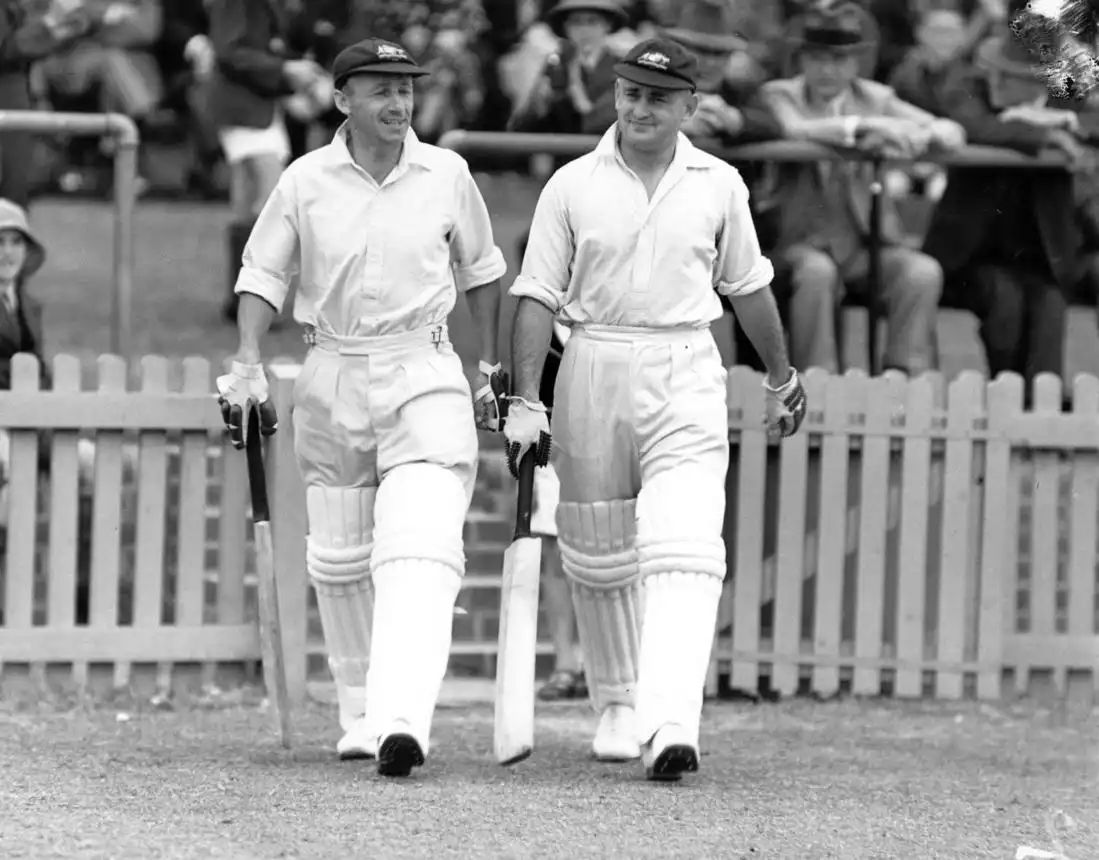
Stan McCabe was one of Australia’s finest batsmen of the 1930s, celebrated for his fearless stroke play, exceptional footwork and remarkable ability to attack fast bowling. Born on 16 July 1910 in Grenfell, New South Wales, Stanley Joseph McCabe represented Australia in 39 Test matches between 1930 and 1938. He scored 2,748 Test runs at an average of 48.21, including six centuries, and became one of the defining Australian cricketers of the period. ICC+1
McCabe is particularly remembered for two extraordinary innings: his unbeaten 187 against England during the controversial 1932–33 Bodyline series and his 232 not out at Trent Bridge in 1938. The latter was so impressive that his captain, Don Bradman, reportedly told him that he would have been proud to play an innings like it himself. Almanack+1
Beyond his famous performances, McCabe was a successful New South Wales cricketer, a useful right-arm medium-pace bowler, a respected team leader and a businessman after his playing career. His place in cricket history rests not simply on his statistics but on the way he challenged some of the world’s most intimidating bowling attacks.
Stan McCabe Career Stats
| Format | Career | Matches | Innings | Runs | HS | Bat Avg | 50s | 100s | Wickets | BBI | Bowl Avg |
|---|---|---|---|---|---|---|---|---|---|---|---|
| TESTReconciled source snapshot | 1930–1938 | 39 | 62 | 2,748 | 232 | 48.21 | 13 | 6 | 36 | 4/13 | 42.86 |
This compact table is rendered directly from the shared per-format source selection; recorded-only rows are explicitly labelled. Detailed opponent, venue, year and dismissal analysis remains on the full stats page.
Stan McCabe
/cricket-player/stan-mccabe/Each format uses one source consistently. Recorded-only figures are labelled separately.
Reconciled source snapshot
Stan McCabe Quick Facts
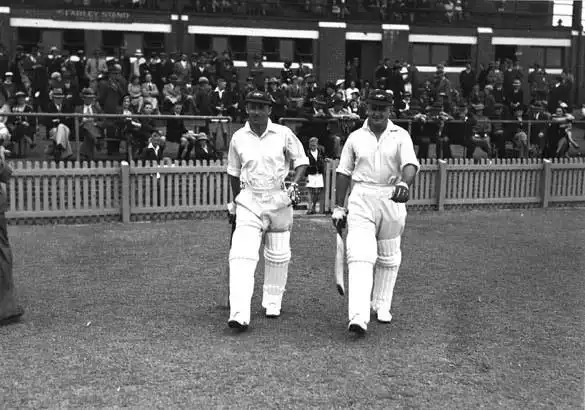
Stanley Joseph McCabe
Australian international cricketer · 1910–1968
Nickname: Napper
Born: 16 July 1910
Died: 25 August 1968, aged 58
Birthplace: Grenfell, New South Wales, Australia
Batting: Right-handed
Bowling: Right-arm medium pace
Test matches
39
Test runs
2,748
Test average
48.21
Test centuries
6
Career figures: ICC Hall of Fame and Sport Australia Hall of Fame. ICC+1
Stan McCabe’s Early Life, Family and Education
Stan McCabe was born into a family in Grenfell, a town in rural New South Wales. His parents were William McCabe, a hairdresser, and Harriet McCabe, née Glynn. He was their third son. His upbringing outside Sydney formed the early setting for a cricket career that would eventually take him to England and South Africa as an Australian international. Australian Dictionary of Biography+1
School cricket at St Joseph’s College
McCabe received his early education locally before attending St Joseph’s College at Hunters Hill, Sydney. He demonstrated considerable cricketing ability as a schoolboy. According to historical accounts, he spent only about a month in the school’s second team before earning a place in the first XI at the age of 14. He remained in the first team for three years and played as an all-rounder. Sport Australia Hall of Fame+1
His early development emphasized sound hitting and keeping the ball down. McCabe’s eventual reputation for aggressive batting was therefore not simply a product of raw power. It developed alongside useful technique, confident footwork and the ability to find scoring opportunities against fast bowlers.
After his school years, he returned to Grenfell and played for Grenfell Juniors, gaining further experience in country cricket. He later moved into Sydney cricket, where his performances for New South Wales and the Mosman club helped establish him as a serious candidate for national selection. Almanack+1
Stan McCabe’s family and personal life
McCabe married Edna May Linton at St Mary’s Cathedral in Sydney on 5 February 1935. Historical biographical records state that they had a son and a daughter. Beyond these documented details, there is limited reason to expand his family story with unsupported claims about relatives or private circumstances. Australian Dictionary of Biography+1
His nickname, Napper, was associated with his short, stocky build and prematurely receding hairline, which contemporary accounts likened to Napoleon. Despite the nickname, McCabe was widely respected by teammates, and his leadership did not diminish his popularity in the Australian dressing room. Australian Dictionary of Biography+1
Stan McCabe’s Domestic Cricket Career and New South Wales Breakthrough
McCabe’s domestic career began before his international reputation was established. He was selected for New South Wales in 1928, at a time when the state side was being rebuilt. His selection was notable because he had developed as a country cricketer rather than following only the established metropolitan pathway. Australian Dictionary of Biography+1
He made his first-class debut during the 1928–29 period and became a regular member of the New South Wales side. His performances in the Sheffield Shield demonstrated that he could score consistently against senior opposition, helping him earn selection for Australia’s 1930 tour of England even before he had made a first-class century. Almanack+1
The 1931–32 Sheffield Shield season
One of McCabe’s most remarkable domestic seasons came in 1931–32. In only three innings for New South Wales, he scored 229 not out against Queensland in Brisbane, followed by 106 and 103 not out against Victoria in Sydney. Those scores gave him a phenomenal Sheffield Shield average of 438 for the season. Almanack+1
The significance of that sequence lies in its consistency as much as its size. McCabe repeatedly converted opportunities into substantial scores, reinforcing his value as a top-order batter and showing that his earlier international selection had a strong domestic foundation.
First-class career summary
McCabe’s first-class career ran from 1928 to 1942, principally with New South Wales. His final recorded career totals were:
| Statistic | First-class record |
|---|---|
| Matches | 182 |
| Runs | 11,951 |
| Batting average | 49.38 |
| Highest score | 240 |
| Centuries | 29 |
| Half-centuries | 68 |
| Wickets | 159 |
| Best bowling | 5/36 |
Sport Australia Hall of Fame+1
For his complete first-class record, including detailed batting and bowling figures, see the player statistics section: View Stan McCabe's complete cricket stats and records.
View Stan McCabe's complete first-class statsStan McCabe’s Australian Test Career, 1930–1938
McCabe made his Test debut against England at Nottingham on 13 June 1930, aged 19. He had been selected for the 1930 Australian tour despite not yet scoring a first-class century, reflecting the confidence selectors placed in his ability and domestic performances. He went on to play 39 Tests and was never omitted from an Australian Test team during his international career. ICC+1
His early international years brought a mixture of promise and growing maturity. McCabe was not immediately known for the extraordinary innings that would later define him, but his versatility also made him useful with the ball. Across his Test career, he took 36 wickets, demonstrating that he was more than a specialist batter.
McCabe’s early Tests against England, South Africa and the West Indies
During the early 1930s, McCabe established himself in a strong Australian side. His first tours gave him experience of different pitches, bowling styles and match situations. While his batting developed, his medium pace offered Australia another option, especially when the team needed additional bowling support.
The experience mattered when he encountered England’s aggressive fast-bowling tactics in 1932–33. By then, he had the technical foundation and international exposure to respond to a sustained short-pitched attack rather than simply defend against it.
Stan McCabe’s Test statistics
| Test statistic | Career record |
|---|---|
| Matches | 39 |
| Innings | 62 |
| Not out | 5 |
| Runs | 2,748 |
| Highest score | 232* |
| Batting average | 48.21 |
| Centuries | 6 |
| Half-centuries | 13 |
| Wickets | 36 |
| Best bowling | 4/13 |
ICC+1
For the complete Test batting and bowling record, use the dedicated statistics section.
Explore Stan McCabe's complete Test statsStan McCabe’s 187 Not Out Against England in the Bodyline Series
Stan McCabe: A delightful batsman and a delightful man — CricketMash
6
McCabe’s 187 not out against England at Sydney in December 1932 became one of the most celebrated innings in Australian cricket history. It came during the Ashes series in which England captain Douglas Jardine used the controversial Bodyline tactic, relying on fast, short-pitched bowling aimed at the batter’s body and a heavily concentrated leg-side field. Harold Larwood and Bill Voce were central to the attack. Almanack+1
Why the Bodyline attack was so difficult to face
Bodyline placed batters under physical pressure while limiting conventional scoring options. The tactic had become a major source of tension between England and Australia, and the first Test of the series exposed Australia to its full force.
McCabe came to the crease after Australia had lost four wickets for 87 runs. Rather than allowing the attack to dictate every stroke, he repeatedly counterattacked with hooks, pulls, glances and improvised deflections. His willingness to take on deliveries directed at his body made the innings extraordinary in both technical and physical terms. Sport Australia Hall of Fame+1
How McCabe scored 187 not out
McCabe made his unbeaten 187 from a team total of 278 in less than five hours. He struck 25 fours and repeatedly sent short-pitched deliveries towards the boundary. Historical accounts record that he was hit on the body during the innings, underlining the physical risks involved. Almanack+1
His approach was not conventional defensive survival. He used the pace of the bowling to generate scoring opportunities and forced England to contend with a batter who refused to be confined by its field setting.
McCabe later described the innings in self-deprecating terms as an impulsive gamble. That reflection is an important part of the story: the innings succeeded brilliantly, but it was also a high-risk response to a hostile tactical challenge. Wisden
Did McCabe’s innings win the Test?
No. England won the Sydney Test by 10 wickets and eventually won the five-match series 4–1. McCabe’s innings therefore did not change the series result, but it became a defining demonstration of how aggressive batting could challenge Bodyline. He finished the series with 385 runs at an average of approximately 43. Almanack+1
Its lasting importance is the example it provided: a batter could resist a controversial fast-bowling strategy through courage, precise timing and counterattacking skill rather than retreating entirely into defence.
Stan McCabe’s 1934 Ashes Tour and Wisden Recognition
McCabe’s reputation grew further during Australia’s 1934 tour of England. He scored eight centuries on the tour, more than any of his teammates, and made 240 against Surrey at The Oval, the highest score of his first-class career. He also scored 137 in the third Test at Old Trafford. Almanack+1
These performances showed that his success against Bodyline had not been an isolated event. McCabe was capable of dominating a variety of bowling attacks and conditions, and his scoring range extended well beyond the short-pitched deliveries for which he became famous.
His performances earned him recognition as one of the Wisden Cricketers of the Year in 1935. The honour reflected his development into one of Australia’s most accomplished and enterprising batsmen. Sport Australia Hall of Fame+1
Stan McCabe’s 1935–36 South Africa Tour: 149 and 189 Not Out
McCabe’s performances in South Africa in 1935–36 further established his standing as an exceptional Test batter. He topped Australia’s Test batting figures on the tour, scoring 420 runs at an average of 84. Almanack+1
The 149 at Durban
In the first Test at Durban, McCabe scored 149 and shared a second-wicket partnership of 161 with Bill Brown. The partnership gave Australia a substantial platform and illustrated McCabe’s ability to combine attacking stroke play with productive batting alongside another established top-order player. Almanack+1
The unbeaten 189 at Johannesburg
His innings of 189 not out in the second Test at Johannesburg was another defining performance. He shared a 177-run partnership with Jack Fingleton and scored his fifty in just 42 minutes, demonstrating how quickly he could change the pace of a match. Almanack+1
Australia was in a strong position when rain eventually prevented the match from reaching a conclusion. The innings became part of the evidence that McCabe’s aggressive batting was effective across countries and conditions, not just against England.
Stan McCabe’s 232 Not Out at Trent Bridge in 1938
‘When it came to sheer beauty, McCabe was on his own’ | ESPNcricinfo
5
McCabe’s 232 not out against England at Trent Bridge in the opening Test of the 1938 Ashes is widely regarded as the greatest innings of his career. It was also his final Test series, making the performance a remarkable high point near the end of his international playing days. ICC+1
The situation at Trent Bridge
McCabe was 19 not out overnight and then produced a sustained attacking innings that kept Australia competitive against England. He scored 232 in approximately 235 minutes, hitting 30 fours and one six. His innings was notable not only for its size but for its speed and the control with which he attacked the bowling. Sport Australia Hall of Fame+1
His approach recalled the qualities he had shown during the Bodyline series: excellent footwork, strong wrists, powerful driving and the confidence to score against fast bowling. But the 1938 innings also demonstrated how complete a batter he had become.
The final-wicket partnership
One of the most memorable parts of the innings came when McCabe was joined by tailender Frank Fleetwood-Smith. The pair added 77 runs for the last wicket in just 28 minutes, with McCabe contributing 72 of those runs. That late partnership amplified the impact of his performance and helped turn the innings into a lasting piece of Ashes history. Sport Australia Hall of Fame
Don Bradman’s famous reaction
Bradman was Australia’s captain during the 1938 series. According to the widely repeated historical account, he told McCabe after the innings: “If I could play an innings like that, I’d be a proud man, Stan.” Almanack+1
The remark is significant because Bradman himself was one of cricket’s most prolific run-scorers. His admiration illustrates the extraordinary impression McCabe’s innings made on teammates and opponents alike.
McCabe finished his Test career in 1938, leaving behind a performance that remains central to discussions of great Ashes innings and Australian batting history.
Stan McCabe’s Playing Style: Footwork, Power and Fast-Bowling Skill
McCabe was a right-handed batter with a compact, powerful build. His principal strengths were his footwork, strong arms, flexible wrists and ability to score forcefully in front of the wicket. He was especially effective against pace bowling, using the drive as a major scoring stroke while also playing the hook shot with exceptional confidence. Almanack+1
His batting style combined aggression with technical control. He could attack a short-pitched ball, drive through the field and use the pace of the delivery to score quickly. The Bodyline innings showed how those skills could be applied under pressure, while the 232 at Trent Bridge demonstrated their effectiveness over a longer innings.
McCabe also contributed with right-arm medium pace. He took 36 wickets in Test cricket and 159 in first-class matches, with best first-class bowling figures of 5/36. He was a useful change bowler and sometimes helped provide early overs when Australia needed additional bowling options. Sport Australia Hall of Fame+1
This all-round contribution added to his value, although his enduring reputation rests primarily on his batting.
Stan McCabe’s Captaincy and Leadership
McCabe became captain of New South Wales in the mid-1930s. His leadership came during a period when he was already established as one of the state’s leading batters and a regular member of Australia’s Test side. Almanack+1
He was also a popular teammate. Historical biographical accounts specifically note that captaincy did not undermine his standing among fellow players. His career is a reminder that leadership can be reflected in the trust and respect of a dressing room, not just in titles or statistics.
McCabe’s role was primarily that of a leading batter and team contributor rather than a long-serving national captain. His influence is best understood through his performances, his place in successful Australian teams and the respect he earned from contemporaries such as Bradman.
Stan McCabe’s Awards and Cricket Honours
McCabe received recognition from several important cricket institutions:
- Wisden Cricketer of the Year, 1935: Recognition following his strong performances, particularly on the 1934 tour of England. Almanack+1
- Sport Australia Hall of Fame: Inducted in 1987. Sport Australia Hall of Fame
- Australian Cricket Hall of Fame: Inducted in 2002, according to the Sport Australia Hall of Fame biography. Sport Australia Hall of Fame
- ICC Cricket Hall of Fame: Inducted in 2021. ICC+1
These honours recognize both his statistical achievements and his historical importance to the game.
Stan McCabe’s Life After Cricket and Death
After his playing career, McCabe remained connected to business and Australian sporting life. In 1939, he opened a sports store on George Street in Sydney, which he operated for the remainder of his life. In 1963, he was appointed to the Sydney Sports Ground and Cricket Ground Trust, giving him a formal role in the administration of sporting venues. Australian Dictionary of Biography+1
McCabe died on 25 August 1968, aged 58, following a fall from a cliff near his home at Beauty Point, Mosman, while trying to dispose of a dead possum. His death was widely mourned, and his funeral was attended by friends and admirers. He was survived by his wife, Edna, and their son and daughter. Australian Dictionary of Biography+1
His passing ended a life that had extended beyond cricket, but his name remained closely associated with the sport through his performances, honours and continuing place in Australian cricket history.
Stan McCabe’s Records and Career Milestones
McCabe’s career numbers provide a clear picture of his consistency and versatility.
| Milestone | Achievement |
|---|---|
| Test debut | Against England, Nottingham, 1930 |
| Test career | 1930–1938 |
| Test appearances | 39 |
| Test runs | 2,748 |
| Test batting average | 48.21 |
| Test centuries | 6 |
| Highest Test score | 232 not out |
| First-class matches | 182 |
| First-class runs | 11,951 |
| First-class centuries | 29 |
| First-class wickets | 159 |
| Wisden Cricketer of the Year | 1935 |
| ICC Hall of Fame induction | 2021 |
ICC+2
The three innings most closely associated with McCabe are his 187 not out during Bodyline in 1932, his 189 not out against South Africa in 1935–36 and his 232 not out at Trent Bridge in 1938. Together, they capture his ability to counterattack, build a major innings and score rapidly against high-quality bowling.
For readers exploring historical batting and bowling records across players, the general statistics tool provides a broader comparison point.
Explore the complete cricket player statistics databaseCompare Stan McCabe With Other Cricketers
McCabe played in a different era from modern international cricketers, so comparisons should account for differences in formats, playing conditions and career lengths. His Test average, first-class output and defining innings nevertheless provide useful starting points for historical comparisons with other Australian batters.
Compare Stan McCabe
Player A is locked to this biographyStart typing Player B, choose a result, then compare instantly from cached career summaries.
Frequently Asked Questions About Stan McCabe
Who was Stan McCabe?
Stan McCabe was an Australian cricketer who represented his country in 39 Test matches between 1930 and 1938. He was a right-handed batter and right-arm medium-pace bowler, renowned for his attacking play against fast bowling. ICC+1
When was Stan McCabe born?
Stan McCabe was born on 16 July 1910 in Grenfell, New South Wales, Australia. Australian Dictionary of Biography+1
What was Stan McCabe’s highest Test score?
His highest Test score was 232 not out against England at Trent Bridge in 1938. He scored the runs in approximately 235 minutes. Sport Australia Hall of Fame+1
How many Test runs did Stan McCabe score?
McCabe scored 2,748 runs in 39 Test matches at an average of 48.21, including six centuries and 13 half-centuries. ICC+1
What was Stan McCabe’s famous Bodyline innings?
His famous Bodyline innings was 187 not out against England at Sydney in December 1932. He counterattacked England’s short-pitched fast bowling during a match that Australia ultimately lost by 10 wickets. Almanack+1
Why did Don Bradman admire Stan McCabe?
Bradman admired McCabe’s exceptional batting, particularly his 232 not out at Trent Bridge in 1938. The well-known account of Bradman’s reaction reflects the extraordinary quality and attacking intent of the innings. Almanack+1
What was Stan McCabe’s nickname?
His nickname was Napper. Historical accounts associated it with his build and his prematurely receding hairline, which was said to resemble Napoleon. Australian Dictionary of Biography+1
How many wickets did Stan McCabe take?
McCabe took 36 wickets in Test cricket and 159 wickets in first-class cricket. His best Test bowling figures were 4 for 13. Cricket Archive
Was Stan McCabe inducted into the ICC Hall of Fame?
Yes. McCabe was inducted into the ICC Cricket Hall of Fame in 2021. He had previously been inducted into the Sport Australia Hall of Fame in 1987 and the Australian Cricket Hall of Fame in 2002. ICC+1
Who was Stan McCabe’s wife?
Stan McCabe married Edna May Linton on 5 February 1935 in Sydney. Historical biographical records state that they had a son and a daughter. Australian Dictionary of Biography+1
When did Stan McCabe die?
McCabe died on 25 August 1968 at the age of 58 following a fall near his home in Mosman, Sydney. Australian Dictionary of Biography+1
conclusion
Stan McCabe’s career stands out because his greatest innings combined technical skill with the courage to challenge fast bowlers on their own terms. His 187 not out against Bodyline demonstrated that aggressive batting could resist England’s controversial tactics, while his 232 at Trent Bridge showed how destructive he could be when in full command.
His record of 2,748 Test runs and 11,951 first-class runs confirms his consistency, while his honours reflect the esteem in which he has been held across generations. McCabe’s place in cricket history is secured by more than a handful of famous scores: he represented a style of Australian batting built on confident stroke play, adaptability and an unwillingness to surrender the initiative.