
Phillip Joel Hughes (30 November 1988 – 27 November 2014) was an Australian left-handed opening batter whose exceptional talent produced some remarkable achievements in a short international career. Born in Macksville, New South Wales, he represented Australia in 26 Tests, 25 ODIs and one T20 International. His career included record-breaking centuries against South Africa, an ODI debut hundred against Sri Lanka and outstanding domestic performances for New South Wales and South Australia. Hughes was also remembered for his unusual attacking technique, determination and love of country life. He died aged 25 after being struck by a short-pitched delivery during a Sheffield Shield match at the Sydney Cricket Ground.
Phillip Hughes Career Stats
| Format | Career | Matches | Innings | Runs | HS | Bat Avg | 50s | 100s | Wickets | BBI | Bowl Avg |
|---|---|---|---|---|---|---|---|---|---|---|---|
| TESTReconciled source snapshot | 2009–2013 | 26 | 49 | 1,535 | 160 | 32.65 | 7 | 3 | 0 | — | — |
| ODIRecorded matches only — career source held | 2013–2014 | 25 | 24 | 826 | 138 | 35.91 | 4 | 2 | 0 | — | — |
| T20IRecorded matches only | 2014–2014 | 1 | 1 | 6 | 6 | 6.00 | 0 | 0 | 0 | — | — |
| T20Recorded matches only | 2012–2014 | 7 | 6 | 167 | 74 | 27.83 | 2 | 0 | 0 | — | — |
This compact table is rendered directly from the shared per-format source selection; recorded-only rows are explicitly labelled. Detailed opponent, venue, year and dismissal analysis remains on the full stats page.
Phillip Hughes
/cricket-player/phillip-hughes/Each format uses one source consistently. Recorded-only figures are labelled separately.
Reconciled source snapshot
Recorded matches only — career source held
Recorded matches only
Recorded matches only
Phillip Hughes Quick Facts
| Detail | Information |
|---|---|
| Full name | Phillip Joel Hughes |
| Known as | Phillip Hughes, Phil Hughes |
| Date of birth | 30 November 1988 |
| Birthplace | Macksville, New South Wales, Australia |
| Date of death | 27 November 2014 |
| Age at death | 25 years |
| Nationality | Australian |
| Profession | Professional cricketer |
| Batting style | Left-handed |
| Bowling style | Right-arm medium |
| Playing role | Opening batter |
| Height | 170 cm |
| Father | Greg Hughes |
| Mother | Virginia Hughes |
| Brother | Jason Hughes |
| Sister | Megan Hughes |
| Primary school | St Patrick’s Primary School, Macksville |
| Secondary school | Macksville High School |
| Later school | Homebush Boys High School |
| First-class debut | 20 November 2007 |
| Test debut | 26 February 2009 |
| ODI debut | 11 January 2013 |
| T20I debut | 5 October 2014 |
| Australian Test cap | 408 |
| Main domestic teams | New South Wales, South Australia |
| IPL franchise | Mumbai Indians (2013 squad) |
| Highest Test score | 160 |
| Highest ODI score | 138 not out |
| Highest first-class score | 243 not out |
| Highest List A score | 202 not out |
| Final professional innings | 63 not out |
| Test career | 2009–2013 |
| International country | Australia |
Sources: Cricket Australia, the NSW Coroners Court findings and contemporary cricket records. cricket.com.au+2
Phillip Hughes’s Early Life, Childhood and Family Background
Birthplace and upbringing in Macksville
Phillip Hughes was born on 30 November 1988 in Macksville, a small country town on the north coast of New South Wales, Australia. He grew up on his family’s farming property, where cricket, farming and family life shaped his childhood.
His father, Greg Hughes, worked in banana farming. The family’s agricultural background gave Phillip a strong connection with rural life, and he remained interested in farming and cattle even after becoming an international cricketer.
Unlike children who developed their cricket entirely through professional academies, Hughes had plenty of opportunities to practise in his own backyard. His early environment played a significant role in shaping his batting technique.
He developed a particularly strong off-side game because the family backyard had practical restrictions on where he could hit the ball. His shots towards the vegetable garden and other areas could create problems at home, encouraging him to develop his attacking strokes through cover and point.
Cricket Australia’s retrospective and the official biography describe how his unusual technique developed through these informal childhood practices. wisden.com+2
Phillip Hughes’s parents and siblings
Phillip was the second of three children born to Greg and Virginia Hughes.
His immediate family consisted of:
- Father: Greg Hughes, a farmer who supported Phillip’s cricket development.
- Mother: Virginia Hughes, who remained closely involved in his life.
- Older brother: Jason Hughes, three years older than Phillip.
- Younger sister: Megan Hughes, six years younger than Phillip.
Jason played an especially important role in introducing Phillip to cricket. The brothers grew up playing together, and Phillip admired his older brother.
Megan also shared a close relationship with Phillip. She was involved in many of his childhood memories and remained an important part of the family’s life.
The NSW Coroners Court findings recorded these family relationships and described the closeness between the three siblings. coroners.nsw.gov.au+1
His father’s influence and family support
Greg Hughes supported his son’s ambitions from an early age. When Phillip began playing representative cricket, travelling to matches became an important part of family life.
Greg regularly drove him to cricket commitments, sometimes covering considerable distances because Phillip was one of the few representative-level players from the local area.
A particularly revealing memory comes from Cricket Australia’s 2024 retrospective. Greg recalled that Phillip would extend his hand to shake his father’s hand and thank him after their journeys home.
The relationship between father and son was not limited to cricket. They also shared an interest in cattle and farming.
Phillip eventually purchased his own property near Macksville, maintaining his connection with the agricultural life that had accompanied his childhood. cricket.com.au+1
Did Phillip Hughes have a wife or children?
Phillip Hughes died unmarried at the age of 25. His widely documented immediate family included his parents, brother and sister. There is no reliably established public record of a wife or children.
He maintained a close relationship with his family throughout his professional career, including after moving away from Macksville to pursue cricket.
Phillip Hughes’s Education, School Cricket and Early Coaches
Education and cricket developed alongside each other during Hughes’s teenage years.
He attended several schools as his cricketing opportunities expanded.
| Stage | Institution | Significance |
|---|---|---|
| Primary education | St Patrick’s Primary School, Macksville | Attended from approximately age five |
| Secondary education | Macksville High School | Continued his schooling locally |
| Representative cricket period | NSW Schoolboys | Selected at age 15 and toured India |
| Later schooling | Homebush Boys High School, Sydney | Moved to Sydney to complete his HSC |
| Club cricket | Western Suburbs District Cricket Club | Entered elite Sydney grade cricket |
The school chronology is documented in the official coronial findings. coroners.nsw.gov.au
His first representative cricket experience
Hughes’s representative cricket development started unusually early.
- At nine, he played in an Under-12 representative team.
- He scored his first century while captaining the Under-12 Nambucca Bellingen district side.
- At 12, he began playing A-grade cricket for Macksville against adult players.
- At 15, he earned selection for the New South Wales Schoolboys team.
- His schoolboys selection provided an opportunity to tour India.
These experiences accelerated his development and exposed him to stronger competition before he entered senior professional cricket.
Moving to Sydney at 17
Hughes eventually moved from Macksville to Sydney at approximately 17 years of age.
He joined Western Suburbs District Cricket Club, one of the important clubs in Sydney’s competitive grade-cricket system.
The move was an important transition. It placed him in an environment where he could compete against experienced senior cricketers while continuing his education at Homebush Boys High School.
It was also where he developed a friendship with Michael Clarke, who later became Australia’s Test captain.
Neil d’Costa and Michael Clarke
Batting coach Neil d’Costa recognised Hughes’s considerable potential during his early development.
ABC reporting quoted d’Costa expressing confidence that the young batter would reach the highest level.
Michael Clarke also became an important influence in Hughes’s career. Their connection began at Western Suburbs and continued through New South Wales and Australian cricket.
Clarke later spoke publicly about Hughes’s personality, work ethic and loyalty, describing him as a close friend rather than simply a former teammate. ABC News+2
Phillip Hughes’s Domestic Cricket Career: New South Wales to South Australia
Hughes’s domestic career was the foundation of his international opportunities. He developed rapidly through Sydney grade cricket before establishing himself as a major first-class batter.
New South Wales debut in 2007
On 20 November 2007, Hughes made his first-class debut for New South Wales against Tasmania at the Sydney Cricket Ground.
He scored 51 in his first innings.
Although he was disappointed not to make a bigger score, his debut represented an important achievement for an 18-year-old batter.
He quickly became a regular part of the New South Wales batting setup under captain Simon Katich.
Youngest century-maker in a Sheffield Shield final
One of the earliest defining achievements of Hughes’s career came in the 2007–08 Pura Cup final against Victoria.
The match was played at the Sydney Cricket Ground from 15 to 19 March 2008.
Hughes scored 116 in New South Wales’s second innings, helping his team establish a commanding position.
2007–08 Pura Cup Final — Performance Snapshot
116
Phillip Hughes’s second-innings score
| Match detail | Information |
|---|---|
| Competition | Pura Cup final |
| Season | 2007–08 |
| Opposition | Victoria |
| Venue | Sydney Cricket Ground |
| Balls faced | 175 |
| New South Wales total | 563/8 declared |
| Result | New South Wales won by 258 runs |
| Achievement | Youngest player to score a century in a Sheffield Shield final at that time |
cricket.com.au+2
This performance confirmed that Hughes was capable of handling important matches and not merely scoring runs in ordinary domestic fixtures.
New South Wales career
During his New South Wales years, Hughes developed into a prolific opening batter.
His strengths included:
- Quick hands against pace bowling.
- Strong attacking shots through the off side.
- An ability to score quickly once established.
- A willingness to play aggressively against experienced bowlers.
- An increasingly strong record in first-class cricket.
His domestic performances eventually helped him earn selection for Australia’s 2009 tour of South Africa.
Move to South Australia in 2012
In 2012, Hughes moved to Adelaide to represent South Australia.
The move provided a new environment after several difficult periods in the Australian Test team.
He continued producing substantial domestic scores and became an important batter for the Redbacks.
His move also coincided with a period of improvement in his limited-overs cricket.
The decision proved significant because his later domestic performances became central to his attempts to return to Australia’s Test team. cricket.com.au+2
First-class career statistics
| Statistic | Record |
|---|---|
| Matches | 114 |
| Runs | 9,023 |
| Batting average | 46.51 |
| Centuries | 26 |
| Half-centuries | 46 |
| Highest score | 243 not out |
Career figures reported in historical CricketArchive-derived records. en.wikipedia.org+1
His first-class average of more than 46 reflected his consistency beyond international cricket.
View Phillip Hughes's complete first-class statsPhillip Hughes’s International Cricket Career for Australia
Hughes made his Test debut in 2009 and quickly became one of the most talked-about young Australian batters.
His international career was marked by exceptional performances, selection setbacks and repeated attempts to regain his place.
Test debut against South Africa in 2009
Phillip Hughes made his Test debut against South Africa at the Wanderers Stadium in Johannesburg on 26 February 2009.
His first innings was disappointing because he was dismissed for a duck by Dale Steyn.
However, he responded strongly in the second innings, scoring 75 and helping Australia compete successfully.
That innings demonstrated his ability to recover from a difficult introduction to international cricket. PerthNow+1
Historic twin centuries against South Africa in Durban
South Africa v Australia – 2nd Test Day Three
The second Test against South Africa at Kingsmead, Durban, from 6 to 10 March 2009, became the defining match of Hughes’s international career.
He scored centuries in both innings, making 115 and 160.
Durban Test — Phillip Hughes’s historic performance
115
First innings
151 balls
160
Second innings
323 balls
| Match detail | Information |
|---|---|
| Opposition | South Africa |
| Venue | Kingsmead, Durban |
| Date | March 2009 |
| Australia first innings | 352 |
| Australia result | Won by 175 runs |
| Age | 20 years |
| Record | Youngest batter to score centuries in both innings of a Test |
Cricbuzz+2
Hughes became the youngest batter in Test history to score a century in each innings of the same match, surpassing the previous record associated with West Indies great George Headley.
His performance was particularly impressive because South Africa had a formidable bowling attack featuring Dale Steyn and other experienced international bowlers.
The achievement brought international attention to Hughes and established his reputation as one of Australia’s most promising young batters.
2009 Ashes: A difficult selection setback
After his remarkable performances in South Africa, Hughes entered the 2009 Ashes series in England with considerable expectations.
However, England’s bowlers identified weaknesses in his technique, particularly against short-pitched bowling and deliveries directed towards his body.
He was dropped after the second Test.
The decision was a major setback because it came only a few months after his historic twin centuries.
His international career subsequently became a pattern of selection, omission and return.
Comeback against Pakistan and New Zealand
Hughes returned to Australia’s Test team during the 2009–10 and 2010 periods.
One of his notable performances came against New Zealand in Wellington in March 2010, when he scored an unbeaten 86 in Australia’s successful first Test.
However, his position remained uncertain as selectors continued assessing his technique and consistency.
The 2010–11 Ashes and another selection challenge
Hughes also featured in Australia’s 2010–11 Ashes series against England.
He played three Tests but struggled to establish the consistency needed to secure a permanent opening position.
The competition for places remained intense, and he continued to move in and out of the Australian team.
Third Test century against Sri Lanka in 2011
Hughes produced another important performance during Australia’s 2011 tour of Sri Lanka.
In the third Test in Colombo, he scored 126 in the first innings.
The innings came during a challenging period for Australian cricket following the 2010–11 Ashes defeat.
Colombo performance snapshot
| Detail | Information |
|---|---|
| Opposition | Sri Lanka |
| Venue | Colombo |
| Year | 2011 |
| Score | 126 |
| Balls faced | 220 |
| Fours | 16 |
| Sixes | 1 |
| Significance | Third Test century |
His innings helped Australia recover from a difficult position and secure a 1–0 series victory. ABC News+2
2011–12: Competition for the opening position
Hughes experienced another difficult period against New Zealand during Australia’s 2011–12 home summer.
He was dismissed by Chris Martin in four consecutive innings, with Martin Guptill taking the catches.
The repeated dismissals became a major talking point and contributed to another omission from the Australian Test team.
Nevertheless, Hughes continued scoring heavily in domestic cricket.
Final Test comeback: The 2013 Ashes
Hughes returned to the Australian Test team during the 2013 Ashes series in England.
One of his most memorable innings came in the first Test at Trent Bridge, Nottingham.
Batting at No. 6, he scored 81 not out and shared a last-wicket partnership of 163 runs with debutant Ashton Agar.
Agar scored 98, narrowly missing a century, while Hughes remained unbeaten.
The partnership became one of the most memorable moments of the series.
Hughes was dropped after the next Test at Lord’s, where he scored one run in each innings. It was his final Test appearance. The Guardian+2
Explore Phillip Hughes's complete Test statsPhillip Hughes’s ODI Career and Historic Debut Century
Hughes made his One Day International debut against Sri Lanka at the Melbourne Cricket Ground on 11 January 2013.
He produced an outstanding performance in his first match, scoring 112 runs from 129 deliveries.
Australia scored 305/5 and won the match by 107 runs.
His innings included 14 fours and a 140-run third-wicket partnership with George Bailey.
ODI debut — Match Snapshot
112
Runs against Sri Lanka, 11 January 2013
| Detail | Information |
|---|---|
| Venue | Melbourne Cricket Ground |
| Balls | 129 |
| Fours | 14 |
| Sixes | 0 |
| Australia | 305/5 |
| Sri Lanka | 198 |
| Result | Australia won by 107 runs |
| Partnership | 140 with George Bailey |
| Award | Player of the Match |
ICC+2
Hughes became the first Australian batter to score a century on ODI debut.
It was a major achievement and gave him a strong start in the format.
Highest ODI score: 138 not out against Sri Lanka
Hughes continued his excellent start to ODI cricket during the same series.
In Hobart in January 2013, he scored 138 not out from 154 balls against Sri Lanka.
The innings demonstrated his ability to build a long one-day innings while maintaining a healthy scoring rate.
ODI career statistics
| Statistic | Record |
|---|---|
| Matches | 25 |
| Innings | 24 |
| Runs | 826 |
| Average | 35.91 |
| Strike rate | 75.09 |
| Highest score | 138 not out |
| Centuries | 2 |
| Half-centuries | 4 |
His ODI career also included appearances against India, England, Zimbabwe, South Africa and Pakistan.NDTV Sports+1
See Phillip Hughes's complete ODI statsPhillip Hughes’s T20 International Career
Hughes played one Twenty20 International for Australia.
His T20I debut came against Pakistan in Dubai on 5 October 2014.
He scored six runs from eight balls.
| Statistic | Record |
|---|---|
| Matches | 1 |
| Innings | 1 |
| Runs | 6 |
| Average | 6.00 |
| Strike rate | 75.00 |
| Highest score | 6 |
This was his only T20 International appearance before his death in November 2014. Cricbuzz.com+1
View Phillip Hughes's full T20I recordPhillip Hughes’s Franchise and Big Bash League Career
Although Hughes was primarily known for his Test and first-class batting, he also participated in professional franchise cricket.
His teams included Mumbai Indians and Adelaide Strikers.
Mumbai Indians and IPL 2013
Hughes was selected into the Mumbai Indians squad for the 2013 Indian Premier League season.
However, he did not play an IPL match for the franchise.
Mumbai Indians later confirmed that he had been part of their 2013 group but did not get an opportunity in the playing XI because of competition for places.
This distinction matters: Hughes was associated with an IPL franchise, but his official IPL appearance total was zero. Mumbai Indians+1
Adelaide Strikers and Big Bash League
Hughes also played Big Bash League cricket for Adelaide Strikers.
Cricket Australia’s historical profile records the following BBL figures:
| Statistic | Record |
|---|---|
| Matches | 8 |
| Innings | 8 |
| Runs | 175 |
| Highest score | 74 |
| Average | 25.00 |
| Strike rate | 116.67 |
| Half-centuries | 2 |
| Catches | 5 |
Cricket Australia+1
He also appeared in English domestic competitions, including county cricket.
Phillip Hughes’s County Cricket Career in England
Hughes gained experience in English conditions through contracts with several county teams.
His documented county associations included:
- Middlesex in 2009.
- Hampshire in 2010.
- Worcestershire in 2012.
These opportunities exposed him to different conditions and bowling styles.
County cricket also helped maintain his competitive match experience during periods when he was outside Australia’s Test team. BBC Sport+2
Phillip Hughes’s Greatest Domestic Performance: The 202 Not Out Against South Africa A
Phil Hughes hits double century for Australia A against South Africa A | Cricket News | Sky Sports
In July 2014, Hughes produced one of the most remarkable performances of his career.
Playing for Australia A against South Africa A at Marrara Oval in Darwin, he scored 202 not out from 151 balls.
He became the first Australian male batter to score a double century in a 50-over List A match.
Match performance details
| Detail | Information |
|---|---|
| Opposition | South Africa A |
| Date | 29 July 2014 |
| Venue | Marrara Oval, Darwin |
| Score | 202 not out |
| Balls faced | 151 |
| Fours | 18 |
| Sixes | 6 |
| Australia A total | 349/4 |
| South Africa A total | 201 |
| Result | Australia A won by 148 runs |
| Partnership | 220 with Moises Henriques |
Cricket Australia+1
The innings was particularly impressive because Australia A had lost early wickets and fallen to 46/3.
Hughes responded by building a 220-run partnership with Moises Henriques, who contributed 90.
He then accelerated towards the end of the innings and reached 200 with a six from the final delivery.
The performance surpassed David Warner’s previous Australian men’s List A record of 197.
It strengthened Hughes’s case for another opportunity in the Australian Test team.
Phillip Hughes’s Highest First-Class Score: 243 Not Out
Just weeks after his record-breaking List A double century, Hughes produced another exceptional performance against South Africa A.
He scored 243 not out in a four-day match at Townsville in August 2014.
It became his highest first-class score.
The innings formed part of a particularly productive period for Australia A. Across the team’s 2014 programme, Hughes scored three centuries and two half-centuries, accumulating 756 runs at an average of 108 according to Cricket Australia’s retrospective.
The two performances, 202 not out and 243 not out, demonstrated that Hughes remained capable of producing exceptional scores after losing his regular place in Australia’s Test team. Wisden+2
Phillip Hughes’s Career Timeline
| Year / Date | Age | Team / Level | Important development |
|---|---|---|---|
| 1988 | 0 | Macksville | Born on 30 November |
| Childhood | 9 | Representative cricket | First Under-12 representative appearance |
| Childhood | 12 | Macksville | Began A-grade cricket |
| Teenage years | 15 | NSW Schoolboys | Selected and toured India |
| 2005–06 approximately | 17 | Western Suburbs | Moved to Sydney for grade cricket |
| 20 Nov 2007 | 18 | New South Wales | First-class debut |
| March 2008 | 19 | New South Wales | 116 in Sheffield Shield final |
| February 2009 | 20 | Australia | Test debut |
| March 2009 | 20 | Australia | Twin centuries against South Africa |
| 2011 | 22 | Australia | 126 against Sri Lanka |
| 2012 | 23 | South Australia | Joined the Redbacks |
| January 2013 | 24 | Australia | ODI debut century |
| July 2013 | 24 | Australia | Last Test appearance |
| July 2014 | 25 | Australia A | 202 not out against South Africa A |
| August 2014 | 25 | Australia A | 243 not out against South Africa A |
| October 2014 | 25 | Australia | Last international appearance |
| 25 Nov 2014 | 25 | South Australia | Final innings of 63 not out |
| 27 Nov 2014 | 25 | — | Died in Sydney |
Coroners Court of New South Wales+3
Phillip Hughes’s Records and Major Achievements
Hughes achieved several important milestones during his relatively short career.
| Record / Achievement | Detail |
|---|---|
| Youngest batter with twin Test centuries | 115 and 160 against South Africa |
| First Australian ODI debut century | 112 against Sri Lanka |
| Youngest Sheffield Shield final centurion at the time | 116 in 2008 |
| First Australian male List A double-century | 202 not out in 2014 |
| Highest first-class score | 243 not out |
| Test centuries | 3 |
| ODI centuries | 2 |
| Final professional innings | 63 not out |
| Australian Test cap | 408 |
Guinness World Records+4
His 408 Test cap
Hughes received Australian Test cap number 408.
The number later became an important part of the Hughes family’s farming business identity.
In particular, his sister Megan and the family incorporated the number into the name Four O Eight Angus, a cattle business that continued to connect Phillip’s cricketing and farming interests. Cricket Australia+1
Explore the complete cricket player statistics databasePhillip Hughes’s Playing Style and Batting Technique
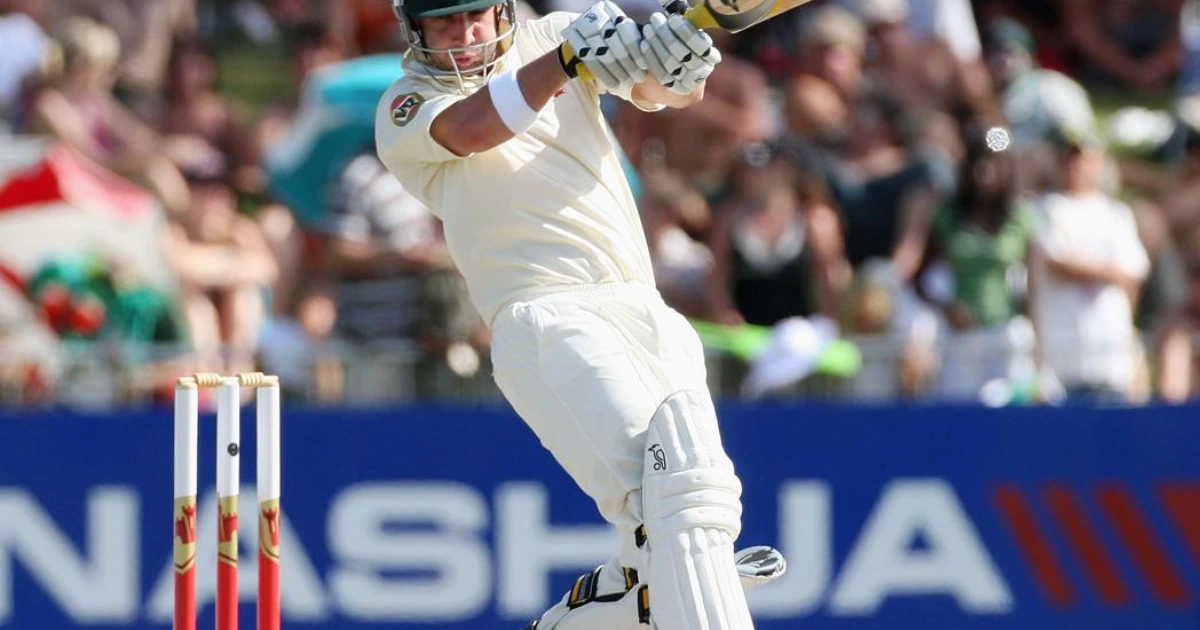
Hughes was a left-handed opening batter with a distinctive and sometimes unconventional technique.
He was particularly effective when attacking deliveries outside off stump.
His attacking off-side game
His batting was characterised by:
- Strong cut shots.
- Powerful square drives.
- Aggressive shots through cover and point.
- Quick hand movements.
- An attacking approach against pace bowling.
- A willingness to score runs rather than simply defend.
His technique was often described as unorthodox because he sometimes moved away from the line of the ball and created room to play through the off side.
However, the same method produced many of his most memorable innings.
The influence of his childhood environment
The origins of his unusual batting style can be traced to his family’s backyard in Macksville.
His practice area encouraged him to hit the ball towards particular areas while avoiding others.
This helped develop his distinctive attacking strokes, particularly through cover and point.
Cricket commentators frequently highlighted the contrast between the unconventional appearance of his technique and the effectiveness of his scoring. BBC Sport+2
Phillip Hughes’s Injuries, Selection Struggles and Comeback Attempts
Hughes’s international career was not a straightforward progression.
He experienced several periods outside the Australian Test team despite producing substantial domestic scores.
His career involved repeated technical adjustments and attempts to satisfy selectors.
Important stages included:
- Dropped during the 2009 Ashes in England.
- Recalled for matches against Pakistan and New Zealand.
- Another difficult period during the 2010–11 Ashes.
- Further omission during the 2011–12 New Zealand series.
- Return for the 2012–13 season.
- Dropped following the second 2013 Ashes Test.
- Strong domestic performances during 2013–14.
- Australia A success during 2014.
- Included in Australia’s Pakistan tour squad in 2014 but not selected for either Test.
His 2014 domestic performances suggested that another Test opportunity was possible.
Cricket Australia’s retrospective records his 202, 243 not out and strong overall Australia A campaign as evidence of his improving form. ABC News+2
Phillip Hughes’s Final Match: 63 Not Out at the Sydney Cricket Ground
NSW v SA – Sheffield Shield: Day 1
The final match of Hughes’s career began on 25 November 2014.
South Australia were playing New South Wales in a Sheffield Shield match at the Sydney Cricket Ground.
Hughes opened the batting for South Australia alongside Mark Cosgrove.
He was playing confidently and had reached 63 not out when the fatal incident occurred.
Final innings scorecard
| Detail | Information |
|---|---|
| Date | 25 November 2014 |
| Competition | Sheffield Shield |
| Teams | New South Wales vs South Australia |
| Venue | Sydney Cricket Ground |
| Batter | Phillip Hughes |
| Runs | 63 not out |
| Balls faced | 161 |
| Fours | 9 |
| Sixes | 0 |
| South Australia score | 136/2 |
| Overs | 48.3 |
| Bowler involved | Sean Abbott |
Cricbuzz+1
What happened during the match?
During the 49th over, New South Wales fast-medium bowler Sean Abbott delivered a short-pitched ball.
Hughes attempted a hook shot but mistimed it.
The ball struck the left side of his neck near the base of his skull.
He initially stepped away from the pitch and bent forward before collapsing unconscious.
Abbott and other players immediately moved towards him to provide assistance.
Hughes was taken to St Vincent’s Hospital in Sydney, where he underwent emergency surgery.
He never regained consciousness.
His death on 27 November 2014
Phillip Hughes died on 27 November 2014, aged 25.
The NSW Coroners Court subsequently established that the cause of death was a traumatic basal subarachnoid haemorrhage following the injury sustained during the match.
The findings identified damage involving the vertebral artery and a catastrophic haemorrhage.
His family agreed to the withdrawal of life-sustaining measures two days after the incident. Coroners Court of New South Wales+2
Why Phillip Hughes is permanently 63 not out
Cricket Australia made an important change to the official Sheffield Shield scorecard following Hughes’s death.
Initially, he was recorded as retired hurt.
The governing body subsequently amended the record to show him as 63 not out because he had not been replaced at the crease by another batter.
The decision became a lasting tribute to the unfinished innings.
63*
Phillip Hughes — Forever Not Out
Cricket Australia’s official scorecard amendment, announced on 30 November 2014.Cricket Australia
Phillip Hughes Inquest: Findings About Sean Abbott, Safety and Cricket Rules
The circumstances of Hughes’s death led to an extensive investigation by the NSW Coroners Court.
The inquest took place in October 2016, with findings delivered on 4 November 2016.
The investigation examined:
- The nature of the bowling during the match.
- Whether dangerous or unfair bowling laws had been breached.
- Whether umpires had adequately enforced the rules.
- The protective equipment Hughes was wearing.
- Emergency medical response procedures.
- Opportunities to prevent similar incidents.
Was Sean Abbott blamed for Phillip Hughes’s death?
No.
The coroner found no malicious intent behind the delivery and concluded that neither Abbott nor anyone else was to blame for the tragic outcome.
The court found that Hughes had been struck by a high-bouncing ball following a mistimed hook shot.
It also concluded that the injury was unsurvivable regardless of the efficiency of the emergency response. Coroners Court of New South Wales+1
Did his helmet fail to protect him?
The coroner established that Hughes was not wearing the most up-to-date helmet available at the time.
However, the findings also stated that even the most modern equipment then available would not have protected the specific area where the fatal blow landed.
The tragedy consequently highlighted the need for further improvements in neck protection.
Changes recommended after the inquest
The coroner identified areas requiring further attention:
- Rules governing dangerous and unfair bowling.
- Personal protective equipment for batters.
- Medical emergency response procedures.
- The role of umpires during medical emergencies.
The investigation also highlighted weaknesses in emergency planning and communication at the ground.
These findings became important in subsequent discussions about player safety in cricket. Coroners Court of New South Wales+2
Phillip Hughes’s Personal Life, Farming Interests and Business
Cricket was Hughes’s professional ambition, but farming remained an important part of his personal identity.
He shared his father’s interest in cattle and eventually purchased a property near Macksville.
Four O Eight Angus
After his death, his family continued developing the cattle operation associated with his property.
The business became known as Four O Eight Angus, a name that references his Australian Test cap number, 408.
His sister Megan and her husband Curtis became involved in managing the family’s farming interests alongside Greg.
The business maintains a connection between Phillip’s cricketing career and the farming environment he loved.
This is one of the most distinctive aspects of his personal story: even after reaching international cricket, he continued to value his rural home and agricultural interests. Cricket Australia+1
His interest in cattle
Hughes was particularly interested in Angus cattle.
Michael Clarke recalled that Hughes could talk enthusiastically about cattle for extended periods.
He enjoyed discussing breeding, farming and his animals with teammates.
This interest remained important even during international tours and his time away from Macksville. ABC News+1
Phillip Hughes’s Tributes, Memorials and Recognition
Always home: Phillip Hughes & a Macksville love story | cricket.com.au
Hughes’s death prompted an extraordinary response from the international cricket community.
Players, teams, supporters and cricket organisations paid tribute to him.
Phillip Hughes Bridge
A bridge near Macksville was named the Phillip Hughes Bridge.
It became a prominent local tribute to the player and his connection with the town.
The bridge is particularly meaningful because it can be seen from the family’s property.
Phillip Hughes Oval
Macksville’s Thistle Park was renamed Phillip Hughes Oval.
The ground provides a permanent reminder of the local boy who progressed from country cricket to the Australian national team.
The Boy from Macksville documentary
Cricket Australia and the cricket community also commemorated Hughes through the documentary The Boy from Macksville.
The production explores his childhood, cricket career, personality, family connections and the impact of his death.
It includes reflections from people who knew him personally and followed his development. Cricket Australia+3
#putoutyourbats tribute
One of the most widely recognised tributes following his death was the #putoutyourbats campaign.
People around Australia placed cricket bats outside their homes and workplaces in remembrance of Hughes.
The campaign demonstrated the emotional connection between Hughes and the wider cricket community. Cricket Australia+1
Phillip Hughes Career Comparison
Hughes’s career can be explored alongside another Australian batter to understand how their records compare across the formats both players have played.
Compare Phillip Hughes
Player A is locked to this biographyStart typing Player B, choose a result, then compare instantly from cached career summaries.
Phillip Hughes Biography FAQs
How old was Phillip Hughes when he died?
Phillip Hughes was 25 years old when he died on 27 November 2014. He was born on 30 November 1988, just three days before his 26th birthday.
Who were Phillip Hughes’s parents?
His parents were Greg Hughes and Virginia Hughes. His father was involved in banana farming and supported his son’s cricket development.
Did Phillip Hughes have any siblings?
Yes. He had an older brother, Jason Hughes, and a younger sister, Megan Hughes. He was the middle child of three siblings.
What was Phillip Hughes’s highest Test score?
His highest Test score was 160, scored against South Africa at Kingsmead in Durban in March 2009.
How many Test matches did Phillip Hughes play?
He played 26 Test matches for Australia, scoring 1,535 runs at an average of 32.65, including three centuries and seven half-centuries.
What was Phillip Hughes’s highest ODI score?
His highest ODI score was 138 not out against Sri Lanka in Hobart in January 2013.
Did Phillip Hughes play in the IPL?
He was included in the Mumbai Indians squad for the 2013 IPL season but did not make an appearance in an IPL match.
How many T20 International matches did Phillip Hughes play?
He played one T20 International for Australia, scoring six runs against Pakistan in Dubai on 5 October 2014.
What happened to Phillip Hughes in his final cricket match?
On 25 November 2014, he was struck on the neck by a short-pitched delivery while batting for South Australia against New South Wales at the Sydney Cricket Ground. He suffered a catastrophic injury and died two days later.
Why is Phillip Hughes remembered as 63 not out?
Cricket Australia amended his final Sheffield Shield scorecard after his death. Because he had not been replaced by another batter, his final innings was officially recorded as 63 not out rather than retired hurt.
What was Phillip Hughes’s highest first-class score?
His highest first-class score was 243 not out against South Africa A in 2014.
What record did Phillip Hughes achieve against South Africa in 2009?
He became the youngest batter in Test cricket to score a century in both innings of a match, making 115 and 160 at Kingsmead in Durban.
What was Phillip Hughes’s nickname?
Some people in his hometown called him Boof or Boofa during his childhood, according to contemporary reporting. The Guardian
What was Phillip Hughes’s net worth?
No dependable, independently verified public estimate of his personal net worth has been established. His cricket earnings, contracts and farming interests should not be combined into an invented wealth figure.
conclusion
Phillip Hughes achieved remarkable things in a short period. His twin centuries against South Africa, ODI debut hundred and exceptional domestic performances established him as an important Australian batting talent.
His career was also a story of persistence. Even after losing his place in the Test side, he continued scoring runs and working towards another opportunity.
The 202 List A double-century, the 243 not out against South Africa A and his final 63 not out all demonstrated that he remained a highly productive batter.
His death at 25 ended a career that was still developing. What remains is an impressive cricketing record, a strong connection with Macksville and a permanent place in Australian cricket history.