
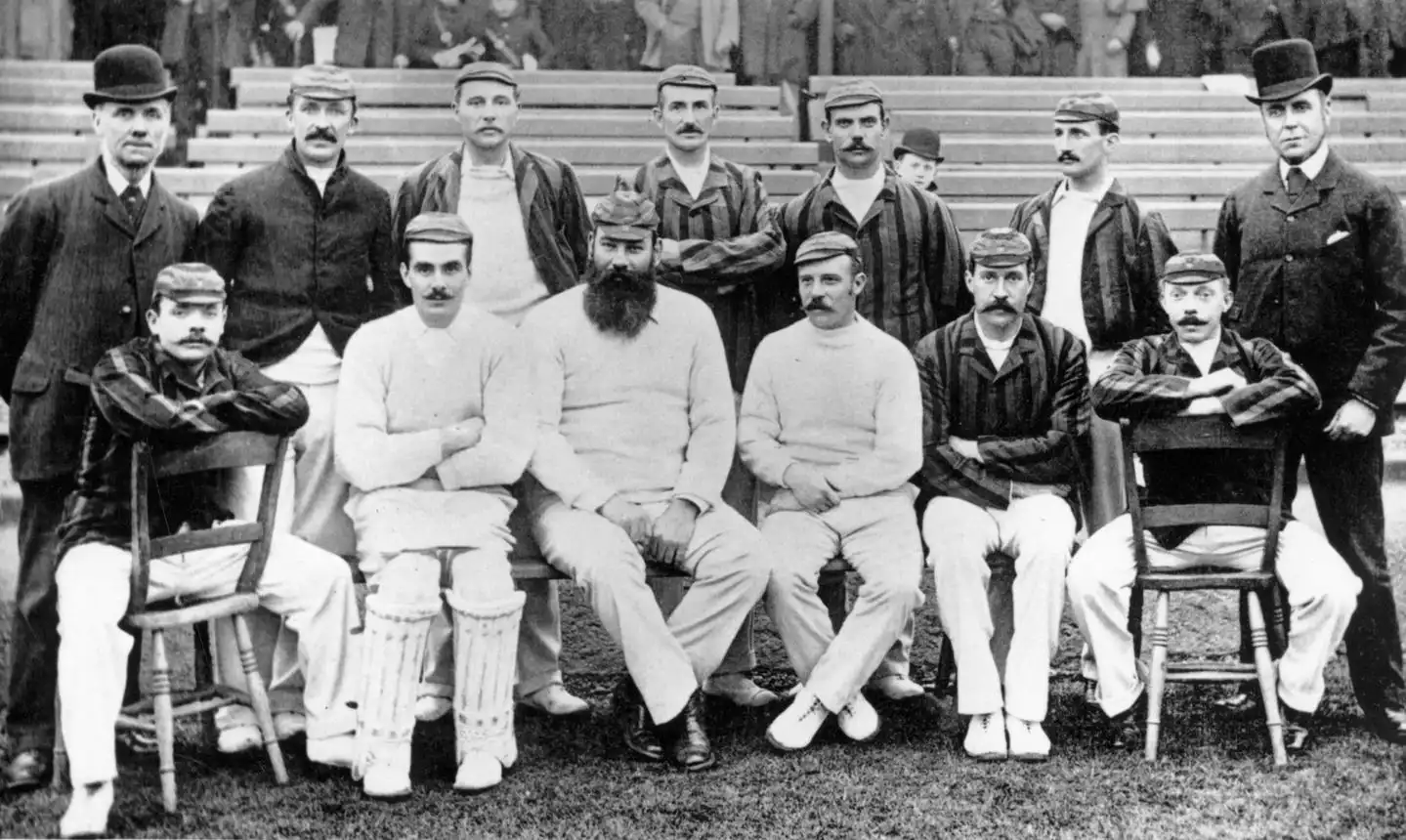
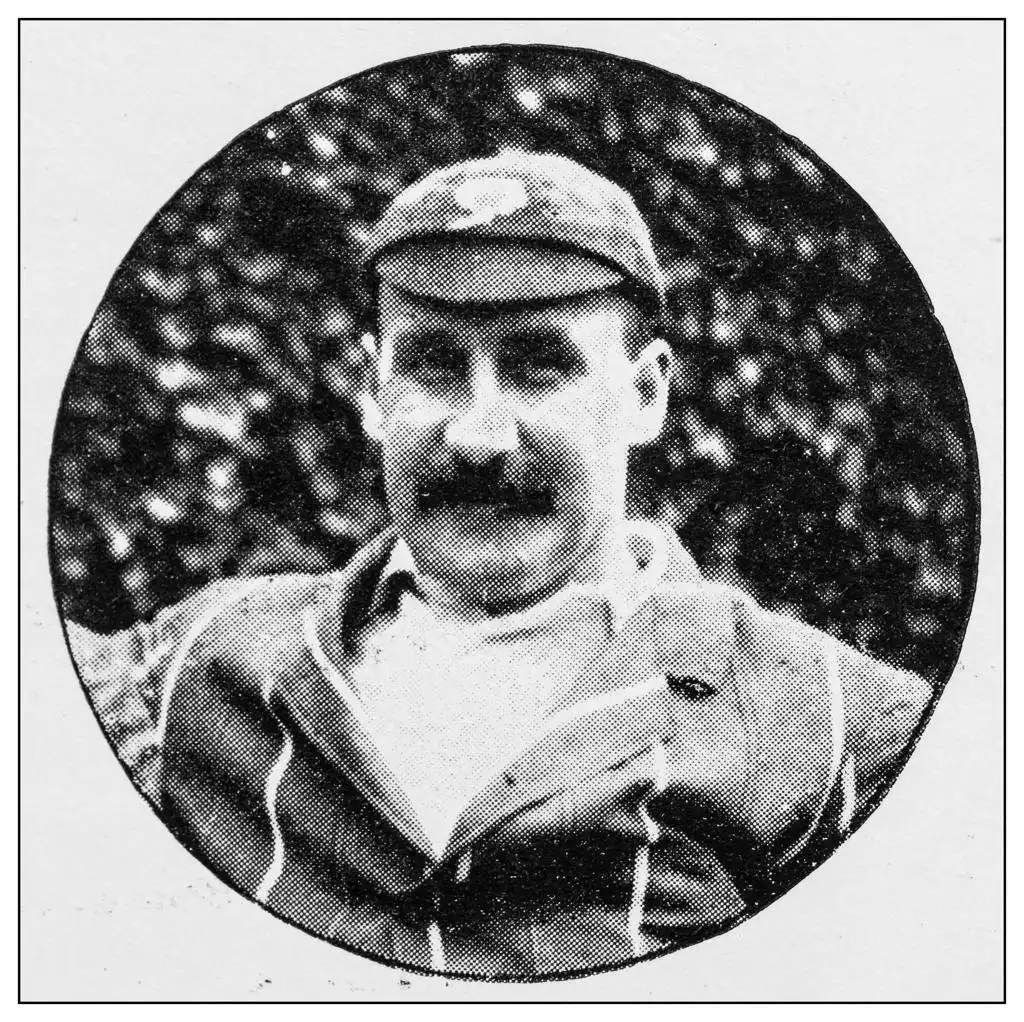
Christopher Heseltine (26 November 1869 – 13 June 1944) was an English right-arm fast bowler who represented England in two Test matches against South Africa during the 1895–96 tour. Although he made only a brief international appearance, he took five wickets in his debut Test, including figures of 5 for 38. His domestic career included Hampshire and the Marylebone Cricket Club (MCC), where he later became an influential administrator. Beyond cricket, Heseltine served as a British Army officer, received the OBE and French Legion of Honour, and held important public positions in Hampshire. His life connected Victorian cricket, military service and the administration of English cricket.
Christopher Heseltine Career Stats
| Format | Career | Matches | Innings | Runs | HS | Bat Avg | 50s | 100s | Wickets | BBI | Bowl Avg |
|---|---|---|---|---|---|---|---|---|---|---|---|
| TESTRecorded matches only — career source held | 1896–1896 | 2 | 2 | 18 | 18 | 9.00 | 0 | 0 | 5 | — | 16.80 |
This compact table is rendered directly from the shared per-format source selection; recorded-only rows are explicitly labelled. Detailed opponent, venue, year and dismissal analysis remains on the full stats page.
Christopher Heseltine
/cricket-player/christopher-heseltine/Each format uses one source consistently. Recorded-only figures are labelled separately.
Recorded matches only — career source held
Christopher Heseltine Quick Facts
| Profile | Details |
|---|---|
| Full name | Christopher Heseltine |
| Date of birth | 26 November 1869 |
| Place of birth | South Kensington, Middlesex, England |
| Nationality | English |
| Date of death | 13 June 1944 |
| Place of death | Walhampton, Hampshire, England |
| Batting style | Right-handed |
| Bowling style | Right-arm fast |
| Primary role | Fast bowler |
| International team | England |
| Test appearances | 2 |
| Test debut | 2 March 1896 |
| Test opponent | South Africa |
| First-class appearances | 79 |
| First-class wickets | 170 |
| Best Test bowling | 5/38 |
| Best first-class bowling | 7/106 |
| County team | Hampshire |
| Other major team | Marylebone Cricket Club |
| Education | Eton College; Trinity Hall, Cambridge |
| Military recognition | OBE; French Legion of Honour |
| Wife | Ethel Heseltine |
| Brother | Godfrey Heseltine |
Career statistics and historical details are based on the available cricket records and biographical accounts.
Christopher Heseltine’s Early Life, Family and Education
Christopher Heseltine was born on 26 November 1869 at South Kensington, Middlesex, England. He came from a family with connections to the arts and sporting interests. His father was John Postle Heseltine, a painter and art collector whose work and collecting interests placed the family within Britain’s cultural circles.
Heseltine’s early life was shaped by an educational environment that offered opportunities beyond cricket. Unlike many professional cricketers of later generations, he attended prestigious educational institutions and also developed an interest in association football.
Christopher Heseltine’s Parents and Family
The following family details are documented in historical biographical accounts:
- Father: John Postle Heseltine, a painter and art collector.
- Brother: Godfrey Heseltine, with whom Christopher shared an interest in breeding and raising basset hounds.
- Wife: Ethel Heseltine, whom he married in 1923.
- Son: Christopher Heseltine, who later played minor cricket matches for Hampshire during the Second World War.
His family connections extended beyond cricket. His brother Godfrey was particularly important in his later interests involving dogs and hunting.
There is insufficient dependable biographical evidence to provide detailed occupations or individual biographies for every family member.
Education at Eton College and Cambridge University
Heseltine received his education at Eton College before proceeding to Trinity Hall, Cambridge.
An interesting feature of his sporting development is that he did not establish himself in the cricket elevens at either institution. Nevertheless, Cambridge provided him with an opportunity to participate in university sport.
In 1891, he represented Cambridge University in association football against Oxford University and earned a sporting Blue.
His sporting background therefore included university football before his first-class cricket career developed.
Christopher Heseltine’s Cricket Career: From MCC Debut to International Selection
Heseltine’s cricket career developed gradually. His first-class debut came in 1892, but he did not become a regular Hampshire bowler immediately. His association with Lord Hawke and participation in overseas tours helped him gain experience against different opponents before his breakthrough as a county bowler.
Compare Christopher Heseltine
Player A is locked to this biographyStart typing Player B, choose a result, then compare instantly from cached career summaries.
First-Class Debut for Marylebone Cricket Club in 1892
Heseltine made his first-class debut for the Marylebone Cricket Club in 1892 against Cambridge University at Fenner’s Ground.
His association with the MCC continued for more than two decades. He represented the club in several periods, with his final first-class appearance for the MCC coming in 1914 against Hampshire at Lord’s.
The MCC was important to both sides of his cricketing life:
- It provided opportunities to play first-class cricket.
- It connected him with influential amateur cricketers.
- It maintained a relationship that later developed into an administrative role.
- He eventually served on the MCC committee.
Lord Hawke’s Tour of India and Ceylon, 1892–93
One of the earliest significant experiences in Heseltine’s cricket career came when he joined Lord Hawke’s touring team to Ceylon and India between November 1892 and February 1893.
The tour was historically important because it formed part of the early development of organised international-style cricket in India.
Heseltine was among a 14-member group of amateur cricketers. The team played 23 matches during the wider tour, including four first-class matches in India.
His first-class appearances included matches against:
- The Parsees (twice)
- Bombay
- All-India
He also recorded a notable bowling achievement in a minor match against the Madras Natives, taking 13 wickets.
The experience exposed him to cricket outside England and strengthened his connection with Lord Hawke, who would subsequently select him for further overseas tours.
Hampshire Cricket Career and Development as a Fast Bowler
Heseltine made his first-class debut for Hampshire in 1895 against Somerset at Taunton. He had previously represented Hampshire when the county was operating at second-class level.
His Hampshire career became more productive after the 1897 West Indies tour.
Hampshire career progression
| Season | Appearances | Wickets | Key detail |
|---|---|---|---|
| 1895 | 1 | — | First-class Hampshire debut |
| 1897 | 15 | 41 | Two five-wicket hauls |
| 1898 | 13 | 25 | Established county presence |
| 1899 | 14 | 45 | Most productive Hampshire wicket-taking season |
| 1901 | 1 | — | Returned to county cricket |
| 1902 | 3 | — | Reduced appearances |
| 1903 | 1 | — | Occasional appearance |
| 1904 | 1 | — | Final regular Hampshire season |
The table highlights the documented seasonal milestones rather than presenting a complete scorecard database.
His 1897 season was particularly important. He took 41 wickets in 15 appearances at an average of 17.29, demonstrating the improvement that had taken place in his bowling.
In 1898, he added another 25 wickets in 13 matches.
However, his strongest Hampshire season by wicket volume came in 1899, when he claimed 45 wickets in 14 appearances.
Christopher Heseltine’s Best First-Class Bowling: 7/106 Against Derbyshire
One of Heseltine’s most notable domestic performances came against Derbyshire County Cricket Club in August 1899.
Playing for Hampshire at Derby, he took seven wickets for 106 runs in Derbyshire’s first innings.
First-Class Bowling Performance
7/106
Career-best first-class bowling figures
| Match detail | Information |
|---|---|
| Bowler | Christopher Heseltine |
| Team | Hampshire |
| Opposition | Derbyshire |
| Venue | Derby |
| Date | 7–9 August 1899 |
| Overs | 33.4 |
| Maidens | 7 |
| Runs conceded | 106 |
| Wickets | 7 |
Historical match scorecard. Cricinfo+1
The performance became his best bowling return in first-class cricket and contributed to his reputation as a fast bowler capable of taking wickets in county competition.
Christopher Heseltine’s Batting and Highest First-Class Score
Although bowling was his principal contribution, Heseltine also provided lower-order batting.
His first-class career included:
- 1,390 runs.
- Batting average of 12.30.
- Three half-centuries.
- Highest score of 77.
- Right-handed batting.
His highest first-class score of 77 came against Somerset at Portsmouth in 1899.
His overall contribution was therefore not restricted to bowling. He also provided useful lower-order runs and contributed in the field, taking 54 catches in first-class cricket.
Christopher Heseltine’s International Career for England
Heseltine represented England in two Test matches during Lord Hawke’s South African tour of 1895–96. His international career was short, but his debut performance was particularly significant.
At the time, the touring side represented England in matches against South Africa. These fixtures subsequently received official Test status.
England Test Debut Against South Africa in 1896
Heseltine made his Test debut in the second Test against South Africa at the Old Wanderers in Johannesburg, played from 2 to 4 March 1896.
England dominated the match, scoring 482 in their first innings. South Africa replied with 151 and then 134 after being forced to follow on.
Heseltine took five wickets in South Africa’s second innings, finishing with figures of 5 for 38.
Test debut performance
5/38
England vs South Africa · Johannesburg · March 1896
| Detail | Result |
|---|---|
| Competition | Second Test |
| Venue | Old Wanderers |
| Date | 2–4 March 1896 |
| England first innings | 482 |
| South Africa first innings | 151 |
| South Africa second innings | 134 |
| Heseltine’s first-innings figures | 0/29 |
| Heseltine’s second-innings figures | 5/38 |
| Match result | England won by an innings and 197 runs |
Source: historical Test scorecard. img.cricinfo.com+1
His five-wicket haul came in the innings in which South Africa were dismissed for 134. He helped England complete a substantial victory by taking half of the opposition’s wickets.
This was the defining performance of his international career.
How Heseltine Took Five Wickets on Test Debut
His five dismissals in South Africa’s second innings included:
- Thomas Routledge: caught by a substitute fielder off Heseltine.
- Robert Poore: bowled.
- Ernest Halliwell: caught by Martin Hawke.
- Charlie Llewellyn: caught off Heseltine’s bowling.
- George Rowe: bowled.
He also helped restrict South Africa to 134, completing an impressive individual contribution in his first Test appearance. Cricket Web+1
His Second Test Against South Africa
Heseltine played his second and final Test during the third Test at Newlands, Cape Town, from 21 to 23 March 1896.
England won this match by an innings and 33 runs.
Heseltine contributed 18 runs in England’s innings of 265, batting in the lower order. The match was another victory for England, who won the three-match series.
His Test career ended with the following record:
| Test statistic | Career total |
|---|---|
| Matches | 2 |
| Runs | 18 |
| Batting average | 9.00 |
| Highest score | 18 |
| Wickets | 5 |
| Bowling average | 16.80 |
| Best bowling | 5/38 |
| Five-wicket hauls | 1 |
| Catches | 3 |
Test Cricket Stats+1
Readers can explore his recorded international career through the Test statistics section:
Explore Christopher Heseltine's complete Test stats
Christopher Heseltine’s West Indies Tour and Career Breakthrough in 1897
The 1897 West Indies tour was a turning point in Heseltine’s development as a bowler.
He joined Lord Hawke’s XI for the tour between February and April 1897. Before this trip, he had not established himself as a regular first-class bowler, and contemporary assessments had questioned whether he was good enough for county cricket.
His performances in the Caribbean changed that perception.
During the tour, Heseltine made six first-class appearances and took 32 wickets at an average of 15.53.
West Indies tour summary
| Category | Record |
|---|---|
| Tour | Lord Hawke’s XI, 1897 |
| Period | February–April 1897 |
| First-class appearances | 6 |
| Wickets | 32 |
| Bowling average | 15.53 |
His improved performances helped him return to England with greater standing as a bowler.
Hampshire subsequently gave him regular opportunities, and his 41-wicket season in 1897 demonstrated the impact of the overseas experience.
This sequence explains why the 1897 tour was more significant than a routine overseas assignment: it preceded his most productive period in county cricket. Bliptext+1
Christopher Heseltine’s Complete First-Class Career Statistics
Heseltine played first-class cricket across several teams and competitions, although Hampshire and the MCC were his principal associations.
His final career record reflected a bowler-first profile.
| First-class statistic | Record |
|---|---|
| Matches | 79 |
| Runs | 1,390 |
| Batting average | 12.30 |
| Highest score | 77 |
| Half-centuries | 3 |
| Wickets | 170 |
| Bowling average | 24.50 |
| Best bowling | 7/106 |
| Five-wicket innings | 7 |
| Ten-wicket matches | 0 |
| Catches | 54 |
Wikipedia+2
His Record Against Bobby Abel
One unusual feature of Heseltine’s bowling career was his success against Surrey batter Bobby Abel.
Historical accounts record that Heseltine dismissed Abel for three consecutive ducks.
It is a distinctive statistical detail from his county career and illustrates how a bowler’s record can include individual opponent match-ups that are not reflected in overall averages.
His Bowling Style and Strengths
Heseltine was a right-arm fast bowler who made use of his height to deliver the ball from a high release point.
Historical descriptions in Wisden praised his ability to use his height and produce dangerous deliveries. However, they also noted that he could be inconsistent and sometimes tired during matches.
Lord Hawke reportedly considered him a bowler who sacrificed length for pace.
These observations help explain both his strengths and limitations:
- Height helped him deliver the ball from an elevated position.
- Pace was an important feature of his bowling.
- He could be particularly dangerous when in rhythm.
- Consistency and stamina were recognised weaknesses.
His bowling profile was therefore that of an attacking fast bowler rather than a bowler whose principal strength was sustained control. Wikipedia+1
Christopher Heseltine’s Military Career and Service in the British Army
Cricket was only one part of Heseltine’s life. He also had a substantial military career, which affected his availability for county cricket and eventually became a major part of his public identity.
He initially served as a volunteer in the 5th (City of London) Battalion before receiving a military commission.
Second Boer War and Imperial Yeomanry
In July 1898, Heseltine was appointed a major in the 7th Militia Battalion of the Royal Fusiliers.
Following the outbreak of the Second Boer War, he joined the Imperial Yeomanry as a lieutenant in February 1900 and travelled to South Africa for military service.
This commitment interrupted his cricketing career.
His county appearances became less frequent, and his military responsibilities made it difficult to maintain the regular playing schedule required of a professional county cricketer.
Appointment as Aide-de-Camp in Ireland
Following his military service in South Africa, Heseltine returned to Britain and resumed his association with the City of London Regiment.
In September 1902, he was appointed an extra aide-de-camp to the Earl of Dudley, who served as Lord Lieutenant of Ireland.
He was promoted to lieutenant colonel in July 1903 and resigned his commission in August 1906.
In 1911, while serving on the Army Reserve of Officers list, he was promoted to captain.
First World War Service
During the First World War, Heseltine was recalled for military duties by the War Office.
His responsibilities included serving as a messenger to King George V. In 1916, he was appointed to the staff of the Egyptian Expeditionary Force.
He was mentioned in dispatches twice for his wartime service.
His military career included recognition from both Britain and France:
- Officer of the Order of the British Empire (OBE).
- French Legion of Honour.
- Two mentions in dispatches.
- Retention of his honorary military rank after the war.
The French decoration was awarded in November 1920. His OBE recognised his wartime service and was gazetted in the post-war honours period. sport.wikisort.org+2
Christopher Heseltine’s Career as Hampshire Cricket President and MCC Administrator
Heseltine’s contribution to cricket continued long after his regular playing career had ended.
His experience as a Hampshire player, international cricketer and close associate of Lord Hawke helped establish his position within English cricket administration.
Hampshire County Cricket Club Presidency
Heseltine was elected president of Hampshire County Cricket Club in 1925.
He later returned to the position in 1936, serving until his death in 1944.
His administrative involvement extended beyond ceremonial duties. He maintained an interest in the county’s playing strength and helped identify players who could contribute to Hampshire’s future.
His Recommendation of John Manners
One notable example involved John Manners, a Royal Navy officer and promising cricketer.
In July 1936, Heseltine watched a Royal Navy versus Army match at Lord’s. He was impressed by Manners’ batting and recommended him to Hampshire.
Manners subsequently joined the county and made his first-class debut against Gloucestershire at Portsmouth, scoring 81 in his first innings.
This episode illustrates Heseltine’s role in recognising cricketing talent and connecting promising players with opportunities at county level. hungerfordvirtualmuseum.co.uk+1
His Work on the MCC Committee
Heseltine also served for many years on the MCC committee.
One particularly important period came during the 1932–33 Bodyline controversy in Australia.
The controversy created serious questions about the spirit and administration of international cricket. The MCC committee discussed how English cricket should respond to the escalating dispute.
Heseltine was part of the committee during this historically significant period.
His involvement connected him with one of the most consequential administrative debates in early international Test cricket. FutureLabz Library+1
Christopher Heseltine’s Life Beyond Cricket: Hunting, Basset Hounds and Public Service
Heseltine had several interests outside cricket and military service.
After his military career, he lived at Walhampton in the New Forest, where he maintained an active interest in hunting and breeding dogs.
Master of the New Forest Hounds
In 1899, Heseltine was appointed master of the New Forest Hounds.
However, his involvement was interrupted by his service during the Second Boer War.
His association with hunting remained an important part of his life beyond cricket.
Basset Hound Breeding and The Kennel Club
Heseltine and his brother Godfrey bred and raised basset hounds.
The brothers also founded the Masters of Basset Hounds Association, reflecting their wider involvement in organised hunting and dog breeding.
In 1903, Christopher was co-opted onto the committee of The Kennel Club.
This was a separate public and sporting interest that extended his influence beyond cricket.
Deputy Lieutenant and Justice of the Peace
In January 1925, Heseltine was appointed a deputy lieutenant for Hampshire.
He also served as a justice of the peace for the county.
These positions reflected his standing in local public life after his military and cricketing careers had developed.
During the Second World War, he also served as a member of the Home Guard. Bliptext+1
Christopher Heseltine’s Wife, Son and Later Life
Heseltine married Ethel in 1923.
The couple had a son, also named Christopher Heseltine, who maintained a connection with cricket.
Their son played minor cricket matches for Hampshire during the Second World War.
The family lived at Walhampton, where Christopher spent his later years at Walhampton Cottage within the grounds of the former family estate.
His life after competitive cricket was characterised by public responsibilities, sporting administration, hunting and family interests.
Christopher Heseltine Career Timeline
| Year | Career milestone |
|---|---|
| 1869 | Born in South Kensington, England |
| 1891 | Represented Cambridge University in association football |
| 1892 | First-class debut for MCC |
| 1892–93 | Joined Lord Hawke’s tour of Ceylon and India |
| 1895 | Made Hampshire first-class debut |
| 1895–96 | Joined Lord Hawke’s South African tour |
| March 1896 | England Test debut against South Africa |
| 1896 | Played his second and final Test |
| 1897 | West Indies tour; took 32 first-class wickets |
| 1897 | Took 41 wickets for Hampshire |
| 1899 | Took 45 Hampshire wickets and recorded 7/106 against Derbyshire |
| 1900 | Joined Imperial Yeomanry for service in South Africa |
| 1902 | Appointed extra aide-de-camp to the Earl of Dudley |
| 1903 | Promoted to lieutenant colonel; joined Kennel Club committee |
| 1916 | Served with the Egyptian Expeditionary Force |
| 1920 | Received French Legion of Honour |
| 1925 | Became Hampshire president and deputy lieutenant |
| 1936 | Returned as Hampshire president |
| 1944 | Died at Walhampton, Hampshire |
Christopher Heseltine Records and Achievements
His principal cricketing achievements included:
- Represented England in two Test matches.
- Took five wickets for 38 runs on Test debut.
- Recorded 170 first-class wickets.
- Achieved best first-class bowling figures of 7/106.
- Scored 1,390 first-class runs.
- Registered a first-class highest score of 77.
- Took 32 first-class wickets during Lord Hawke’s 1897 West Indies tour.
- Took 45 wickets for Hampshire in 1899.
- Served as president of Hampshire County Cricket Club.
- Served on the MCC committee.
His achievements outside cricket included:
- British Army service during the Second Boer War.
- First World War service.
- Officer of the Order of the British Empire.
- French Legion of Honour.
- Deputy lieutenant of Hampshire.
- Justice of the peace.
- Committee member of The Kennel Club.
Christopher Heseltine FAQs
Who was Christopher Heseltine?
Christopher Heseltine was an English Test cricketer, right-arm fast bowler, British Army officer and cricket administrator. He represented England in two Tests against South Africa in 1896 and later became president of Hampshire County Cricket Club.
When was Christopher Heseltine born?
He was born on 26 November 1869 in South Kensington, Middlesex, England.
When did Christopher Heseltine die?
He died on 13 June 1944 at Walhampton, Hampshire, England, aged 74.
How many Test matches did Christopher Heseltine play?
He played two Test matches for England, both against South Africa during the 1895–96 tour.
What were Christopher Heseltine’s best Test bowling figures?
His best Test bowling figures were 5 wickets for 38 runs, achieved against South Africa at Johannesburg in March 1896.
How many first-class wickets did Christopher Heseltine take?
He took 170 wickets in 79 first-class matches at an average of 24.50.
What was Christopher Heseltine’s highest first-class score?
His highest first-class score was 77, made against Somerset at Portsmouth in 1899.
Which county did Christopher Heseltine represent?
He represented Hampshire County Cricket Club, with his principal first-class county career running from 1895 to 1904.
Was Christopher Heseltine a member of the MCC committee?
Yes. He was involved in MCC administration for many years and participated in committee discussions during the 1932–33 Bodyline controversy.
Who was Christopher Heseltine’s father?
His father was John Postle Heseltine, a British painter and art collector.
Who was Christopher Heseltine’s wife?
He married Ethel Heseltine in 1923. Their son, also named Christopher, played minor cricket for Hampshire during the Second World War.
What was Christopher Heseltine’s military rank?
He served as an officer in the British Army and attained the rank of lieutenant colonel.
What honours did Christopher Heseltine receive?
He received the Officer of the Order of the British Empire and the French Legion of Honour for his military service.
What was Christopher Heseltine’s net worth?
There is no dependable publicly documented estimate of his personal net worth. His financial circumstances should not be estimated from his cricketing or military career.
Did Christopher Heseltine play in the IPL or modern franchise leagues?
No. His cricket career took place in the nineteenth and early twentieth centuries, long before modern franchise competitions such as the IPL existed.
CONCLUSION
Christopher Heseltine’s importance extends beyond his two Test appearances. His five-wicket debut performance against South Africa remains the defining achievement of his international playing career, while his Hampshire seasons demonstrated his ability as a first-class fast bowler.
His later contributions to Hampshire and the MCC show that his relationship with cricket continued long after his playing opportunities declined. His military service, public appointments and involvement in the Kennel Club also made him a distinctive figure whose life crossed several different sporting and public institutions.
He is best remembered as an English fast bowler who combined a short international career with a much longer contribution to county cricket administration.