
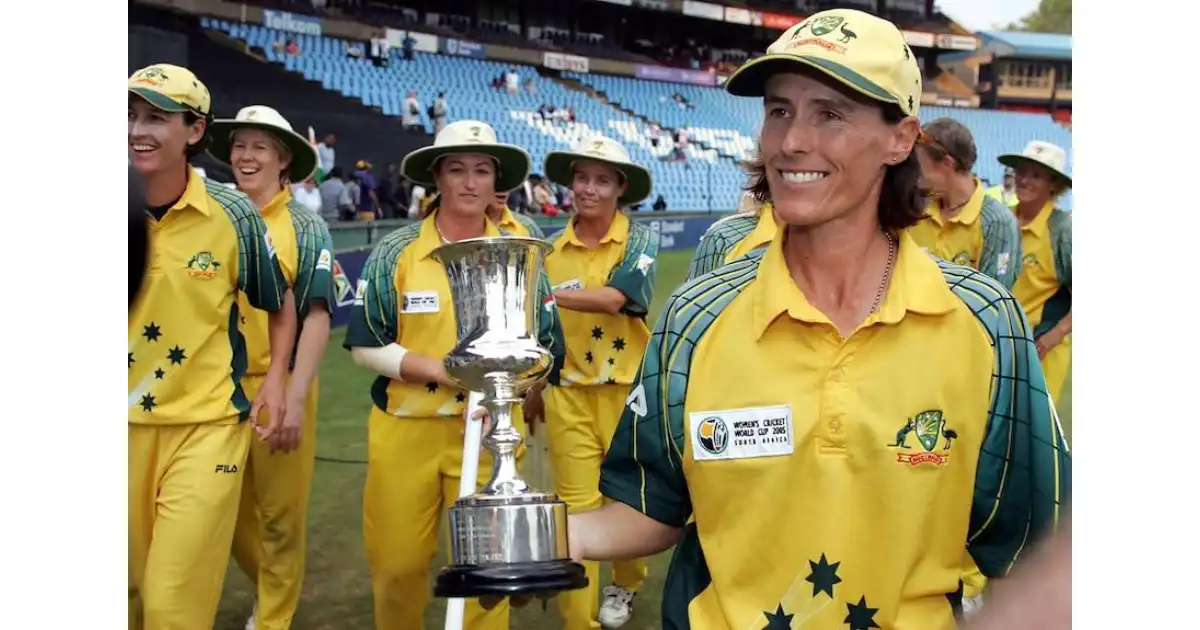
The Wheeler Centre – Belinda Clark
Mystery ‘Lone Man’ sculpture falls into Sydney Harbour after old wharf collapses – ABC News
9
Belinda Jane Clark is a former Australian international cricketer, opening batter and one of the most influential leaders in women’s cricket history. Born on 10 September 1970 in Newcastle, New South Wales, she captained Australia to two Women’s Cricket World Cup titles, in 1997 and 2005.
Clark made cricket history in 1997 when she scored an unbeaten 229 against Denmark, becoming the first cricketer, male or female, to score a double century in One Day International cricket. She retired from international cricket in 2005 but continued contributing to the sport through senior administrative and leadership positions.
Her achievements have earned her places in the ICC Cricket Hall of Fame and Sport Australia Hall of Fame, where she was elevated to Legend status in 2025. ICC+2
Belinda Clark Career Stats
| Format | Career | Matches | Innings | Runs | HS | Bat Avg | 50s | 100s | Wickets | BBI | Bowl Avg |
|---|---|---|---|---|---|---|---|---|---|---|---|
| ODICareer source | 1991–2005 | 118 | — | 4,844 | 229* | 47.49 | 30 | 5 | 3 | 1/7 | 17.00 |
| T20ICareer source | 2005–2005 | 1 | — | 4 | 4 | 4.00 | 0 | 0 | — | – | — |
This compact table is rendered directly from the shared per-format source selection; recorded-only rows are explicitly labelled. Detailed opponent, venue, year and dismissal analysis remains on the full stats page.
Belinda Clark
/cricket-player/belinda-clark/Each format uses one source consistently. Recorded-only figures are labelled separately.
Career source
Career source
Belinda Clark Quick Facts
| Detail | Information |
|---|---|
| Full name | Belinda Jane Clark |
| Date of birth | 10 September 1970 |
| Age | 56 (November 2026) |
| Birthplace | Newcastle, New South Wales, Australia |
| Nationality | Australian |
| Profession | Former cricketer and cricket administrator |
| Batting style | Right-handed |
| Playing role | Opening batter |
| International team | Australia Women |
| ODI debut | 17 January 1991 |
| Test debut | 26 January 1991 |
| International retirement | 2005 |
| ODI matches | 118 |
| Test matches | 15 |
| Highest ODI score | 229 not out |
| Highest Test score | 136 |
| World Cup titles | 1997 and 2005 |
| ICC Hall of Fame | 2011 |
| Sport Australia Hall of Fame Legend | 2025 |
ICC+3
Belinda Clark’s Early Life and Childhood
Belinda Clark grew up in Newcastle, Australia. Her early sporting ambition was to become an international tennis player rather than a professional cricketer. However, cricket gradually became her main sporting passion.
She played her first official cricket match at the age of 13 while attending high school. Her development included playing alongside boys in a local under-16 team, an experience that helped her progress into regional and state cricket.
Her performances eventually earned her selection for New South Wales and, at 21, the Australian national team. Her early development is particularly significant because she entered international cricket at a time when women’s cricket had considerably fewer professional opportunities than it does today. Sport Australia Hall of Fame+1
Education and Academic Qualifications
Clark combined elite cricket with university study. She graduated from the University of Sydney in 1992 with a Bachelor of Applied Science in Physiotherapy.
Her education continued well beyond her undergraduate degree. In 2015, she completed the Advanced Management Program at Harvard Business School, strengthening her qualifications for senior leadership and sports administration.
Her academic background helped her develop a career that extended beyond playing cricket, particularly in sports management, organisational development and leadership. Sport Australia Hall of Fame+1
Belinda Clark’s Family, Parents and Personal Life
Belinda Clark is the third child of Allan and Margaret Clark. Her parents supported her sporting development while encouraging her to work hard, behave responsibly and give her best effort.
Her childhood cricket included competitive backyard games with her siblings. Clark has recalled facing short-pitched bowling from her siblings, even in fading light.
Her family environment helped develop her competitive personality, although the family was not described as being obsessed with sport. Sport Australia Hall of Fame
Family information:
- Father: Allan Clark.
- Mother: Margaret Clark.
- Birth order: Third child.
- Siblings: She grew up with siblings, but their names and detailed biographies are not reliably established in the sources consulted.
- Husband or partner: No sufficiently reliable public confirmation established.
- Children: No sufficiently reliable public confirmation established.
Her private life should not be filled with unsupported claims about marriage or relationships.
Belinda Clark’s Domestic Cricket Career
Clark’s domestic career was central to her development as an international batter and captain. She represented New South Wales before moving to Victoria, winning seven national domestic championships across her career.
New South Wales Breakers
Clark established herself with New South Wales and became one of the most important players in the state team.
She captained the Breakers to four consecutive Women’s National Cricket League titles following the competition’s introduction in 1996–97.
Her domestic leadership helped establish New South Wales as a dominant force in Australian women’s cricket.
The Historic Move from New South Wales to Victoria
One of the most interesting chapters of Clark’s domestic career was her move to Victoria ahead of the 2001–02 season.
In September 2000, she relocated from Sydney to Melbourne after receiving an appointment as executive director of Women’s Cricket Australia. Before the move, she had worked as a game development manager at Cricket NSW.
The transition initially created a difficult situation. She continued representing New South Wales while training in Victoria and travelling interstate to play for the Breakers.
She eventually decided that the distance made it difficult to lead New South Wales properly. The decision to switch states was particularly significant because of the intense historical rivalry between the two teams.
Clark subsequently represented Victoria and helped the state win two national championships. This move is an important example of how her professional administrative career influenced her playing career. Cricket Australia+2
Domestic teams: New South Wales Women and Victoria Women.
Belinda Clark’s International Cricket Career
Belinda Clark made her international debut in January 1991. She quickly became one of Australia’s most dependable batters and eventually took over the captaincy in 1993.
Her international career lasted until 2005 and included 15 Tests, 118 ODIs and one T20 International.
Test Cricket Career
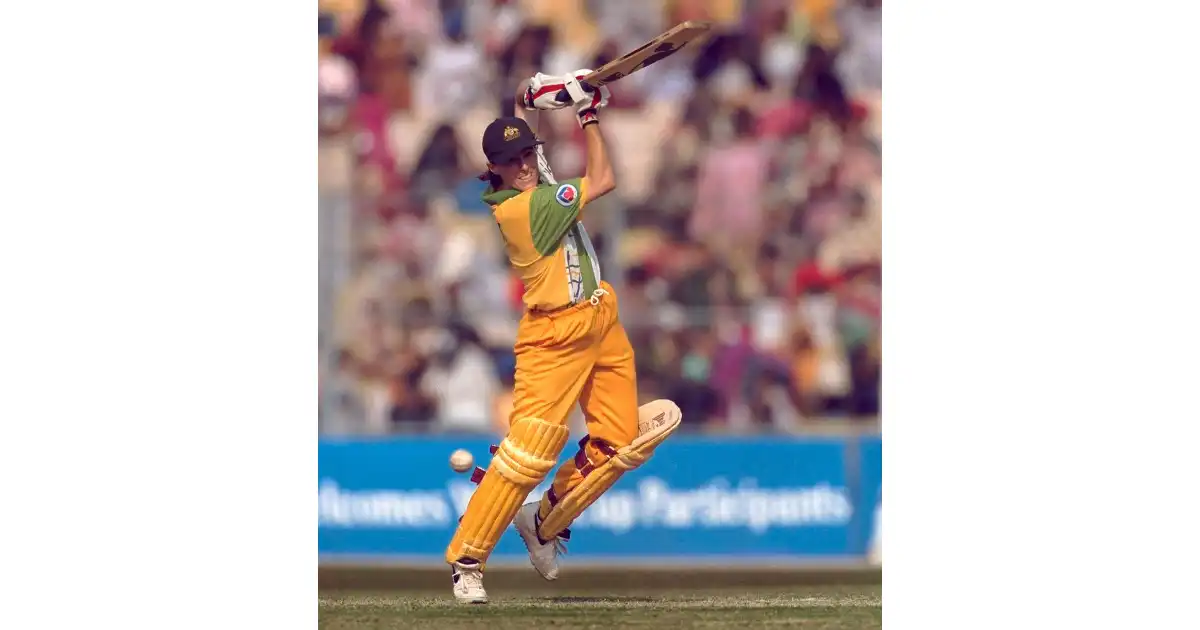
Belinda Clark of Australia in action
Clark made her Test debut against India at North Sydney Oval on 26 January 1991.
She announced herself with a century, scoring 104 in her first Test innings. She was also named Player of the Series against India, making an immediate impression on international cricket.
Across 15 Tests, she scored 919 runs at an average of approximately 45.90, with two centuries and six half-centuries.
Her highest Test score was 136, achieved against England at Worcester during the 1998 Ashes series.
Her Test performances demonstrated her ability to build long innings and succeed against high-quality international bowling.
For her complete Test record:
Explore Belinda Clark's complete Test stats
One Day International Career
When Belinda Clark scored cricket’s first ODI double hundred | Cricbuzz.com
ODI cricket was the format in which Clark established her greatest statistical achievements.
She made her ODI debut against New Zealand on 17 January 1991 and became one of the most successful opening batters in women’s international cricket.
Her ODI career included:
- 118 matches.
- 4,844 runs.
- Batting average of 47.49.
- Five centuries.
- 30 half-centuries.
- Highest score of 229 not out.
She combined consistency with an ability to produce major innings in important tournaments.
Her 1997 World Cup campaign was particularly successful, and she finished that calendar year with 970 ODI runs, a record for the most runs by a woman in a calendar year at the time. Cricket Australia+2
For her complete ODI record:
See Belinda Clark's complete ODI stats
T20 International Career
Clark’s final international appearance came during the beginning of women’s T20 International cricket.
She captained Australia in its first official Women’s T20I against England at Taunton on 2 September 2005.
She scored four runs in that match. Although her T20I career consisted of only one appearance, it gave her a place in the early history of Australia’s women’s T20 international team.
She retired from international cricket in 2005. Cricket Australia+2
View Belinda Clark's full T20I record
Belinda Clark’s 229 Against Denmark: The Historic ODI Double Century
Belinda Clark | cricket.com.au
When Belinda Clark scored cricket’s first ODI double hundred | Cricbuzz.com
On this day in 1997 – the first ever double ton in ODI cricket was scored | Cricket
5
One of the greatest achievements of Clark’s career occurred during the 1997 Women’s Cricket World Cup in India.
On 16 December 1997, she scored 229 not out against Denmark in Mumbai.
Her innings came from 155 balls and included an extraordinary display of batting control and attacking stroke play.
It was a historic achievement because no cricketer, male or female, had previously scored 200 runs in an ODI innings.
Her performance established a new benchmark for one-day batting and remained the highest individual score in women’s ODI cricket until New Zealand’s Amelia Kerr scored 232 not out against Ireland in June 2018.
Clark’s innings was important for several reasons:
- She became the first player to score an ODI double century.
- She established a world record in international cricket.
- She demonstrated the potential of women’s batting at the highest level.
- She helped bring greater attention to the 1997 Women’s World Cup.
- Her achievement became one of the defining moments in Australian women’s cricket.
The innings was not simply a personal scoring milestone. It helped change perceptions of what women could achieve in international limited-overs cricket. ICC+3
Belinda Clark and the 1997 Women’s Cricket World Cup
The 1997 World Cup was one of the defining tournaments of Clark’s career.
Australia entered the competition with Clark as captain and emerged as champions after defeating New Zealand in the final at Eden Gardens, Kolkata.
Clark contributed 52 runs in the final, helping Australia secure a five-wicket victory.
Her tournament included the historic 229 not out against Denmark, while her overall tournament contribution was reported as 445 runs.
The victory was especially meaningful because it established Australia as the leading side in women’s international cricket during an important period of development.
Clark’s combination of batting excellence and leadership made her central to the team’s success. archive.sen.com.au+2
Belinda Clark’s Captaincy and Australian Leadership
Clark became Australia’s women’s captain in 1993, following the disappointing 1993 World Cup campaign.
Her leadership helped transform the team’s approach to international cricket. She encouraged high standards, preparation and a more aggressive competitive mindset.
Under her captaincy, Australia developed into a highly successful international side.
Captaincy record
| Record | Achievement |
|---|---|
| ODI matches as captain | 101 |
| ODI victories | 84 |
| ODI win percentage | Approximately 83% |
| World Cup titles | 2 |
| Captaincy period | 1993–2005 |
Her captaincy was supported by coach John Harmer, whose contribution to the team’s development was recognised in accounts of Australia’s transformation.
Clark’s leadership also helped younger players develop within a more ambitious national team environment. Cricket Australia+2
The 2001 Ashes Victory and Australia’s Dominance
The 1998 Ashes series in England was drawn, with Clark scoring her Test career-best 136 at Worcester.
Australia subsequently defeated England 2–0 in the 2001 Ashes series under Clark’s leadership.
The team retained the Ashes in 2002–03, continuing its strong run in women’s international cricket.
Her leadership during this period was characterised by consistent performances, disciplined preparation and a strong competitive culture.
In 2005, Australia won another World Cup under her captaincy. Although the subsequent Ashes campaign was unsuccessful, the World Cup triumph provided a fitting final major achievement in her playing career. Cricket Australia+1
Belinda Clark’s Playing Style and Strengths
Clark was a right-handed opening batter known for her classical technique and ability to score runs consistently.
Her batting combined traditional stroke-making with an attacking approach that helped Australian women’s cricket move towards a more aggressive style.
Important characteristics of her batting included:
- Strong technique against international bowling.
- Excellent ability to construct long innings.
- Consistent run accumulation.
- Effective attacking stroke play.
- Strong performance in major tournaments.
- The ability to lead from the front as captain.
Her 229 against Denmark demonstrated that she could also accelerate and dominate a one-day innings over a long period.
She was principally recognised as a batter, rather than as a bowling all-rounder.
Belinda Clark’s Records and Major Achievements
Clark established several important records during her international career.
| Achievement | Record |
|---|---|
| First ODI double century | 229* against Denmark, 1997 |
| Highest Test score | 136 |
| Highest ODI score | 229* |
| Test runs | 919 |
| ODI runs | 4,844 |
| ODI centuries | 5 |
| ODI captaincy wins | 84 |
| ODI matches captained | 101 |
| Women’s World Cup titles | 1997, 2005 |
| Calendar-year ODI runs | 970 in 1997 |
Her 229 remained the women’s ODI individual record until Amelia Kerr surpassed it in 2018. ICC+3
Belinda Clark’s Awards and Honours
Clark’s contributions have been recognised through major Australian and international sporting honours.
- 1998: Wisden Australia Cricketer of the Year.
- 2000: Member of the Order of Australia (AM).
- 2011: Inducted into the ICC Cricket Hall of Fame.
- 2011: Inducted into the Sport Australia Hall of Fame.
- 2014: First woman inducted into the Australian Cricket Hall of Fame.
- 2018: Appointed Officer of the Order of Australia (AO).
- 2023: Bronze statue unveiled at the Sydney Cricket Ground.
- 2025: Elevated to Legend status in the Sport Australia Hall of Fame.
Her 2025 elevation was particularly significant because she became the first female cricketer to receive Legend status in that institution. Sport Australia Hall of Fame+3
The Belinda Clark Award
One of the most enduring recognitions of Clark’s contribution is the Belinda Clark Award.
The award was first presented in 2002 and recognises Australia’s outstanding female international cricketer of the season.
It is presented at the annual Australian Cricket Awards and represents the importance of Clark’s contribution to Australian women’s cricket.
The award also connects her playing achievements with the development of subsequent generations of Australian female cricketers. Cricket Australia+2
Belinda Clark’s Career After Retirement
Clark retired from international cricket in 2005, but her involvement in cricket administration continued.
She had already begun working in cricket development while still playing, including her appointment as executive director of Women’s Cricket Australia in 2000.
Following the merger of women’s cricket administration into Cricket Australia, she held several senior positions.
Her professional milestones included:
- Assistant Development Manager at Cricket NSW.
- Chief Executive of Women’s Cricket Australia.
- Senior Manager of Team Performance at Cricket Australia.
- Manager of the Australian Cricket Academy.
- Executive General Manager of Community Cricket.
- Executive General Manager of Team Performance.
- Member of the ICC Women’s Committee.
- Director of the ICC T20 World Cup organising committee.
In 2020, she announced that she would leave her executive role at Cricket Australia, finishing on 30 November that year.
She also established The Leadership Playground in 2020, focusing on developing leadership capabilities and opportunities.
Her post-playing contribution is important because she helped shape the professional environment in which future Australian women’s cricketers could develop. Sport Australia Hall of Fame+3
Belinda Clark’s Statue at the Sydney Cricket Ground
Former Australian women’s cricket captain Belinda…
In January 2023, a bronze statue of Clark was unveiled at the Sydney Cricket Ground.
The installation made her the first female cricketer to have a statue cast in her honour.
The sculpture depicts her playing a bold pull shot and stands alongside statues of former Australian men’s captains Richie Benaud and Steve Waugh.
Clark had input into the design and wanted the sculpture to represent the forward-moving nature of cricket.
The statue is a permanent recognition of her contribution to Australian cricket and the development of the women’s game. BBC Sport+1
Belinda Clark’s Net Worth, Salary and Business Interests
There is no sufficiently reliable, independently verified public figure establishing Clark’s personal net worth.
Her professional career included international cricket, cricket administration and leadership work. However, her historical playing fees, administrative remuneration and personal financial assets are not publicly established in a way that supports a dependable net-worth calculation.
Her leadership venture, The Leadership Playground, is a documented professional initiative. It should not be confused with evidence of a particular personal fortune.
No unsupported salary or net-worth estimate should be published.
Belinda Clark’s Current Status in 2026
As of November 2026, Belinda Clark is a retired international cricketer whose contribution continues to be recognised through Australian cricket institutions and leadership initiatives.
Her most recent significant recognition includes her 2025 elevation to Legend status in the Sport Australia Hall of Fame.
A November 2026 Cricket Australia feature also revisited her move from New South Wales to Victoria, adding further detail about her playing career and administrative responsibilities. Sport Australia Hall of Fame+2
Belinda Clark Career Statistics
The following figures summarise her senior international batting record.
| Format | Matches | Runs | Average | 100s | 50s | Highest |
|---|---|---|---|---|---|---|
| Tests | 15 | 919 | 45.90–45.95 | 2 | 6 | 136 |
| ODIs | 118 | 4,844 | 47.49 | 5 | 30 | 229* |
| T20Is | 1 | 4 | 4.00 | 0 | 0 | 4 |
Note: Test average is reported as 45.90 by Sport Australia Hall of Fame and approximately 45.95 by some statistical databases. The underlying run total is 919. The difference is retained rather than silently choosing between source presentations.
Explore the complete cricket player statistics database
Compare Belinda Clark With Other Cricketers
For readers interested in comparing Clark’s career with other international players, the comparison tool provides a way to examine overlapping formats and career achievements.
Start typing Player B, choose a result, then compare instantly from cached career summaries. Compare Belinda Clark
Player A is locked to this biography
Frequently Asked Questions About Belinda Clark
1. Who is Belinda Clark?
Belinda Clark is a former Australian women’s cricket captain and opening batter who led Australia to World Cup victories in 1997 and 2005.
2. How old is Belinda Clark?
She was born on 10 September 1970 and is 56 years old as of November 2026.
3. What is Belinda Clark famous for?
She is famous for scoring the first double century in ODI cricket, making 229 not out against Denmark in 1997.
4. How many runs did Belinda Clark score in international cricket?
She scored 919 Test runs, 4,844 ODI runs and four T20I runs, giving her 5,767 runs across the three formats.
5. How many World Cups did Belinda Clark win?
She captained Australia to two Women’s Cricket World Cup titles, in 1997 and 2005.
6. Who are Belinda Clark’s parents?
Her parents are Allan and Margaret Clark.
7. Where did Belinda Clark study?
She graduated from the University of Sydney in 1992 with a Bachelor of Applied Science in Physiotherapy. She later completed Harvard Business School’s Advanced Management Program in 2015.
8. When did Belinda Clark retire?
She retired from international cricket in 2005 after an international career spanning 1991 to 2005.
9. Is Belinda Clark in the ICC Hall of Fame?
Yes. She was inducted into the ICC Cricket Hall of Fame in 2011.
10. What is the Belinda Clark Award?
It is an annual Australian cricket award recognising the country’s outstanding female international cricketer.
11. Does Belinda Clark have a statue?
Yes. Her bronze statue was unveiled at the Sydney Cricket Ground in January 2023.
12. What is Belinda Clark’s net worth?
No dependable, independently verified public net-worth figure has been established.
CONCLUSION
Conclusion
Belinda Clark remains one of the most influential figures in the history of women’s cricket. Her outstanding batting, record-breaking 229 not out against Denmark, and leadership in Australia’s 1997 and 2005 World Cup victories established her as a true pioneer of the game. Beyond her achievements on the field, she made a lasting contribution through cricket administration and the development of women’s cricket in Australia. Her induction into the ICC Hall of Fame and recognition as a Sport Australia Hall of Fame Legend in 2025 further highlight her remarkable legacy. Belinda Clark’s career is not just a story of records and trophies; it is a story of leadership, determination, and helping create greater opportunities for future generations of women cricketers.