

Anne Gordon grew up in Moe, a town in Victoria’s Gippsland region. Her early experiences were important in shaping a cricket career that eventually took her to international grounds and into Australian women’s cricket history.
Unlike modern cricketers who often enter formal academies and structured development programmes at a young age, Gordon’s introduction to competitive sport came through school activities and informal cricket.
Anne Gordon Career Stats
| Format | Career | Matches | Innings | Runs | HS | Bat Avg | 50s | 100s | Wickets | BBI | Bowl Avg |
|---|---|---|---|---|---|---|---|---|---|---|---|
| ODICareer source | 1973–1976 | 8 | — | 99 | 50* | 19.80 | 1 | 0 | 7 | 3/25 | 21.28 |
This compact table is rendered directly from the shared per-format source selection; recorded-only rows are explicitly labelled. Detailed opponent, venue, year and dismissal analysis remains on the full stats page.

Anne Gordon
/cricket-player/anne-gordon/Each format uses one source consistently. Recorded-only figures are labelled separately.
Career source
How Anne Gordon Started Playing Cricket
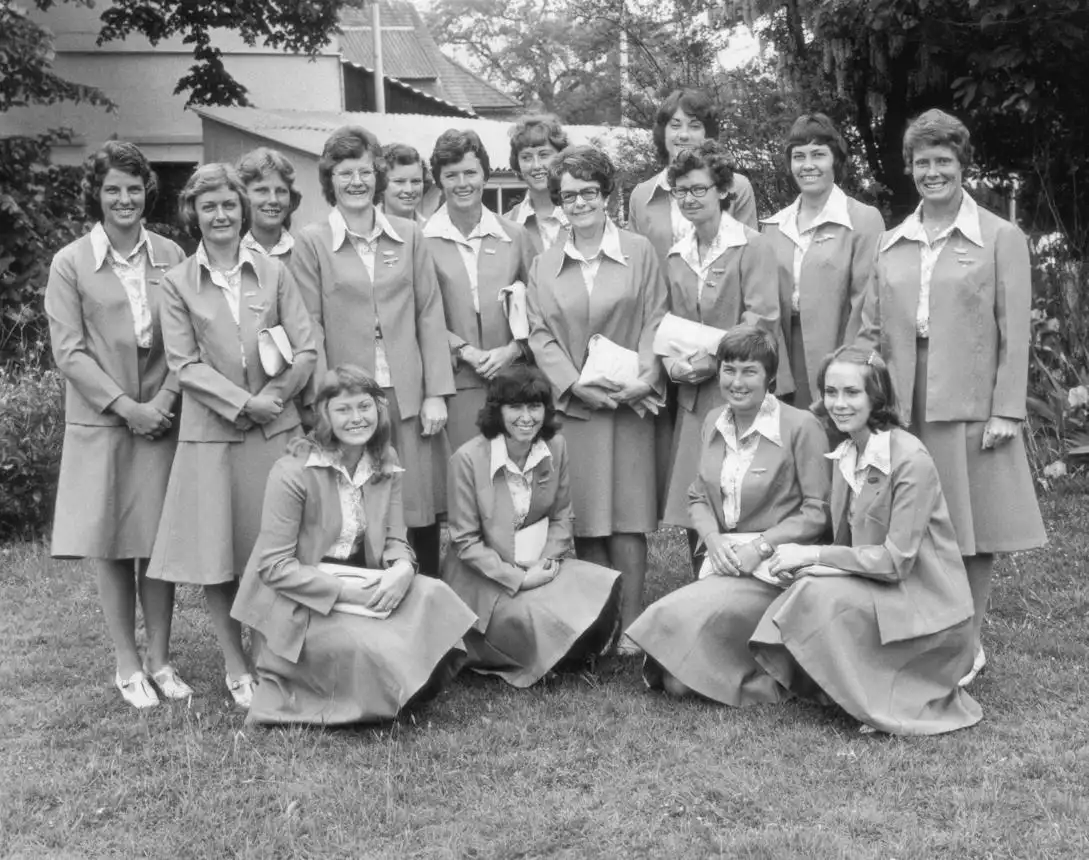
In a 2020 interview with Siren Sport, Gordon explained that her interest in sport developed at school. Her sports mistress encouraged her to participate in vigoro, a game involving paddles and a rubber ball that combined elements of cricket and tennis.
Gordon showed promise in the activity. An important detail was that her teacher also played women’s cricket in Melbourne through the YWCA. This connection helped introduce Gordon to the organised women’s cricket environment.
Her childhood cricket experiences were also shaped by the boys playing informal cricket in Moe during the 1950s. Gordon recalled how she and other girls became involved after retrieving balls that had been hit into a neighbouring garden.
These experiences provided an informal starting point for her later involvement in organised cricket. sirensport.com.au+2
Travelling from Moe to Melbourne for Cricket
One of the most interesting aspects of Gordon’s early career was the amount of travel required to participate in women’s cricket.
She travelled from Moe to Melbourne for weekend matches and stayed with her grandparents in Cheltenham. The grounds were often located at Clifton Hill or Sunshine, requiring several public transport connections.
Her recollections describe travelling in full cricket uniform, carrying equipment on trains, trams and buses, and sometimes returning home as late as 8:00 or 8:30 in the evening.
Gordon’s experience illustrates the practical difficulties faced by women cricketers during a period when the sport had limited funding and infrastructure.
The journey to senior cricket was not simply about developing batting and bowling skills. It also required considerable time, travel and personal commitment. sirensport.com.au+1
Anne Gordon’s Family and Grandparents
Gordon has spoken publicly about staying with her grandparents in Cheltenham while travelling from Moe to play cricket in Melbourne.
Their accommodation helped make her weekend cricket commitments possible.
However, reliable public sources reviewed for this biography do not establish the names, occupations or broader details of her parents and siblings. Those details should not be invented.
Her maiden name, Lonsdale, is documented in Cricket Australia’s historical captain profile. cricket.com.au+1
Anne Gordon’s Domestic Cricket Career with Victoria
Anne Gordon’s domestic career developed before she became an established Australian international.
According to Cricket Victoria’s official historical record, she made her debut for the Victorian women’s team in January 1962.
She became an important left-arm bowling option and contributed with the bat as a right-handed player.
Cricket Victoria records her state career contribution as:
- 166 wickets for Victoria.
- 923 runs for Victoria.
- Victorian women’s team debut in January 1962.
- Victorian women’s captaincy in 1973.
These figures demonstrate that her contribution to Victorian cricket extended beyond her international statistics. Cricket Victoria+1
Early Selection and the 1962 Western Australia Tour
In 1962, Gordon received confirmation that she had been selected for Victoria’s women’s team travelling to Perth.
Her recollections provide an unusually detailed account of the difficulties involved in that selection.
She had to pay for her playing uniform and contribute to her travel expenses. The journey from Melbourne to Perth involved an overnight train journey to Adelaide, a connection to the transcontinental express and approximately two days of travel across the Nullarbor.
The conditions were very different from those experienced by modern professional cricketers.
Gordon later recalled that the Victorian association provided the distinctive white letter V for her blazer, while she had to arrange the financial requirements herself. sirensport.com.au+1
South Hawthorn Cricket Club
Following her unsuccessful attempt to gain selection for Australia’s 1963 England tour, Gordon returned to Melbourne club cricket.
She played for South Hawthorn under Jean Perkins, who was associated with Methodist Ladies College.
Gordon later became captain of South Hawthorn. The club environment exposed her to several respected Victorian women’s cricketers, including Joyce Bath, Marion Goring, Gladys Phillips and Eleanor McKenzie.
This period was important in her development as a player and leader before her later international captaincy. sirensport.com.au
Anne Gordon’s International Cricket Career for Australia
Gordon made her Australian Test debut against England in December 1968.
She became recognised as a left-arm seamer capable of producing important breakthroughs against strong batting teams.
Her international career included:
| Format | Matches | Runs | Average | Highest score | Wickets | Bowling average |
|---|---|---|---|---|---|---|
| Women’s Tests | 9 | 195 | 19.50 | 38* | 22 | 23.09 |
| Women’s ODIs | 8 | 99 | 19.80 | 50* | 7 | 21.28 |
| Combined | 17 | 294 | — | — | 29 | — |
Source: historical women’s international scorecard records. Career totals are separated by format. Cricket Wicket+2
Anne Gordon’s Test Debut Against England
Grandstand named in honour of local cricket legend: Lyn Larsen
Gordon made her Test debut on 27 December 1968 against England at Thebarton Oval in Adelaide.
She was one of six debutants selected for Australia’s opening Test of the 1968–69 Ashes campaign.
Her selection marked the beginning of a significant international career. She quickly developed a reputation as a strike bowler, particularly through her left-arm seam bowling.
The series also took place during a challenging period for Australian women’s cricket. Public promotion and participation had declined, and the team was undergoing a generational change.
Gordon became one of the players who helped strengthen the national side during this period. cricket.com.au+1
The Historic 10-Wicket Performance Against England in 1968
Career-defining achievement
Gordon produced the most remarkable bowling performance of her Test career in her second international appearance against England at Junction Oval, Melbourne.
She took:
| Innings | Bowling figures |
|---|---|
| First innings | 5/61 |
| Second innings | 5/57 |
| Match total | 10/118 |
She bowled 28 overs in each innings, collecting two five-wicket hauls in the same Test.
Her performance made her only the second woman, after the legendary Betty Wilson, to take 10 wickets in a women’s Test match.
Among her important dismissals were England’s leading players Rachael Heyhoe-Flint and Enid Bakewell.
Despite Gordon’s outstanding bowling, the match ended in a draw. Australia had reached 5/108 while chasing 182 when time ran out on the third day.
The performance established her as one of Australia’s most effective bowlers of the series. Cricket Victoria+2
Leading Australia’s Bowling Attack in the 1968–69 Ashes
Gordon finished the 1968–69 Ashes series as Australia’s leading wicket-taker.
Her series record was:
- 16 wickets.
- Bowling average of 16.68.
- A match-winning standard of bowling despite the series producing drawn results.
Her performances demonstrated that she could compete with England’s leading batters, even during a period when women’s Test cricket was frequently affected by limited playing time and drawn matches.
This achievement helped establish her as an important member of Australia’s international bowling attack. cricket.com.au+1
Anne Gordon and the 1973 Women’s Cricket World Cup
Pariah to pioneer: Patsy Fayne on life & legacy | cricket.com.au
The 1973 Women’s Cricket World Cup was a major milestone in international cricket history. It took place two years before the first men’s Cricket World Cup.
Gordon was part of Australia’s inaugural World Cup-era team.
Her selection was particularly interesting because she had suffered a broken arm and received a late call-up to the Australian squad.
The tournament was held in England and involved several international teams at a time when women’s cricket was still developing its international structure.
Gordon also played in Australia’s first-ever Women’s ODI, against Young England on 23 June 1973 at Dean Park, Bournemouth.
Australia won that match by seven wickets after restricting Young England to 57 runs.
Gordon’s participation placed her among the early generation of Australian women’s ODI cricketers. sirensport.com.au+2
Anne Gordon’s Role in the Development of Women’s ODI Cricket
Her involvement in the 1973 World Cup was an important part of the transition from traditional women’s Test cricket to international one-day competition.
The inaugural tournament helped generate renewed interest in women’s cricket and encouraged greater international visibility.
Gordon subsequently became an Australian captain, giving her a leadership role during another important phase of the sport’s development.
Anne Gordon’s Australian Captaincy in 1976
Gordon was appointed Australia’s women’s captain in 1976, at the age of 34.
She became the eighth captain of the Australian women’s national team, according to Cricket Victoria’s historical record.
Her captaincy covered two major overseas assignments:
- Australia’s first women’s tour of the West Indies in May 1976.
- Australia’s tour of England in 1976.
These tours were important because Australian women’s cricket was expanding its international programme and competing in new cricketing environments.
Australia Women’s Tour of the West Indies, 1976
Gordon led Australia during the historic 1976 West Indies tour.
The team played two Test matches against the West Indies women’s side in May.
Both matches ended in draws, and the series finished 0–0.
The tour also had importance beyond the scorecards. Gordon later recalled that travelling through Jamaica exposed the Australian players to political unrest and different social conditions.
She described the experience as educational for the team and an opportunity to understand the wider world beyond cricket. en.wikipedia.org+2
Australia Women’s Tour of England, 1976
The England tour became the most historically significant chapter of Gordon’s captaincy.
Australia played a three-Test series against England, with all three matches ending in draws.
England subsequently won the three-match ODI series 2–1.
The tour was especially important because it included the first women’s international match at Lord’s Cricket Ground.
Gordon captained Australia during that historic occasion. cricket.com.au+2
Anne Gordon and the First Women’s Cricket Match at Lord’s
News From The Home of Cricket | Lord’s
Historic milestone
On 4 August 1976, Anne Gordon led Australia onto the field at Lord’s Cricket Ground in London.
It was the first women’s international cricket match played at the famous venue.
The occasion represented a significant breakthrough for women’s cricket because the Marylebone Cricket Club had historically restricted women’s access to the ground.
The Women’s Cricket Association had sought permission to stage a match at Lord’s for decades. The opportunity finally arrived during its golden jubilee year.
Gordon later explained that the Australian players had travelled from Jamaica and initially did not even know why they were being taken to Lord’s.
The match was an enormous honour for the team, but the occasion also carried considerable pressure.
The Historic Lord’s ODI Scorecard
| Match detail | Information |
|---|---|
| Date | 4 August 1976 |
| Venue | Lord’s, London |
| Match | England Women vs Australia Women |
| Competition | Women’s ODI |
| Australian captain | Anne Gordon |
| Australia | 161 all out |
| England | 162/2 |
| Result | England won by 8 wickets |
Gordon scored three runs in Australia’s innings and bowled 12 overs for 37 runs without taking a wicket.
Although Australia lost the match, the historical importance of the occasion was much greater than the result.
The match attracted approximately 8,000 spectators, according to Lord’s historical account. i.imgci.com+2
The Long Room and a Historic Moment
One of the memorable details of the Lord’s match involved the famous Long Room.
Gordon recalled that nobody had clearly explained which route the Australian team should use when walking down to the playing area.
The players needed to reach the field quickly, and the route they found took them through the Long Room.
This inadvertently broke a longstanding tradition associated with the male members of the club.
The incident became another memorable part of the occasion and illustrated the changing place of women in cricket.
Gordon also described the pressure of playing in front of a large crowd and the attention surrounding the match.
Her recollections provide an important personal account of a landmark event in women’s cricket history. sirensport.com.au+1
The Dressing-Room Photography Incident
Gordon also spoke about an upsetting incident that occurred before the Lord’s match.
She recalled that a photographer entered the Australian dressing room without permission and took photographs while players were changing.
The images were subsequently circulated internationally.
The incident left the team uncomfortable and made the players more conscious of photography during the historic match.
This account adds an important perspective to the celebration of the 1976 occasion: the players were breaking barriers on the field while still facing inappropriate treatment away from it. sirensport.com.au
Anne Gordon’s Final ODI and International Retirement
Gordon’s international career was approaching its end during the 1976 England tour.
However, she produced an important batting performance in the final ODI against England at Trent Bridge on 8 August 1976.
Her Unbeaten 50 Against England
ODI career-high score
Gordon scored 50 not out in Australia’s innings of 119/9.
She also took one wicket for 28 runs in eight overs.
England reached 120/1 and won by nine wickets.
The unbeaten half-century became Gordon’s highest individual score in women’s ODI cricket.
It was a notable final contribution during an international career that had largely been defined by her bowling. en.wikipedia.org+1
Final Test Against India in 1977
Gordon’s last Test appearance came against India on 15 January 1977.
She finished her international Test career with nine matches, 195 runs and 22 wickets.
Her final international appearances marked the end of a career spanning almost a decade.
Following her playing retirement, she moved into other areas of cricket, including selection and administration. WomenCricket+2
Anne Gordon’s Career Statistics and Records
Gordon’s international record reflects the contribution of a bowling-focused player who also produced useful batting performances.
Test Cricket Statistics
| Test batting record | Performance |
|---|---|
| Matches | 9 |
| Innings | 11 |
| Runs | 195 |
| Average | 19.50 |
| Highest score | 38* |
| Hundreds | 0 |
| Fifties | 0 |
| Test bowling record | Performance |
|---|---|
| Matches | 9 |
| Bowling innings | 15 |
| Balls bowled | 1,808 |
| Runs conceded | 508 |
| Wickets | 22 |
| Bowling average | 23.09 |
| Economy | 1.68 |
| Best innings | 5/57 |
| Best match figures | 10/118 |
| Five-wicket hauls | 2 |
| Ten-wicket matches | 1 |
[Cite: Cricket Wicket+1]
For a complete format breakdown, readers can use the dedicated Test statistics section:
Explore Anne Gordon's complete Test stats
ODI Cricket Statistics
| ODI batting record | Performance |
|---|---|
| Matches | 8 |
| Innings | 7 |
| Runs | 99 |
| Average | 19.80 |
| Highest score | 50* |
| Hundreds | 0 |
| Fifties | 1 |
| ODI bowling record | Performance |
|---|---|
| Matches | 8 |
| Bowling innings | 7 |
| Balls bowled | 304 |
| Runs conceded | 149 |
| Wickets | 7 |
| Bowling average | 21.28 |
| Economy | 2.94 |
| Best innings | 3/25 |
Source: historical women’s international career records. Cricket Wicket+1
See Anne Gordon's complete ODI stats
Domestic Cricket Statistics
Cricket Victoria records 166 wickets and 923 runs for Gordon’s Victorian career.
Her broader women’s domestic record is also listed in historical statistical databases:
| Format | Matches | Runs | Wickets |
|---|---|---|---|
| Women’s First-Class | 33 | 608 | 93 |
| Women’s List A | 26 | 261 | 7 |
The Victorian association totals and database format totals represent different statistical scopes and should not be added together. Cricket Victoria+1
View Anne Gordon's complete first-class stats
Explore Anne Gordon's complete List A record
Anne Gordon’s Most Important Cricket Records
- Took 10 wickets in a women’s Test against England in 1968.
- Became the second woman to achieve 10 wickets in a Test match after Betty Wilson.
- Finished the 1968–69 Ashes as Australia’s leading wicket-taker.
- Represented Australia in the inaugural Women’s Cricket World Cup era.
- Played in Australia’s first Women’s ODI.
- Captained Australia in the first women’s international match at Lord’s.
- Scored an unbeaten 50 in her final ODI against England.
- Recorded 166 wickets for Victoria.
- Captained Victoria’s women’s team in 1973. Cricket Victoria+4
Anne Gordon’s Career After Retirement: Selector, Administrator and Historian
News From The Home of Cricket | Lord’s
Gordon’s involvement in cricket did not end with her international playing career.
She continued working in the sport through selection, administration, leadership and historical preservation.
Her post-playing career also created an unusual connection with English women’s cricket.
Victorian Women’s Cricket Selection
After retiring from international cricket, Gordon became involved in selection for the Victorian women’s cricket system.
She also held leadership positions within the Victorian Women’s Cricket Association.
Her documented contributions included:
- Former vice-president.
- Former secretary.
- Former state selector.
- Former national delegate.
- Former newsletter editor.
- Life membership of the Victorian Women’s Cricket Association in 1971.
These responsibilities demonstrated her commitment to the development of women’s cricket beyond her playing achievements. OA v4.0+1
Anne Gordon’s Move to England
After her playing career, Gordon moved to England.
She continued her involvement in women’s cricket through selection roles with Surrey and England.
Her work eventually led to her appointment as Chair of England Selectors, a position she held from 1993 to 1996.
She also contributed to England’s preparations for the 1993 Women’s Cricket World Cup.
This was a particularly interesting development because Gordon had previously captained Australia against England.
Her cricket knowledge and experience were therefore valued by the same national cricket environment she had competed against internationally. Cricket Victoria+2
The 1993 Women’s Cricket World Cup
Gordon’s involvement in English cricket selection included helping select England’s squad for the 1993 Women’s Cricket World Cup.
England eventually won that tournament, ending Australia’s long period of dominance in the competition.
Her role demonstrated that her influence extended beyond her own international playing record. sirensport.com.au+1
Anne Gordon’s Work with the Pioneer Victorian Women’s Cricket Association
After returning to Australia in 2013, Gordon became involved with the Pioneer Victorian Women’s Cricket Association.
The organisation is dedicated to preserving the history of women’s cricket in Victoria.
Gordon’s work includes historical research and helping ensure that the achievements of earlier generations are accurately documented.
The Australian Government’s 2026 honours record identifies her as a committee member since 2013 and a current historian.
Her involvement is especially important because many early women’s cricket achievements were not documented as comprehensively as men’s cricket.
Gordon has explained that preserving the history of previous generations matters because those players made considerable sacrifices to establish opportunities for future cricketers.
She has also continued mentoring young female cricketers, sharing lessons from her own playing and leadership experiences. OA v4.0+2
Anne Gordon’s Awards and Honours
Gordon has received several recognitions for her contributions to cricket.
| Year | Award or recognition |
|---|---|
| 1971 | Life Member, Victorian Women’s Cricket Association |
| 1996 | Honorary Individual Membership, Women’s Cricket Association of England |
| 2016 | Outstanding Services to Women’s Cricket Award |
| 2018 | Life Member, Cricket Victoria |
| 2026 | Member of the Order of Australia (AM) |
OA v4.0+1
Member of the Order of Australia in 2026
National honour
One of the most significant recent recognitions of Gordon’s career came in the 2026 Australia Day Honours.
She was appointed a Member of the Order of Australia (AM) for significant service to cricket as a player, selector and administrator.
The official Australian Government citation recognises her contributions across several organisations:
- Cricket Victoria.
- Victorian Women’s Cricket Association.
- Pioneer Victorian Women’s Cricket Association.
- England women’s cricket.
- Victoria’s Past Players Association.
- Greenvale Kangaroos Cricket Club.
The honour recognises decades of contribution to the sport rather than only her international playing achievements. OA v4.0+1
Anne Gordon’s Playing Style and Cricketing Strengths
Gordon was primarily a left-arm medium-pace bowler who batted right-handed.
Her career statistics show that bowling was her most significant contribution to international cricket.
Her 22 Test wickets came at an average of 23.09, while her ODI record included seven wickets at an average of 21.28.
Her strongest statistical achievement was her 10-wicket match against England in 1968.
As a batter, she contributed 195 Test runs and 99 ODI runs. Her unbeaten 50 in her final ODI showed that she could also make useful contributions lower down the order.
Her playing style combined left-arm seam bowling with practical batting contributions. Cricket Wicket+2
Anne Gordon’s Influence on Modern Australian Women’s Cricket
Gordon played during an era when women’s cricket had limited financial support, restricted access to facilities and comparatively little media attention.
Her own experiences included paying for travel and uniforms, undertaking lengthy journeys for domestic matches and competing in an international environment where women’s cricket was still fighting for recognition.
The 1976 Lord’s match was an important example of how far the sport had progressed, although Gordon later explained that the attention did not immediately produce the sponsorship and opportunities the players had hoped for.
She has also spoken positively about the improved opportunities available to modern Australian women cricketers.
Her continued work in historical preservation and mentoring helps connect the early generations of women’s cricket with today’s players. sirensport.com.au+2
Comparing Anne Gordon with Other Australian Women’s Cricket Legends
Anne Gordon belongs to an important generation of Australian women’s cricketers.
Her career can be understood alongside other historical figures such as Betty Wilson, Miriam Knee, Rachael Heyhoe Flint and Sharon Tredrea.
These players contributed to different stages of the development of international women’s cricket.
Gordon’s particular distinction was her combination of a historic 10-wicket Test performance, national captaincy and later involvement in English and Australian cricket administration.
Start typing Player B, choose a result, then compare instantly from cached career summaries. Compare Anne Gordon
Player A is locked to this biography
Anne Gordon’s Current Status in 2026
As of 15 November 2026, Gordon is a former international cricketer whose involvement in cricket continues through historical preservation and mentoring.
The Australian Government’s honours citation lists her as a current member of the Cricket Victoria Historical Society, a historian with the Pioneer Victorian Women’s Cricket Association and a committee member of Victoria’s Past Players Association.
Her 2026 Order of Australia recognition has further acknowledged her long-term contribution to the sport. OA v4.0+1
Frequently Asked Questions About Anne Gordon
1. Who is Anne Gordon?
Anne Gordon is a former Australian women’s international cricketer who represented Australia in nine Tests and eight ODIs between 1968 and 1977. She later became a cricket selector, administrator and historian.
2. What is Anne Gordon’s real name?
Her full name is Dorothy Anne Gordon. Her maiden name was Dorothy Anne Lonsdale.
3. How old is Anne Gordon?
She was born on 24 December 1941 and is 84 years old as of 15 November 2026.
4. What is Anne Gordon famous for?
She is best known for taking 10 wickets in a Test match against England in 1968 and captaining Australia in the first women’s international match played at Lord’s in 1976.
5. How many wickets did Anne Gordon take in Test cricket?
She took 22 wickets in nine women’s Test matches at an average of 23.09.
6. How many ODI wickets did Anne Gordon take?
She took seven wickets in eight women’s ODIs at an average of 21.28.
7. What was Anne Gordon’s highest ODI score?
Her highest ODI score was 50 not out, scored against England at Trent Bridge on 8 August 1976.
8. Did Anne Gordon captain Australia?
Yes. She captained Australia during the 1976 tours of the West Indies and England.
9. Did Anne Gordon play in the first women’s match at Lord’s?
Yes. She captained Australia against England on 4 August 1976 in the first women’s international match at Lord’s.
10. What happened to Anne Gordon after retirement?
She became involved in cricket selection and administration, working with Victoria, Surrey and England. She later became Chair of England Selectors from 1993 to 1996.
11. Did Anne Gordon receive an Order of Australia honour?
Yes. She was appointed a Member of the Order of Australia (AM) in the 2026 Australia Day Honours for her services to cricket.
12. What is Anne Gordon’s net worth?
No dependable public financial disclosure or independently verified net-worth estimate was identified. It would be misleading to assign her a specific figure.
13. Is Anne Gordon married?
Her public cricket biographies and the reliable sources reviewed do not establish verified details about her spouse or relationship status.
14. What is Anne Gordon’s bowling style?
She was a left-arm medium-pace bowler and a right-handed batter.
15. Does Anne Gordon still contribute to cricket?
Yes. Her documented roles include historical work with the Pioneer Victorian Women’s Cricket Association, mentoring and involvement with cricket organisations.
conclusion
Anne Gordon’s career is significant not only because of her international statistics but also because of the historical moments she helped create.
Her 10-wicket Test performance against England demonstrated her ability as a leading international bowler. Her captaincy at Lord’s placed her at the centre of a landmark moment in women’s cricket, while her later selection and historical work extended her contribution well beyond her playing years.
Her 2026 Member of the Order of Australia honour provides national recognition of a career built across playing, leadership, administration and the preservation of women’s cricket history.