
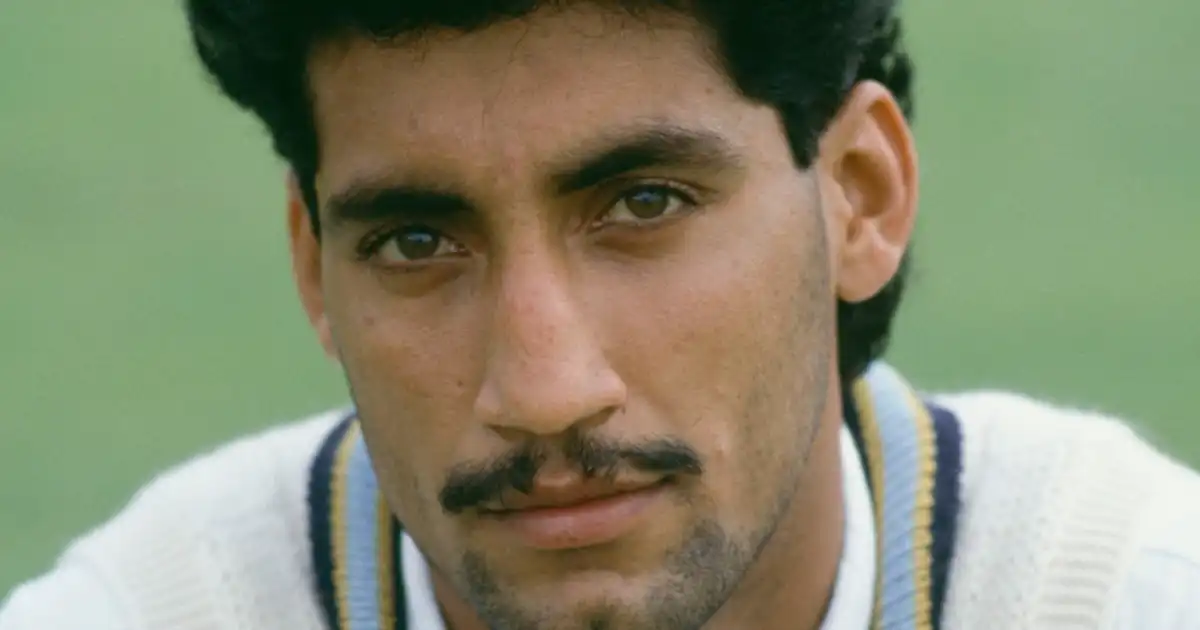
Atul Wassan is a former Indian international fast-medium bowler from Delhi who represented India in four Test matches and nine One Day Internationals between 1990 and 1991. Born on 23 March 1968, he built his reputation through Delhi’s domestic cricket system, taking 290 first-class wickets and scoring two centuries. Although injuries and limited international opportunities shortened his playing career, Wassan remained involved in Indian cricket after retirement as a commentator, analyst and Delhi cricket selector. He also became an important figure in the early domestic development of Virat Kohli and Ishant Sharma, having served on Delhi’s senior selection committee.
Atul Wassan Career Stats
| Format | Career | Matches | Innings | Runs | HS | Bat Avg | 50s | 100s | Wickets | BBI | Bowl Avg |
|---|---|---|---|---|---|---|---|---|---|---|---|
| TESTReconciled source snapshot | 1990–1990 | 4 | 5 | 94 | 53 | 23.50 | 1 | 0 | 10 | 4/108 | 50.40 |
| ODIReconciled source snapshot | 1990–1991 | 9 | 6 | 33 | 16 | 8.25 | 0 | 0 | 11 | 3/28 | 25.72 |
This compact table is rendered directly from the shared per-format source selection; recorded-only rows are explicitly labelled. Detailed opponent, venue, year and dismissal analysis remains on the full stats page.
Atul Wassan
/cricket-player/atul-wassan/Each format uses one source consistently. Recorded-only figures are labelled separately.
Reconciled source snapshot
Reconciled source snapshot
Atul Wassan Quick Facts
| Profile | Details |
|---|---|
| Full name | Atul Satish Wassan |
| Date of birth | 23 March 1968 |
| Age | 58 years (November 2026) |
| Birthplace | Delhi, India |
| Nationality | Indian |
| Profession | Former international cricketer, commentator and cricket administrator |
| Batting style | Right-handed |
| Bowling style | Right-arm fast-medium |
| Primary role | Fast bowler |
| International team | India |
| Test matches | 4 |
| ODI matches | 9 |
| Test wickets | 10 |
| ODI wickets | 11 |
| Highest Test score | 53 |
| Best Test bowling | 4/108 |
| Best ODI bowling | 3/28 |
| Domestic team | Delhi |
| First-class wickets | 290 |
| List A wickets | 64 |
| School | Guru Harkrishan Public School, Vasant Vihar, Delhi |
| Notable administrative role | Chairman, DDCA senior selection committee |
Career statistics are historical records, not current playing statistics. cricketarchive.com+3
Atul Wassan’s Early Life, Childhood and Education
Atul Wassan was born and raised in Delhi, India, where he developed as a cricketer through the city’s school and club cricket structure. Unlike players whose careers began through a major national academy, Wassan’s early development was closely connected to Delhi’s competitive cricket environment.
Schooling at Guru Harkrishan Public School
Wassan attended Guru Harkrishan Public School in Vasant Vihar, Delhi. His cricketing ability was recognised during his school years, helping establish his reputation as a promising young fast bowler.
His school background is one of the few independently documented details about his early education. More detailed claims about university qualifications or additional educational institutions should not be treated as established without further evidence.
Development as a Delhi Fast Bowler
Wassan eventually progressed into Delhi’s senior cricket system. His right-arm fast-medium bowling, ability to generate bounce and capacity to bowl extended spells made him a useful domestic pace option.
His first-class career began in the 1986–87 season, several years before his international debut. That domestic experience provided the foundation for his eventual selection for India.
Verified early-life details:
- Birthplace: Delhi, India.
- School: Guru Harkrishan Public School, Vasant Vihar.
- Cricketing pathway: School cricket followed by Delhi domestic cricket.
- First-class career beginning: 1986–87.
- Batting: Right-handed.
- Bowling: Right-arm fast-medium.
cricketarchive.com+3
Atul Wassan Family: Parents, Siblings and Personal Life
Atul Wassan’s professional cricket career and subsequent media work are publicly documented, but detailed information about his family has a considerably smaller public record.
There is insufficient reliable evidence in the sources reviewed to confidently identify his parents, their occupations, siblings or their individual backgrounds.
| Personal-life detail | Verification |
|---|---|
| Father | Not reliably established |
| Mother | Not reliably established |
| Brothers and sisters | Not reliably established |
| Wife | Not reliably established |
| Children | Not reliably established |
| Family cricketing background | Not reliably established |
These details should not be filled using unsupported biography websites or assumptions.
His public career provides considerably more verifiable material than his private family life.
Atul Wassan’s Domestic Cricket Career: Delhi and Ranji Trophy
Atul Wassan’s domestic career was the strongest statistical foundation of his cricketing life. Between 1986–87 and 1997–98, he represented Delhi in first-class cricket, collecting 290 wickets in 80 matches.
His domestic record also demonstrates that he was more than a specialist bowler. Wassan scored 1,310 first-class runs, including two centuries, and occasionally contributed important lower-order innings.
First-Class Debut and Delhi Cricket
Wassan began his first-class career during the 1986–87 season. He developed into a consistent Delhi fast-medium bowler and remained part of the team’s domestic setup until 1997–98.
His first-class record:
| Batting statistic | Record |
|---|---|
| Matches | 80 |
| Innings | 83 |
| Runs | 1,310 |
| Highest score | 110 |
| Average | 18.98 |
| Centuries | 2 |
| Half-centuries | 1 |
| Bowling statistic | Record |
|---|---|
| Wickets | 290 |
| Bowling average | 28.21 |
| Best innings figures | 7/36 |
| Five-wicket hauls | 17 |
| Ten-wicket match hauls | 4 |
| Economy rate | 3.36 |
| Bowling strike rate | 50.36 |
cricketarchive.com+1
Breakthrough Season: Delhi’s 1989–90 Domestic Campaign
The 1989–90 season was particularly important in Wassan’s progression towards international cricket.
He helped Delhi win the Irani Trophy against Rest of India, taking five wickets in the match. His domestic performances strengthened his case for national selection.
Cricbuzz’s historical profile also identifies his ten-wicket performance against Jammu and Kashmir in Delhi as an important achievement during this period.
These performances demonstrated his ability to produce match-changing spells in Indian domestic conditions, rather than relying solely on occasional individual wickets.
Atul Wassan’s 110 Against Bengal in the 1991–92 Ranji Trophy
One of the most notable batting performances of Wassan’s domestic career came in the 1991–92 Ranji Trophy quarter-final against Bengal.
Although primarily selected as a fast bowler, he produced a career-best first-class score of 110.
His innings included two important partnerships:
- 130 runs with Vivek Razdan.
- 61 runs with Vemulapally Arvind for the final wicket.
The innings illustrated Wassan’s lower-order batting ability and gave Delhi a significant contribution from a player whose principal responsibility was taking wickets.
Historical performance details: Cricbuzz’s Atul Wassan career profile. Cricbuzz.com+1
Atul Wassan’s Domestic Team Record
| Team | Format | Period |
|---|---|---|
| Delhi | First-class | 1986–87 to 1997–98 |
| Delhi | List A | 1989–90 to 1997–98 |
| India | Test | 1989–90 to 1990 |
| India | ODI | 1989–90 to 1990–91 |
cricketarchive.com+1
Atul Wassan’s International Cricket Career for India
Atul Wassan represented India during the 1990 period, playing four Test matches and nine ODIs. His international career included promising performances against New Zealand, although he struggled to maintain a permanent place in the national side.
His international career statistics are modest compared with his domestic achievements, but they provide a useful picture of his role as a developing Indian fast-medium bowler during a competitive period for Indian pace bowling.
Atul Wassan Test Career
Wassan made his Test debut against New Zealand at Christchurch on 2 February 1990.
He played four Tests, taking 10 wickets at an average of 50.40. His best innings figures were 4/108.
His final Test appearance came against England at The Oval in August 1990.
Test career summary
| Statistic | Record |
|---|---|
| Matches | 4 |
| Runs | 94 |
| Highest score | 53 |
| Batting average | 23.50 |
| Half-centuries | 1 |
| Wickets | 10 |
| Bowling average | 50.40 |
| Best bowling | 4/108 |
| Economy rate | 4.24 |
Explore Atul Wassan's complete Test statscricketarchive.com+2
Test Debut Against New Zealand
Wassan’s international introduction came during India’s 1989–90 tour of New Zealand.
The tour presented difficult conditions for visiting Indian players, particularly fast bowlers who had to adapt to New Zealand’s pitches and weather.
Wassan made his debut in Christchurch and subsequently played in the series against New Zealand. His right-arm pace gave India another seam-bowling option alongside experienced players such as Kapil Dev and Manoj Prabhakar.
The Auckland Test and Ian Smith’s 24-Run Over
One of the most remembered incidents of Wassan’s international career occurred during the third Test between New Zealand and India at Eden Park, Auckland, from 22 February 1990.
Wassan had actually bowled effectively earlier in the innings, taking four wickets for 108 runs. His victims included Trevor Franklin, Martin Crowe, Mark Greatbatch and Ken Rutherford.
However, New Zealand wicketkeeper-batter Ian Smith produced an extraordinary counterattacking innings.
SMITHY WINS BERT SUTCLIFFE MEDAL
Ian Smith’s innings against India
173
Runs from 136 balls
- Venue: Eden Park, Auckland
- Match: New Zealand vs India, third Test
- Date: February 1990
- Wassan’s bowling figures: 4/108
- Smith struck 24 runs from one six-ball over bowled by Wassan.
Smith scored 173 from 136 deliveries, including 23 fours and three sixes. During his innings, he equalled the then-record for most runs scored from a single six-ball over in Test cricket, hitting Wassan for 24.
The incident became a defining statistical footnote in Wassan’s international career, despite the fact that he had taken four wickets in the same innings.
It is important to distinguish the two achievements: Wassan’s four-wicket haul was a significant bowling contribution, while Smith’s assault was an extraordinary batting performance. Cricbuzz+2
Atul Wassan’s Highest Test Score: 53 Against New Zealand
Wassan’s highest Test score was 53, made during the 1990 New Zealand series.
The half-century demonstrated his ability to contribute with the bat despite being selected primarily for his fast bowling.
He finished his Test career with 94 runs from four matches, including one half-century.cricketarchive.com+1
Atul Wassan’s Final Test Against England
Wassan’s fourth and final Test came against England at The Oval in August 1990.
He took three wickets in the match, with figures of 2/79 and 1/94 across the two innings. He also scored 15 runs in his first innings.
Despite this appearance, he did not receive another Test opportunity for India. His international career in the longest format ended after just four matches.India Cricket+1
Atul Wassan Test Career Timeline
| Date | Opponent | Venue | Performance |
|---|---|---|---|
| 2 February 1990 | New Zealand | Christchurch | Test debut |
| 9 February 1990 | New Zealand | Napier | Played second Test |
| 22 February 1990 | New Zealand | Auckland | 4/108 and 53 runs |
| 23 August 1990 | England | The Oval | Final Test; 3 match wickets |
Cricbuzz.com+1
Atul Wassan’s ODI Career and Best Bowling Figures
Atul Wassan made his One Day International debut against New Zealand at Dunedin on 1 March 1990. He finished with nine ODI appearances and 11 wickets.
His ODI career included an encouraging start in New Zealand and some useful performances against Sri Lanka and Bangladesh in India.
ODI Debut Against New Zealand
Wassan made his first ODI appearance in the Rothmans Cup triangular series on 1 March 1990.
India were dismissed for 138, and Wassan contributed 16 runs from 24 balls. With the ball, he took three wickets for 45 runs in 10 overs.
Although India lost the match, his three-wicket return gave him a positive introduction to international one-day cricket.
Best ODI Bowling: 3/28 Against Sri Lanka
One of Wassan’s best limited-overs performances came against Sri Lanka at Cuttack on 28 December 1990.
He returned figures of 3/28 from 10 overs, maintaining an economy rate of 2.80.
This was his best ODI bowling performance and demonstrated his ability to contribute through disciplined spells in the 50-over format.
Performance snapshot
| Detail | Record |
|---|---|
| Opposition | Sri Lanka |
| Date | 28 December 1990 |
| Venue | Cuttack |
| Format | ODI |
| Overs | 10 |
| Runs conceded | 28 |
| Wickets | 3 |
| Economy | 2.80 |
Cricbuzz.com+1
ODI Performances Against Bangladesh and Sri Lanka
During India’s home international programme in late 1990 and early 1991, Wassan featured in matches against Bangladesh and Sri Lanka.
His bowling figures included:
| Date | Opposition | Venue | Bowling |
|---|---|---|---|
| 5 December 1990 | Sri Lanka | Pune | 1/29 |
| 8 December 1990 | Sri Lanka | Margao | 0/11 |
| 25 December 1990 | Bangladesh | Chandigarh | 1/41 |
| 28 December 1990 | Sri Lanka | Cuttack | 3/28 |
| 4 January 1991 | Sri Lanka | Kolkata | 1/35 |
Cricbuzz.com
Atul Wassan ODI Career Statistics
| Statistic | Record |
|---|---|
| Matches | 9 |
| Runs | 33 |
| Highest score | 16 |
| Batting average | 8.25 |
| Wickets | 11 |
| Bowling average | 25.72 |
| Best bowling | 3/28 |
| Economy rate | 3.98 |
| Bowling strike rate | 38.72 |
See Atul Wassan's complete ODI statscricketarchive.com+1
Atul Wassan’s Asia Cup Association
Wassan was part of India’s wider international cricket group during the period surrounding the 1990–91 Asia Cup.
Historical tournament records identify him in India’s squad information. However, squad membership should not automatically be treated as proof of an appearance in a particular match. His established international record remains four Tests and nine ODIs.
India won the 1990–91 Asia Cup, adding a team honour to the period in which Wassan represented the national side. en.wikipedia.org+2
Atul Wassan’s Playing Style and Strengths as a Fast Bowler
Atul Wassan was a right-arm fast-medium bowler whose height and high release helped him generate bounce. His domestic performances showed his ability to bowl extended spells and take wickets consistently.
Cricbuzz describes him as a tall Delhi seamer who could hit the pitch hard from a high release point.
Main Characteristics
- Bowling type: Right-arm fast-medium.
- Approach: Pace bowling with an emphasis on hitting the pitch.
- Bounce: His release point helped generate bounce.
- Workload: Capable of bowling long spells.
- Domestic effectiveness: 290 first-class wickets at 28.21.
- Limited-overs contribution: 11 ODI wickets at 25.72.
His first-class record was considerably stronger than his brief international record. The contrast reflects the difference between his sustained domestic opportunities and the limited number of matches he played for India.Cricbuzz.com+1
Atul Wassan’s Career Records and Major Achievements
Wassan’s most substantial achievements came in domestic cricket, although his international career also included notable bowling performances.
| Achievement | Record |
|---|---|
| Test appearances | 4 |
| ODI appearances | 9 |
| Test wickets | 10 |
| ODI wickets | 11 |
| First-class wickets | 290 |
| List A wickets | 64 |
| First-class centuries | 2 |
| Highest first-class score | 110 |
| Best first-class bowling | 7/36 |
| First-class five-wicket hauls | 17 |
| First-class ten-wicket match hauls | 4 |
| Best ODI figures | 3/28 |
| Best Test figures | 4/108 |
| 1990–91 Asia Cup | Member of India’s winning-era squad |
cricketarchive.com+2
Atul Wassan’s List A Cricket Statistics
Wassan also represented Delhi in List A cricket, accumulating 53 matches between 1989–90 and 1997–98.
| Statistic | Record |
|---|---|
| Matches | 53 |
| Runs | 370 |
| Highest score | 106 |
| Batting average | 11.56 |
| Centuries | 1 |
| Wickets | 64 |
| Bowling average | 25.95 |
| Best bowling | 5/36 |
| Five-wicket hauls | 1 |
cricketarchive.com
For a broader statistical breakdown across his playing formats, readers can use the [general cricket statistics tool] through the following integrated link.
Explore the complete cricket player statistics database
Atul Wassan’s Role in Virat Kohli and Ishant Sharma’s Early Careers
One of the most significant parts of Wassan’s contribution to Indian cricket came after his playing career. He became involved in Delhi’s selection system and played a role in the early senior-cricket opportunities given to future India internationals Virat Kohli and Ishant Sharma.
How Atul Wassan Helped Virat Kohli Reach Delhi’s Ranji Team
Wassan was associated with the West Delhi Cricket Academy, where he first watched Kohli develop as a young cricketer under coach Rajkumar Sharma.
In an interview published by Khaleej Times in September 2018, Wassan explained that Kohli had joined the academy as a young boy and that he had watched his junior development.
Wassan recalled that Kohli’s talent became increasingly apparent as he progressed through junior cricket.
The important selection decision came in November 2006, when Wassan was involved in Delhi’s senior selection committee. Kohli was selected for Delhi’s Ranji Trophy team alongside fast bowler Ishant Sharma.
According to Wassan, both players faced resistance because they were involved with India’s Under-19 setup. He supported their inclusion, and both made their Ranji Trophy debuts in the same match against Tamil Nadu.
The significance of Wassan’s selection contribution:
- He was associated with the West Delhi Cricket Academy.
- He observed Kohli’s development during his junior years.
- He supported Kohli’s progression into Delhi senior cricket.
- He helped select Kohli and Ishant Sharma for the Delhi Ranji team.
- Their selection came in November 2006 against Tamil Nadu.
Outlook India+2
His Connection With Rajkumar Sharma and West Delhi Cricket Academy
Wassan’s association with coach Rajkumar Sharma was important to this part of his career.
The two were connected through Delhi cricket and the West Delhi Cricket Academy. Their shared involvement in developing young players gave Wassan an opportunity to remain close to the grassroots game after retiring from professional cricket.
An Outlook India feature also recorded Wassan’s recollection of first seeing Kohli at the academy. He recognised his potential but explained that predicting how far a young player’s career would progress was not straightforward.
This provides an important distinction: Wassan contributed to Kohli’s selection and development pathway, but Kohli’s subsequent international achievements were the result of his own cricketing progression, coaching and performances.Outlook India+1
Atul Wassan’s Injury, Career Setbacks and Retirement
Wassan’s international career was relatively short, and injury was an important factor in its early ending.
A 2006 profile in The Telegraph reported that he suffered a rib injury and was dropped from the Indian team. The same report described the physical and psychological difficulties surrounding the end of his playing career.
His wife, Sonu, supported him during this period, including helping him recover physically and mentally.
Wassan subsequently continued playing domestic cricket, with his first-class and List A records extending through the 1997–98 season.
What Happened After His International Career?
Although he stopped representing India, Wassan remained involved in cricket through several professional activities.
His post-playing career included:
- Television cricket analysis.
- Cricket commentary.
- Hosting cricket-related programmes.
- Sports broadcasting.
- Domestic cricket administration.
- Player selection and development.
The combination of his playing experience and later administrative involvement helped him maintain a presence in Indian cricket.Telegraph India+2
Atul Wassan’s Wife, Children and Family Life
Unlike many former international cricketers whose private lives receive little detailed coverage, Wassan’s family life was discussed in a 2006 Telegraph profile.
The article identified his wife as Sonu and described her role in supporting the family while Wassan travelled for commentary assignments and business activities.
It also identified their two children:
- Aayushmaan
- Aavantikaa
The article reported that Wassan and Sonu had met through a friend and had been together for approximately 13 years at the time of publication.
It also described how Sonu supported him following the rib injury and his departure from the Indian team.
These are historical details reported in 2006, not a complete update of the family’s present circumstances. Telegraph India
Atul Wassan’s Business Career and Work Outside Cricket
Wassan’s professional life was not restricted to cricket and television.
The 2006 Telegraph profile described him as a businessman who had been involved in establishing a factory producing mobile-phone accessories.
This was particularly relevant during the period when his international playing career had ended and he was developing other professional interests.
However, there is insufficient recent company-registration or financial evidence to establish the factory’s present ownership, operating status, turnover or value.
His documented business involvement should therefore be distinguished from unsupported claims about his present wealth.Telegraph India
Atul Wassan’s Career as a Cricket Commentator and Television Analyst
After retiring from professional cricket, Wassan moved towards television and sports broadcasting.
His playing experience gave him a perspective on bowling, team selection and the pressures experienced by international cricketers.
An Outlook India interview published in February 2024 described him as a former medium-pacer who had moved into television, hosting cricket-related shows and appearing as a prime-time cricket analyst.
Television and Cricket Broadcasting
His documented broadcasting and media activities include:
- Hosting cricket-related television programmes.
- Appearing as a cricket expert on sports channels.
- Providing match analysis.
- Participating in cricket discussion programmes.
- Commentary work, including the World Championship of Legends.
He has also appeared in cricket-related entertainment productions, although these should be distinguished from his professional playing and broadcasting work.
His Views on Modern Cricket
In his 2024 Outlook interview, Wassan discussed the changing relationship between cricket, politics and social media.
He expressed concern about the influence of online trolling on players and argued that social-media reactions should not be confused with informed cricket analysis.
He also discussed how the India–Pakistan cricket rivalry had changed over time, drawing on his own experience of international cricket.
In August 2025, he spoke to NDTV about the withdrawal of Indian legends from matches against Pakistan during the World Championship of Legends. Outlook India+2
Atul Wassan’s Career in Delhi Cricket Administration
Wassan’s experience as an international player and his understanding of Delhi’s domestic cricket structure eventually brought him into cricket administration.
His administrative work has included senior-team selection, committee leadership and involvement in the appointment of coaches and support staff.
Delhi Senior Selection Committee
Wassan served as chairman of the DDCA senior selection committee during different periods.
His administrative chronology includes:
| Period | Position / Development |
|---|---|
| 2006 | Involved in the Delhi selection process when Virat Kohli and Ishant Sharma entered the Ranji team |
| 2016 | Removed from the senior selection panel |
| 2017–18 | Returned as chairman of the senior selection committee |
| 2018–19 | Continued in Delhi selection leadership |
| August 2019 | Named chairman for the 2019–20 season |
| December 2019 | Replaced by Bantoo Singh |
| December 2020 | Appointed chairperson of DDCA’s Cricket Advisory Committee |
India Today+3
Removal and Reappointment in the DDCA
In November 2016, the DDCA removed Wassan from its senior selection panel. Contemporary reporting attributed the decision to complaints concerning alleged commercial engagements.
He subsequently returned to a leadership position in the selection system.
In August 2019, the DDCA announced his appointment as chairman of the senior selection committee for the 2019–20 season, alongside Anil Bharadwaj and Vineet Jain.
However, in December 2019, the Cricket Advisory Committee replaced him with former Delhi batsman Bantoo Singh.
These were administrative changes, and the reported allegations surrounding his earlier removal should not be presented as established findings of wrongdoing. India Today+2
Appointment as DDCA Cricket Advisory Committee Chairperson
On 4 December 2020, the DDCA appointed Wassan as chairperson of its three-member Cricket Advisory Committee.
The other members were former Indian cricketers Parvinder Awana and Robin Singh Junior.
The committee was responsible for making recommendations concerning:
- Selection committees.
- Coaches.
- Support staff.
- Cricket-related appointments.
- Conditions governing cricketing positions.
The appointment represented another step in Wassan’s post-playing involvement in Delhi cricket administration. Cricket News – Times of India+1
View Atul Wassan's complete first-class stats
Explore Atul Wassan's complete List A record
Atul Wassan Player Comparison
Wassan’s domestic and international career can be compared with other Indian fast bowlers from his generation. His 290 first-class wickets provide a useful basis for comparing his domestic contribution with other Delhi and India seamers.
Start typing Player B, choose a result, then compare instantly from cached career summaries. Compare Atul Wassan
Player A is locked to this biography
Atul Wassan’s Net Worth, Salary and Earnings
Atul Wassan’s exact net worth has not been established through dependable public financial disclosures.
His documented professional activities have included:
- International and domestic cricket.
- Television commentary and analysis.
- Hosting cricket programmes.
- Cricket administration.
- A reported mobile-phone accessories manufacturing business.
There is no sufficiently reliable financial evidence to assign a specific net-worth figure, annual salary or present business valuation.
Online estimates should not be treated as verified financial information.
Atul Wassan’s Awards and Recognition
Wassan’s most clearly documented cricketing achievements include:
- Representing India in Test and ODI cricket.
- Being associated with India’s 1990–91 Asia Cup-winning campaign.
- Taking 290 first-class wickets.
- Scoring two first-class centuries.
- Serving as chairman of the DDCA senior selection committee.
- Becoming chairperson of the DDCA Cricket Advisory Committee.
His most significant contribution beyond his playing career was his involvement in Delhi’s selection system, particularly the early senior opportunities given to Virat Kohli and Ishant Sharma.
Atul Wassan’s Current Status (November 2026)
Atul Wassan is a former international cricketer whose publicly documented post-playing work has centred on cricket broadcasting, analysis and administration.
Current career profile:
| Area | Position |
|---|---|
| International cricket | Retired |
| First-class cricket | Retired |
| List A cricket | Retired |
| Commentary and analysis | Documented professional activity |
| Cricket administration | Previous senior DDCA leadership positions |
| Business | Previously reported manufacturing involvement |
| Current playing team | None established |
His last recorded first-class season was 1997–98, and his international appearances ended in 1991.
A new 2026 interview published on 5 May 2026 also discussed his playing career, injury-related setback and broadcasting experiences. This confirms his continued public involvement in cricket discussion, although it does not independently establish a current formal DDCA appointment. cricketarchive.com+2
Frequently Asked Questions About Atul Wassan
1. Who is Atul Wassan?
Atul Wassan is a former Indian international fast-medium bowler from Delhi. He played four Tests and nine ODIs for India and later worked as a cricket commentator, television analyst and Delhi cricket administrator.
2. What is Atul Wassan’s age?
Atul Wassan was born on 23 March 1968. He is 58 years old as of November 2026.
3. What is Atul Wassan’s highest Test score?
His highest Test score is 53, made against New Zealand at Auckland in February 1990.
4. How many international wickets did Atul Wassan take?
He took 10 Test wickets and 11 ODI wickets, giving him a combined total of 21 international wickets.
5. What was Atul Wassan’s best ODI bowling performance?
His best ODI figures were 3 wickets for 28 runs against Sri Lanka at Cuttack on 28 December 1990.
6. Who is Atul Wassan’s wife?
A 2006 profile in The Telegraph identified his wife as Sonu.
7. Does Atul Wassan have children?
Yes. The 2006 Telegraph profile identified his children as Aayushmaan and Aavantikaa.
8. Which school did Atul Wassan attend?
He attended Guru Harkrishan Public School in Vasant Vihar, Delhi.
9. What was Atul Wassan’s highest first-class score?
His highest first-class score was 110, made against Bengal in the 1991–92 Ranji Trophy quarter-final.
10. Why did Atul Wassan’s international career end early?
His career was affected by injury, including a rib injury reported in a 2006 profile. He subsequently continued playing domestic cricket.
11. Did Atul Wassan select Virat Kohli for Delhi?
Yes. Wassan was involved in the Delhi selection process when Virat Kohli and Ishant Sharma were selected for the Ranji Trophy team in November 2006.
12. What is Atul Wassan’s net worth?
No dependable public financial disclosure or independently verified net-worth estimate establishes his exact wealth.
13. Is Atul Wassan still playing cricket?
No. His recorded professional playing career ended after the 1997–98 domestic season. He subsequently worked in cricket broadcasting and administration.
conclusion
Atul Wassan’s career is an interesting example of a cricketer whose contribution extended beyond his international playing statistics. Although he represented India in only four Tests and nine ODIs, he established a substantial domestic record with 290 first-class wickets and two centuries.
His later involvement in Delhi cricket administration added another dimension to his career. His role in the selection of Virat Kohli and Ishant Sharma for Delhi’s Ranji Trophy team in 2006 remains an especially notable part of his contribution to Indian cricket.
As a commentator and analyst, Wassan has also continued to share his perspective on the game, drawing on his experience as an international fast bowler and domestic cricket administrator.